
States we serve · Kansas
Distributor and wholesaler business insurance in Kansas
For the beverage, food, protein, and equipment wholesalers who own what they sell in a state that licenses you to hold it — from the intermodal terminal at Edgerton to the freezers of the southwest packing towns.
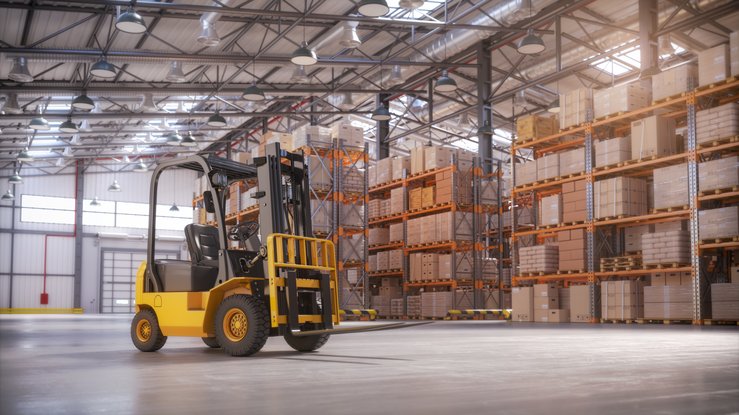

Read a Kansas liquor distributor license closely and you find a word most states leave out. It authorizes wholesale purchase, it authorizes importation, and it authorizes storage.
That is not a drafting accident. Kansas is a license state — the government stands in no tier — and it calls its middle tier a distributor rather than a wholesaler, which is a fair description of what the business actually does. Alcoholic Beverage Control, a division of the Department of Revenue, issues the credential that lets a company buy at wholesale, bring product into the state, hold it, and sell it onward to licensed retailers. The state has licensed you to keep the goods, and it collects monthly gallonage-tax and purchase-and-sale reporting against them.
So the goods on your rack are yours, the state knows they are yours, and if a storm or a compressor takes them, you will be squaring an account with the Department of Revenue as well as filing a claim. Everything on this page follows from that first fact: you own the inventory.
The peril you fear, and the peril that pays
Kansas is the state the phrase tornado alley was coined for, and the severe convective season is genuinely the defining property exposure for anything with a large roof plane. But if you look at what actually empties a Kansas distributor’s bank account, the tornado is not usually the culprit.
Hail is. A distribution roof is a horizontal target measured in acres, and the rooftop mechanical units, the skylights, and the membrane seams are all vulnerable to a single storm that never makes the local news. Straight-line downburst wind is the other quiet one — it can peel roofing off a big-box building without a tornado ever touching down. The lesson is unglamorous and worth taking seriously: insure the roof over your inventory for the storm that comes every year, not only for the one that would make the front page.
Commercial property is the right instrument for the building, the racking, and the owned stock inside it, together with the business income lost while the site is down. Winter adds hard freeze and burst-pipe and sprinkler-freeze exposure in unheated or partially heated space — water doing more damage to stored goods than the fire it was meant to fight. And flash flooding along the Kansas and Arkansas river systems is a siting question in the eastern half of the state, with flood as its own placement rather than a property peril you may assume.
An inland port, and an ocean’s worth of imported stock
The anchor of the modern Kansas distribution economy is Logistics Park Kansas City at Edgerton — a master-planned intermodal and warehouse development built around a full-service rail intermodal terminal with wide-span gantry cranes, automated gates, and a direct connection to the transcontinental network, which turned a stretch of Johnson County farmland into one of the strongest inland-port distribution submarkets in the interior of the country.
Which means the imported container sitting on a Kansas rack got here from a coastal port by rail, and the goods inside it were at their owner’s risk from a foreign supplier’s dock forward. Stock throughput is the single form written across that whole span — supplier, ocean leg, port, rail move, warehouse, customer. Property covers the stock at rest inside a scheduled building; a cargo policy covers movement; the seam between them is where a loss lands. The form belongs to the marine family of coverage, which is a historical artifact rather than a geographic claim — it works exactly as well on a container riding a train across the plains as on a hull, and a landlocked owner should not be put off by the name.
There is a duty-deferred layer on top of it. The zone over the Kansas side of the metro shares a grantee with the Missouri-side zone, so the bi-state market operates as effectively one duty-deferred distribution market, and Wichita has its own zone over Sedgwick County and the counties around it. Imported inventory can sit in a Kansas building without duty being paid until it leaves for domestic commerce — which makes that stock valuable and encumbered at once, and a loss on it carries a customs consequence beyond the value of the goods.
The question this forces is the one importers most often answer by accident: when does risk of loss actually pass to you? If ownership passes at the supplier’s dock and coverage begins at the Edgerton gate, there is an ocean and a railroad on which your inventory is traveling uninsured by you.
The cold chain, where a power loss is a total loss
Go southwest and the risk changes character entirely. Dodge City, Liberal, and Garden City are a protein economy — beef processing at scale, with a cold-chain, packaging, and agricultural-supply distribution business built around it — and the owned inventory sits in refrigerated and frozen space.
There, a compressor failure or a sustained power loss is a total-loss event for the stock. Not a nuisance. Not a partial. The building is untouched; nothing burned, nothing collapsed, nothing was struck by anything. The product simply crosses the line from sellable to worthless — and it does so on your balance sheet, because you own it.
That is a loss mode the standard property conversation skims past, and it is where an owner of frozen goods should slow down. What triggers the coverage. How long an outage has to run before it responds. Whether the goods are valued as stock or as scrap. Whether equipment breakdown is actually on the policy or merely assumed onto it. These are questions with a right answer, and the right time to ask them is not the morning the freezer is warming up.
Food storage is its own license category
Kansas puts food storage under an actual license, and it is precise about the difference. The Department of Agriculture’s food safety program treats food wholesalers, food warehouses, food re-packers, and food manufacturers as food processors — and it splits the application between facilities that process and store food and facilities that only store it, so a pure food-storage warehouse has its own license category, fee-rated by facility size.
The Board of Pharmacy requires a wholesale distributor registration before you distribute drugs or devices at wholesale, with a facility inspection before initial registration and periodically thereafter. Both regimes attach to the product — which is the pattern for an owner: you are credentialed because of what is in the boxes.
Selling on what you did not build
A distributor who manufactured nothing can still be sued over what it sold. Products liability follows the chain of distribution to a seller, and buying a product and reselling it makes you one. The importer sits at the head of the chain: as the first party to put a product into U.S. commerce, you are the realistic target when the actual maker is beyond the practical reach of a U.S. claim.
In Kansas the exposure has a particular grain to it, because so much of the owned parts inventory is aviation supply, industrial supply, and agricultural equipment — high value per pallet, and headed inside a machine or an aircraft, where the claim is sized to the thing it failed in rather than to the part itself. General liability answers through the products-completed-operations hazard, and a wholesaler of components needs a limit set against the system, not the stock-keeping unit.
Crew, cold rooms, and the route
Kansas workers compensation is a private-market line — insurers compete for it and there is no state fund standing between the employer and coverage. The claims that come out of a Kansas distribution building are forklift and pallet-jack contact injuries, workers struck by product falling out of a rack bay, dock and trailer falls, and lifting strain in high-throughput picking. In the beef-belt towns of the southwest, cold-room work and the physical intensity of a protein warehouse add their own layer, and refrigerated space brings a slip exposure on wet or frozen floors that a dry building simply does not have.
The route fleet is the second and separate exposure, answered by commercial auto. A word on the vocabulary this trade cannot escape: your insurance carrier writes your policy; a motor carrier or freight carrier hauls goods for hire. Above the primary lines, umbrella liability is what a national customer or a landlord requires once the contract limits climb, and a route-based distribution operation is where that severity tends to appear first.
What drives the pricing conversation for a Kansas distributor
We do not print premiums, and any site that does is guessing. What genuinely moves it for an owner of inventory here:
- Roof condition, membrane seams, and rooftop units — the surfaces a hail season is actually aiming at.
- Refrigeration redundancy and backup power, and whether the policy answers for spoilage and equipment breakdown at all.
- The transit span you own — where risk of loss passes, and how much ocean and rail sits between there and Edgerton.
- Duty-deferred inventory, and what a loss on customs-controlled goods triggers beyond the stock.
- What the product is — frozen protein, aviation components, and cereal malt beverage are three different appetites.
- Peak versus average inventory value, especially on agricultural inputs that concentrate into a short window.
Where Kansas distributors and wholesalers concentrate
Edgerton and Logistics Park Kansas City
A master-planned intermodal development built around a full-service rail terminal with wide-span gantry cranes, automated gates, and a direct connection to the transcontinental network. An importer’s owned inventory arrives here by rail from a coastal port — which means the goods were at the company’s risk across an ocean and half a continent before they ever reached a rack.
Johnson and Wyandotte counties
The Kansas side of the metro, inside a foreign-trade zone that shares a grantee with the Missouri-side zone — so the bi-state market is effectively one duty-deferred distribution market. Imported inventory can sit here without duty being paid until it leaves for domestic commerce, which makes the stock valuable and encumbered at the same time.
Olathe
Class A distribution space serving retailers and e-commerce operators that want to reach most of the country in two days by truck. Fast turns flatter a balance sheet and mislead an insurance conversation: high velocity means the value on hand at any moment badly understates the annual product volume passing through the chain of distribution behind it.
Dodge City and Garden City
The protein belt, where beef processing at scale anchors a cold-chain, packaging, and agricultural-supply distribution economy. Owned inventory sits in refrigerated and frozen space, and there a compressor failure or a power loss is not a nuisance — it is a total loss on stock that never burned and was never struck.
Liberal
Southwest packing-town distribution feeding national and export channels. Product moving to export has a long onward journey under the owner’s risk, and the span between a Kansas freezer and a foreign buyer is exactly what a property policy does not follow.
Wichita
An aviation-driven supply base with its own foreign-trade zone over Sedgwick County and the counties around it. An aviation or equipment parts wholesaler owns inventory that is high in value per pallet and carries a products exposure sized to the aircraft or the machine, not to the component sitting in the bin.
Topeka
Distribution on the I-70 spine between the metro and the west of the state. Owned goods routed through here spend real time on the road in both directions, and transit is the span a commercial property form was never written to reach.
Salina and the I-135 corridor
Agricultural supply and industrial wholesaling stitching Wichita to the interstate. Agricultural-input stock concentrates hard into a short pre-season window, which makes the peak inventory value — not the average — the number that has to be insured.
If the goods are not yours, you are on the wrong page
An honest signpost. This page is for the business that owns what it stores. If your operation holds other companies’ freight for a fee — a third-party, contract, or cold-storage warehouse at Edgerton or in Wyandotte County, or a grain elevator holding a producer’s crop under a receipt — then the goods on your floor are not owned stock, they are a bailment, and none of the above is your lead exposure. Your program begins with warehouse legal liability, the bailee line for goods in your care, custody, and control, and it turns on your storage contract rather than on your purchase terms. Kansas also has a statute whose name invites real confusion on this point, which the other page takes apart properly: warehouse insurance in Kansas.
A good many Kansas businesses do both — they distribute their own product and warehouse somebody else’s alongside it. If that is you, we place both, and we draw the line between them before anything binds.
Kansas distributor and wholesaler insurance FAQs
Does my Kansas liquor distributor license actually cover storing the product?
It does, explicitly, and that is unusual enough to be worth knowing. Kansas is a license state, and it calls its middle tier a distributor rather than a wholesaler. Alcoholic Beverage Control, a division of the Department of Revenue, issues the distributor license that authorizes wholesale purchase, importation, and — the word that matters to anyone with a building — storage of alcoholic liquor and cereal malt beverage, plus sale onward to licensed retailers. Distributors also carry monthly gallonage-tax and purchase-and-sale reporting duties. So the state has both licensed you to hold the goods and set up a reconciliation against what you hold. After a loss, the inventory question is not only a claim question; it is also an account you have to square with the Department of Revenue.
Is the tornado really my biggest property exposure in Kansas?
It is the one you fear, and it is not usually the one that pays. Kansas is the state the phrase tornado alley was coined for, and severe convective season is genuinely the defining exposure for anything with a large roof plane. But the peril that most often actually cashes a check is hail — because a distribution roof is a horizontal target measured in acres, with rooftop mechanical units, skylights, and membrane seams all vulnerable to a single storm. Straight-line downburst wind can peel roofing off a big-box building without a tornado ever touching down. Insure the roof for the storm that arrives every year, not only for the one that makes the news. Winter adds hard freeze and sprinkler-freeze exposure in unheated space, and flash flooding along the Kansas and Arkansas river systems is a siting question in the east — with flood as its own placement.
What happens to my frozen inventory if the power goes out?
In the southwest packing towns this is the question. Owned protein and cold-chain inventory sits in refrigerated and frozen space, and there a compressor failure or a sustained power loss is a total-loss event for the stock rather than an inconvenience. The building is undamaged. Nothing burns, nothing collapses, nothing is struck. The product simply crosses a line from sellable to worthless, and it does so on your balance sheet because you own it. That is a loss mode a standard property conversation tends to skip past, and it is why the equipment breakdown and spoilage terms — what triggers, how long the outage has to run, and whether the goods are valued as stock or as scrap — deserve reading before the season rather than during it.
Why would a Kansas distributor need stock throughput?
Because owned inventory here has usually crossed an ocean and half a continent before it lands. The intermodal terminal at Edgerton pulls import containers in by rail from coastal ports, and the goods inside them were at their owner’s risk from a foreign supplier’s dock forward. Commercial property covers stock while it sits in a scheduled building and stops at the walls; a cargo policy covers movement; and the seam between them is where a loss can fall. Stock throughput is one marine-family form written across the whole span — supplier, ocean leg, port, rail move, warehouse, customer. Kansas has no coastline, and the form does not care: it works exactly as well on a container riding a train across the plains as on a hull.
Does Kansas license a food warehouse separately from a food processor?
It does, and it is more specific about it than most states. The Department of Agriculture’s food safety program treats food wholesalers, food warehouses, food re-packers, and food manufacturers as food processors — and it splits the application between facilities that process and store food and facilities that only store it, so a pure food-storage warehouse has its own license category, fee-rated by facility size. On the drug side, the Board of Pharmacy requires a wholesale distributor registration before you distribute drugs or devices at wholesale, with a facility inspection before initial registration and periodically afterwards. In both regimes the credential attaches to what you own, not to the shell you keep it in.
Am I in the products-liability chain if I only distribute parts made elsewhere?
Yes. Products liability follows the chain of distribution to a seller, not only to the manufacturer, and a wholesaler who bought a product and resold it is a seller. It is sharpest for the importer: as the first party to put a product into U.S. commerce, you become the realistic target when the actual maker sits beyond the practical reach of a U.S. claim. In Kansas the exposure has a particular texture, because so much of the owned parts inventory is aviation supply, industrial supply, and agricultural equipment — high value per pallet, and destined to go inside a machine or an aircraft where the claim is sized to the thing it failed in rather than to the component itself. General liability answers through the products-completed-operations hazard, and those limits belong sized against what you actually handle.
Get a Kansas distributor insurance quote
Quotes in 1–2 hours during business hours.