
States we serve · Kentucky
Distributor and wholesaler business insurance in Kentucky
For the air-freight importers, medical and electronics wholesalers, beverage distributors, and brand owners whose stock either leaves Kentucky tonight or sits in a barrel for years — and is theirs the whole time.
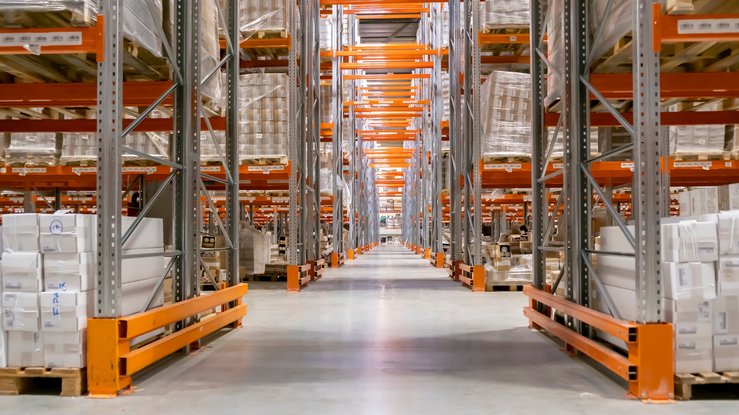

Kentucky runs two clocks on owned inventory, and they could hardly be further apart.
One is measured in hours. Kentucky’s logistics identity is written in the air: Louisville Muhammad Ali International is the site of the UPS Worldport global air hub, and Cincinnati/Northern Kentucky International, on the Kentucky side of the river, hosts both a DHL global superhub and an Amazon Air hub. Three global air-cargo operations in one state is a genuinely rare concentration — and it means a Kentucky warehouse can accept an order later in the evening than a warehouse almost anywhere else and still make next-day delivery. A distributor’s owned stock lands, gets picked, and is airborne again before the building has cooled down.
The other clock is measured in years. The bourbon economy is the clearest case in the country: a producer or a non-distilling brand owner holds barrels that will not be sold for years, so owned-stock exposure in Kentucky can mean a maturing asset sitting in a wooden rickhouse rather than a pallet turning in a month.
Both are the same legal fact — you bought it and you still own it — and they demand almost opposite underwriting attention. That is what makes a Kentucky program interesting to build.
The overnight clock: stock that flies
Because parcels leave Kentucky by air overnight, an enormous amount of e-commerce fulfillment, high-value electronics, medical-device, and pharmaceutical distribution has settled in the state. For an owner, that has two consequences worth stating plainly.
The first is value density. A single pallet position of medical devices or electronics can be worth more than a truckload of ordinary consumer goods, which means an inventory limit derived from square footage will be wrong in the direction that hurts. The second is span: goods arriving by air are typically the importer’s from a foreign airport onward, not from the moment a Kentucky forklift touches them. The exposure has been running for days before anyone in Kentucky sees the freight.
Bonded and zone-status storage is unusually live here for exactly that reason. The Louisville and Jefferson County Riverport Authority is grantee of the Louisville foreign-trade zone, which sponsors sites across a wide swath of the Commonwealth, and Greater Cincinnati FTZ, Inc. is grantee of the Boone County zone serving northern Kentucky and the CVG airport area. Goods can land at a Kentucky air hub, sit in a zone-status building, and be released to the domestic market only when they are sold. Note carefully what that does and does not do: it defers the duty on goods you already own. It does nothing at all about the risk of loss.
The years clock: inventory as a maturing asset
Now the other extreme. A brand owner’s barrels will not be sold for years, and the whole inventory sits in a building the entire time. The underwriting question stops being throughput and becomes duration and accumulation: how much value is under one roof, for how long, and what happens to a business whose product cannot simply be reordered.
Kentucky also carries a very large stock of federally bonded distilled-spirits premises — bonded storage in the most literal sense of the phrase. For an owner, the practical point is that commercial property and business income carry unusual weight in this half of the state’s economy, because a loss does not merely delay a shipment; it destroys a thing that took years to make and cannot be replaced on a purchase order. And property still stops at the walls, which is where the other coverage picks up.
Stock throughput across an air-freight supply line
Stock throughput is the lead line for an owner of inventory, and Kentucky needs it in both of its economies. It is one marine-family policy covering owned product across the entire span: at the supplier, in air or ocean transit, in the zone-status building, in the warehouse, and out to the customer. The form is written in the marine family of coverage — which is where the ocean-cargo and inland-marine vocabulary comes from — and the fact that a Kentucky distributor’s goods travel by aircraft rather than by ship changes nothing about what the policy is for.
The alternative is a patchwork with seams. Property insures the goods while they sit in a scheduled building; a cargo policy insures them while they move; and Kentucky stock spends a remarkable share of its life in between — on an apron, in a zone-status building, on a truck to a hub with a cutoff time bearing down on it. The question the form forces is when the risk of loss actually passed to you: at the foreign supplier’s dock, at the airport of loading, or on arrival. If it passed early and your coverage starts late, there is a lane of sky where your own goods are traveling uninsured by you.
The registered brand, and the walls between tiers
Kentucky licenses private wholesalers and distributors through the Department of Alcoholic Beverage Control, in the Public Protection Cabinet, and keeps the three tiers formally separate — a manufacturer, a wholesaler, and a retailer are meant to operate distinctly and apart, with interlocking interests between the tiers restricted. Brands sold in the state are registered through the department’s product registry, and both suppliers and wholesalers participate in it.
The Kentucky wrinkle is that the state is also a producing state on a scale no other state matches, so its middle tier sits unusually close to the distillers it buys from. For an owner, the position is nonetheless clean: the inventory is yours, the brand book is registered, and the tier walls are walls.
Licensed on the goods, not on the building
There is no general public-warehouse licensing statute in Kentucky. Grain is licensed, and licensed carefully — the Department of Agriculture licenses grain warehouse operators and grain dealers facility by facility, and an operator already licensed under the federal warehouse act must still hold the Kentucky license. For merchandise, parcel, and fulfillment warehousing, which is most of the state’s warehouse economy, no state license applies at all.
What is licensed is what you own. The Kentucky Board of Pharmacy licenses wholesale distributors of prescription drugs, requiring a separate license for each facility that distributes into the Commonwealth regardless of common ownership — and given the concentration of air-cargo pharmaceutical and medical-device distribution around Louisville, that has real operational weight. Food distribution and food storage warehouses are regulated through the Cabinet for Health and Family Services food-safety program.
The chain of distribution, at the head of a runway
A distributor who never made anything can still be sued over what it sold, because products liability follows the chain of distribution to a seller and not only to the maker. Kentucky’s version arrives by air: the high-value electronics and medical-products importer who takes delivery at a Kentucky hub is the first U.S. seller, and therefore the accessible defendant when a claim comes back up the chain and the foreign manufacturer sits beyond the practical reach of a U.S. court.
General liability answers this through the products-completed-operations hazard, and it is the exposure that the wholesaling model carries and a pure storage business does not — the warehouse that merely held the product for its owner never sold it, and was never in the chain.
Conveyors, barrels, trucks, and a wide roof
Kentucky is a private-market workers’ compensation state, and the exposure is shaped by what the state’s buildings actually do. High-velocity parcel sortation and fulfillment around the air hubs produce injuries from conveyor and sortation equipment, repetitive lifting on a fast line, and forklift traffic on congested docks. The barrel warehouses of the distilling economy produce a different pattern entirely: heavy manual handling, workers moving heavy barrels on ricks at height. Racking falls, dock injuries, and lifting strain are constant across both.
Commercial auto answers a distributor’s route fleet — and a note on language this trade cannot avoid: your insurance carrier is the company that writes your policy, which is an entirely different thing from a motor carrier or freight carrier that hauls goods for hire. Above the primary lines, umbrella liability is usually what a national customer or a landlord demands once contract limits climb.
On the weather: hail and straight-line wind across a wide low-slope roof are the practical exposures, along with damage to rooftop equipment — and the business-interruption consequence of a building that cannot ship is unusually severe in a state whose entire proposition is a late cutoff and a next-day promise. Ice storms and heavy wet snow load large roofs in the north and east, and freeze threatens wet sprinklers. Flooding along the Ohio and the eastern Kentucky river valleys has repeatedly been severe and is a separate, separately placed peril. On price we publish no premiums; what drives the conversation is inventory value and concentration, how long the stock sits, the product mix behind the products exposure, whether you import and where risk of loss passes, and claims history.
Where Kentucky distributors and wholesalers concentrate
Louisville
The site of the UPS Worldport global air hub, and the reason a distributor here can accept an order later in the evening than almost anywhere else and still make next-day delivery. Owned inventory in this market moves by aircraft, which means the exposure begins at a foreign airport and ends in a customer’s hands within a day — with a property policy covering only the hours in between.
Hebron and the CVG area
Cincinnati/Northern Kentucky International, on the Kentucky side of the river, hosts both a DHL global superhub and an Amazon Air hub. The Boone County foreign-trade zone sits alongside: goods can land, be held in zone status, and be released to the domestic market only when they are sold — duty deferred on inventory the distributor already owns.
Florence and Covington
The northern Kentucky distribution belt feeding the air hubs, where high-value electronics, medical-device, and pharmaceutical inventory concentrates. A single pallet position here can hold more value than a truckload of ordinary consumer goods — which is a limits question that a square-footage view of the building will never surface.
Lexington and the Bluegrass
Bourbon country and the distribution economy around it, where a brand owner’s stock is a maturing asset rather than a turning one. Inventory that will not be sold for years is still owned inventory, and the underwriting question is duration and accumulation rather than throughput.
Bowling Green
Automotive assembly and the parts distribution that trails it, on I-65 between Louisville and Nashville. A parts wholesaler here sells to a maker rather than to a consumer, and its products exposure surfaces as somebody else’s finished-goods problem — a different claim profile from a consumable, and one that gets underestimated.
Owensboro and the river
Ohio River barge handling and regional wholesaling in the western part of the state. Owned stock arriving by water and leaving by truck spends time in a yard, on a dock, and on the road — three places a commercial property policy was never written to reach.
If you are picking and packing goods that belong to somebody else
An honest signpost, and around the air hubs it is the more common business. Fulfillment is a bailee operation: the operator picks, packs, and ships goods owned by a retailer or a brand and never takes title to any of it. And the distilling economy runs its own version, where a warehouse can hold another company’s spirits for years in a federally bonded building — the longest-duration bailment in this trade. If that is you, the goods in your racking are not owned stock. They are a bailment, and your program starts from warehouse legal liability, the bailee line for goods in your care, custody, and control, which turns on your storage contract rather than on your purchase terms. That is a different risk with a different policy stack, and it has its own page: warehouse insurance in Kentucky.
Many Kentucky businesses sit on both sides — they own and sell their own book and hold another company’s goods alongside it. If that is you, we place both, and we draw the line between the two before anything binds.
Kentucky distributor and wholesaler insurance FAQs
Why is stock throughput the lead coverage for a Kentucky distributor?
Because Kentucky owned inventory is almost never sitting still, and when it is sitting still it is sitting for years. Stock throughput is one marine-family policy that follows your owned product across the whole span it travels — supplier, air or ocean transit, the zone-status building, the warehouse, and out to the customer. Kentucky’s logistics identity is written in the air: goods arrive at an air hub, may be held in zone status, and go back out on an aircraft the same night. A commercial property policy insures inventory only while it sits inside a scheduled building, and a cargo policy only while it moves, with seams between them. Stock throughput closes those seams with one form. It is written in the marine family of coverage — hence the ocean-cargo and inland-marine vocabulary — and the fact that your goods travel by air rather than by sea does not change what the policy is for.
My inventory will not be sold for years. Is that still an owned-stock exposure?
Very much so, and Kentucky is the clearest example in the country. A producer or a non-distilling brand owner holds barrels that will not be sold for years, so owned-stock exposure here can mean a maturing asset sitting in a wooden rickhouse rather than a pallet turning in a month. Federally bonded distilled-spirits premises are bonded storage in the literal sense. The underwriting question changes shape accordingly: it is about duration, accumulation, and the value of a whole inventory sitting under one roof for a long time, rather than about throughput. Concentration is the thing to look at hard, because an inventory that took years to build cannot be replaced by ordering more — which is why business income and the way values are reported matter as much as the property limit itself.
How does the Kentucky three-tier system affect a beverage distributor?
Kentucky licenses private wholesalers and distributors through the Department of Alcoholic Beverage Control, inside the Public Protection Cabinet, and keeps the three tiers formally separate — a manufacturer, a wholesaler, and a retailer are meant to operate distinctly and apart, with interlocking interests between the tiers restricted. Brands sold in the state are registered through the department’s product registry, and both suppliers and wholesalers participate in it. The wrinkle worth knowing is that Kentucky is also a producing state on a scale no other state matches, so its middle tier sits unusually close to the distillers it buys from. For an owner, the practical position is clean: the inventory in your building is genuinely yours, the brand book is registered, and the tiers are walls rather than suggestions.
I import by air. Does the zone-status building insure my goods?
No — and this is a distinction worth being blunt about. Bonded and zone-status storage is unusually live in Kentucky because the freight is arriving by air: goods can land at a Kentucky air hub, sit in a zone-status building, and be released to the domestic market only when they are sold. The Louisville and Jefferson County Riverport Authority is grantee of the Louisville foreign-trade zone, and Greater Cincinnati FTZ, Inc. is grantee of the Boone County zone serving the CVG area. But zone status defers the duty on goods you already own. It says nothing about the risk of loss, which stays exactly where your purchase terms put it. Customs posture and coverage posture are answered on different pieces of paper, and assuming a bonded building is somehow insuring what is inside it is an expensive assumption.
Am I exposed to products liability if I only distribute?
Yes. Products liability follows the chain of distribution, and a claim over a product that injures someone or damages property can reach a seller in that chain — not only the manufacturer who made it. Kentucky’s sharpest version arrives by aircraft: a high-value electronics or medical-products importer who takes delivery by air becomes the first U.S. seller, and therefore the accessible defendant when a product claim comes back up the chain and the foreign maker sits beyond the practical reach of a U.S. court. General liability answers this through the products-completed-operations hazard, and how those limits are sized against the products you actually handle — devices, electronics, automotive parts, food, beverage — is most of the work. It is also the clearest line between an owner and a warehouse: the warehouse that merely held the product never sold it.
What weather should a Kentucky distributor plan around?
Convective storms first, ice second, and the river third. Kentucky sits in a high-frequency severe convective corridor and has seen violent tornado outbreaks in the western part of the state; for a distribution building the practical exposures are hail and straight-line wind across a wide low-slope roof, damage to rooftop equipment, and the business-interruption consequences of a building that cannot ship — which, in a state where the whole value proposition is a late cutoff and a next-day promise, is not a minor consequence. Ice storms and heavy wet snow load large roofs in the north and east, and freeze threatens wet sprinkler systems, which is a water loss landing directly on an owner’s inventory. Flooding along the Ohio River and the eastern Kentucky river valleys has repeatedly been severe and is a separate, separately placed peril.
Get a Kentucky distributor insurance quote
Quotes in 1–2 hours during business hours.