
States we serve · Louisiana
Warehouse business insurance in Louisiana
For the transit sheds, river-terminal warehouses, bonded operators, and seafood and poultry cold storage between Lake Charles and New Orleans — holding other companies’ cargo in the few days it spends between one mode and the next.
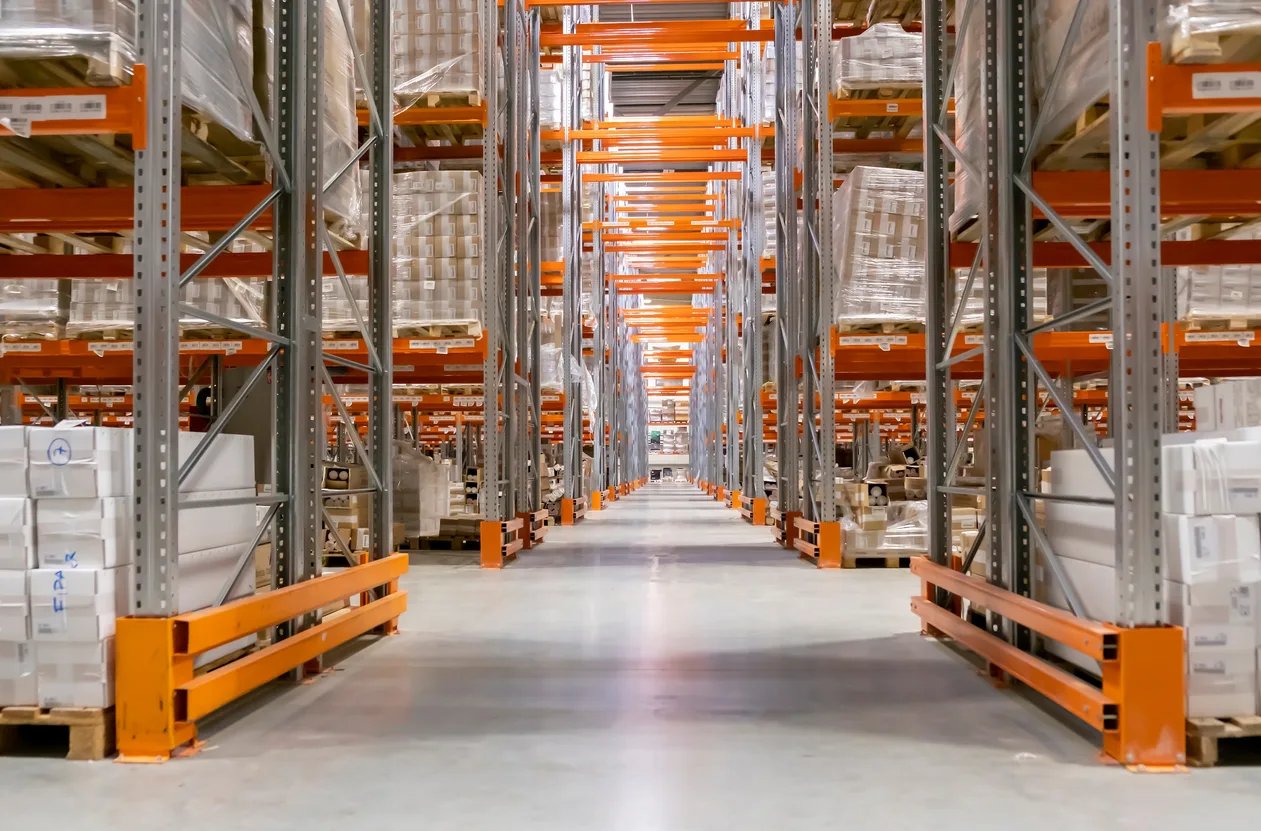

Louisiana warehouses goods that are on their way somewhere else. That is not a slight — it is the economic identity of the state. At the mouth of the Mississippi, oceangoing vessels, barges, rail, and truck all exchange cargo, and New Orleans is one of the few places in the country where all the major Class I railroads meet. Freight comes here to change mode. And in the days between one mode and the next, it sits in somebody’s building.
That somebody is you, and it makes the Louisiana bailee a distinct animal. You are not holding inventory mid-shelf-life. You are holding cargo mid-journey — briefly, at high value, in a chain of custody with a great many hands in it. Which produces the defining Louisiana problem: when a loss surfaces, it is hard to reconstruct who had the goods when. And that is exactly the moment a warehouse legal liability claim stops being paid and starts being contested.
Custody is short, valuable, and hard to prove after the fact
You took in property that belongs to someone else, and you answer for it while it is in your care, custody, and control. In a transit shed that window may be days. In those days the cargo may be broken down, re-sorted, staged, and handed on — and every handoff is a place where a claim can start and a place where the record can go thin.
So the discipline that protects a Louisiana operator is documentary before it is physical: contemporaneous records at each handoff, condition on receipt, condition on release. That is not administrative overhead. It is the evidence your warehouse legal liability defense will actually be built from, and it is what separates an operator who pays for their own handling from one who pays for everybody’s.
Meanwhile your general liability policy sits the whole thing out. A standard general liability form excludes damage to personal property in your care, custody, or control, and the cargo on your floor is exactly that. The single largest exposure in a river-terminal warehouse is carved out of the foundation policy by the policy’s own terms — which is why the bailee line leads a Louisiana program, and why we read the storage contract against the limit before binding. That is the shape of the warehouse insurance program here.
The one warehouse Louisiana licenses, and the negotiable receipt behind it
There is no Louisiana license for a general merchandise or contract warehouse. The license that does exist is commodity-scoped: the Louisiana Agricultural Commodities Commission, inside the Department of Agriculture and Forestry, licenses warehouses that store agricultural commodities for the public for a fee — cotton, grain, soybeans, and the rest — and requires security or a bond behind the negotiable warehouse receipts those operators issue.
That last detail is worth pausing on, because it is where warehousing law gets serious. A negotiable receipt is a document of title: it can be traded, pledged, and financed while the goods sit still, which means the piece of paper you issued can end up in the hands of a bank rather than the farmer who delivered the crop. The state stands security behind it for a reason. And a warehouse holding consumer goods, industrial parts, or oilfield equipment for hire falls entirely outside that regime — for those operators, the storage contract is the only thing standing between them and the full value of somebody else’s cargo.
Bonded on the river: goods that have not entered the country
The New Orleans foreign-trade zone is administered by the Board of Commissioners of the Port of New Orleans and has been expanding its service area across the surrounding parishes; the Lake Charles zone sits with the Lake Charles Harbor and Terminal District. Bonded storage here is a working reality rather than a paper category — grain moving out, project and industrial cargo moving in, and a great deal of it sitting in a warehouse before it has formally entered U.S. commerce at all.
When you admit that cargo, you answer to two masters over the same lot: the customer who owns the freight, and a customs regime that has not been paid. Layered onto a custody chain that is already hard to reconstruct, that raises both the value concentration under your roof and the formality of what happens when something goes missing.
A hurricane is three perils, and the third one is time
Hurricane is not one peril in Louisiana, it is three. Wind peels a warehouse roof. Surge pushes water into a building that never sees a drop of rain. And the loss of power quietly ruins the contents of every cold-storage room in the parish. A distribution center here plans for the contents loss as seriously as the building loss, because for a bailee the contents are the whole business.
The peril that catches owners off guard is time. After a named storm, the building may be standing, the roof intact, the racking upright — and the goods still worthless. Seafood, poultry, and anything else in a cold room does not need the storm to reach it; it only needs the compressor to stay off long enough. That is a warehouse legal liability claim with essentially no property claim beside it, and no adjuster photograph that looks like a loss.
Flood belongs in its own placement, and in much of this state — the river parishes, the coastal parishes, the low ground behind the levees — that placement is load-bearing rather than optional. What is yours in all of it, the roof and racking and the income you cannot earn while the doors are shut, is commercial property. What is on the floor is not.
Break-bulk, barge decks, and heat
Louisiana runs a conventional private workers’ compensation market, administered through the state’s workforce agency — no state fund monopoly and no opt-out. What is distinctive is the work itself. Warehousing here skews toward transit sheds, river terminals, and industrial and project cargo, so the injuries skew heavier than pick-and-pack: powered industrial trucks working around break-bulk, banded loads and awkward industrial pieces that do not behave like cartons, dock and barge-side movement, and lifting strain in a humidity that makes a long shift longer. Cold-storage floors for seafood and poultry add slip and cold-exposure claims on top of all of it. A submission that describes a river terminal as though it were a fulfillment building is not describing the risk.
Two agencies, two rooms, one building
Louisiana routes drug distribution to a board of its own: wholesale distributors of drugs and devices are licensed by the Louisiana Board of Drug and Device Distributors, resident and non-resident alike, with a separate license for each physical facility. Food manufacturing and distribution sits with the Louisiana Department of Health through its sanitarian services, and agricultural commodities remain with the Department of Agriculture and Forestry. An operator holding groceries in one room and pharmaceuticals in another is answering to two different agencies about the same building — and the compliance seam between those rooms is exactly where an underwriter will look for management discipline.
What an underwriter weighs on a Louisiana bailee submission
- The value of the goods in your care — not your own assets. It sizes the bailee limit, and it is the number owners understate most, because the cargo is never on their balance sheet.
- Your custody records — condition on receipt, condition on release, and whether a handoff can be reconstructed months later when a claim is contested.
- The cold rooms and the power behind them — generator capacity, fuel, and how long a room holds temperature after a named storm.
- Siting — surge, levee position, and whether flood was placed deliberately rather than assumed.
- What is actually in the building — containerised consumer freight, break-bulk project cargo, hazardous materials, agricultural commodities under negotiable receipt, or bonded goods that have not entered.
- Your storage contract — limitation of liability, standard of care, and whether the customer was told to insure its own goods.
- Claims history, which moves pricing further than most of this list put together.
Major Louisiana warehouse markets
New Orleans and the port
The Board of Commissioners of the Port of New Orleans administers the foreign-trade zone, and its service area has been expanding across the surrounding parishes. It is also one of the few places where all the major Class I railroads meet — so cargo changes mode here rather than merely passing through, and a warehouse on the river is frequently holding goods that have not yet formally entered U.S. commerce.
The transit sheds
Custody between vessel and barge is short, high-value, and hard to reconstruct after a loss — which is exactly when a bailee claim gets contested. When goods pass through several hands in a few days, the argument after a fire or a shortage is about which hand was holding them, and the operator with the best contemporaneous records is the one who does not pay for somebody else’s handling.
Baton Rouge and the petrochemical corridor
Industrial, project, and hazardous-materials storage runs the stretch between here and New Orleans. A bailee holding project cargo is holding units that do not behave like cartons: banded, awkward, heavy, and often impossible to replace on any short schedule, which means the customer’s downtime after a loss can be worth more than the cargo itself.
The Port of South Louisiana and the grain terminals
Deep-draft river capacity handing agricultural exports between oceangoing vessels and the barges that run the inland system. Where a warehouse stores agricultural commodities for the public it is licensed by the state agricultural commodities commission and its receipts are backed by security — everywhere else on the river, the storage contract is the only thing standing between the operator and the full value of somebody else’s cargo.
Lake Charles
The western energy corridor, with its own zone sitting with the Lake Charles Harbor and Terminal District. Bonded custody here attaches to industrial and project cargo moving into the energy complex, which layers customs obligations on top of an ordinary duty of care to the owner of the goods.
Port Fourchon and the bayou supply bases
Offshore and coastal energy supply warehousing, holding operators’ and contractors’ equipment on the coast. Named-storm wind and surge are underwriting facts rather than abstractions on this ground, and flood is the load-bearing placement rather than an add-on.
Lafayette and Shreveport
The I-49 corridor linking the coastal parishes to the northern half of the state, with regional and industrial distribution space along it. Inland siting takes surge off the table but leaves the wind, and leaves the same question of who owned the goods that were on the racking when the roof let go.
The seafood and poultry cold stores
A genuine Louisiana specialism and a genuine hazard: a power failure destroys a customer’s goods without touching the building. The compressor stops, the room warms, and a full cold store of somebody else’s product becomes a total loss with nothing for an adjuster to photograph but an intact roof.
If you own the cargo, you are on the wrong page
One honest signpost. This page is for the operator holding other people’s cargo. If your Louisiana business buys, holds, and resells its own product — an importer landing goods at New Orleans and becoming the first U.S. seller, a grain or commodity merchant owning stock it never touches, an industrial or oilfield distributor holding heavy inventory near the petrochemical corridor, or a beverage wholesaler permitted by the Office of Alcohol and Tobacco Control — then your stock is not a bailment. Your exposure runs with the goods across the whole journey, which is the stock throughput picture and a products-liability picture rather than a warehouse legal liability one, and it has its own page: distributor and wholesaler insurance in Louisiana.
On this river the two roles blur constantly, because the same terminal that holds a shipper’s cargo may hold the operator’s own stock in the next shed. If yours does, we place both — the distribution operation and the wholesale operation — and we map the seam first, because when the power fails it is the seam that decides whose loss is whose.
Louisiana warehouse insurance FAQs
Does Louisiana license a general merchandise or contract warehouse?
No. There is no Louisiana license for a general merchandise or contract warehouse. The license that does exist is commodity-scoped: the Louisiana Agricultural Commodities Commission, inside the Department of Agriculture and Forestry, licenses warehouses that store agricultural commodities for the public for a fee — cotton, grain, soybeans, and the rest — and requires security or a bond behind the negotiable warehouse receipts those operators issue. A warehouse holding consumer goods, industrial parts, or oilfield equipment for hire falls outside it entirely, and answers to the bailment and its storage contract instead.
Why is a Louisiana bailee claim harder to defend than one in an inland state?
Because the custody is short and the handoffs are many. The Louisiana bailee is usually holding cargo mid-journey rather than mid-shelf-life — a transit shed or a river-terminal warehouse takes custody of other companies’ goods between vessel and barge, and that custody is brief, high-value, and hard to reconstruct after the fact. When a loss surfaces, the question is not only what happened but whose hands the goods were in when it happened, and if the records do not answer that cleanly, the claim gets contested. Contemporaneous custody documentation at every handoff is not administrative overhead here; it is the evidence you will be defended with.
What does my general liability policy do for goods in my care?
Nothing, and that is by design rather than by accident. A standard general liability form excludes damage to personal property in your care, custody, or control — and the cargo sitting in a Louisiana transit shed is precisely that property. The loss you most fear is carved out of your foundation policy by that policy’s own terms. Warehouse legal liability is the bailee line written to answer exactly what the exclusion removes, and it leads a Louisiana program: on this river the goods passing through your building are worth a great many times more than the building.
What does bonded storage on the river add to my obligations?
A second master over the same cargo. Bonded storage here is a working reality rather than a paper category, because the lower Mississippi is where oceangoing vessels, barges, rail, and truck all exchange cargo — grain moving out, project and industrial cargo moving in. A warehouse on the river is frequently holding goods that have not yet formally entered U.S. commerce. When you admit them you take on customs obligations alongside your ordinary duty of care to the owner, and a shortage that would be an awkward phone call in an ordinary building becomes considerably more formal when the goods were never entered.
How should a Louisiana warehouse think about hurricane?
As three perils rather than one. There is wind, which peels a warehouse roof. There is surge, which pushes water into a building that never sees rain. And there is the loss of power, which quietly ruins the contents of every cold-storage room in the parish. A distribution center here has to plan for the contents loss as seriously as the building loss. Flood belongs in its own placement, and in much of the state — the river parishes, the coastal parishes, the low ground behind the levees — that placement is the load-bearing one rather than an add-on. The peril that catches owners off guard is time: after a named storm the building may be standing and the goods still worthless.
Which agencies license a Louisiana distribution building?
It depends what is in it, and the answer is unusual. Louisiana routes drug distribution to a board of its own rather than to the pharmacy board — wholesale distributors of drugs and devices are licensed by the Louisiana Board of Drug and Device Distributors, resident and non-resident alike, with a separate license for each physical facility. Food manufacturing and distribution sits with the Louisiana Department of Health through its sanitarian services, while agricultural commodities remain with the Department of Agriculture and Forestry. An operator who stocks both groceries and pharmaceuticals is answering to two different agencies about two different rooms in the same building.
Get a Louisiana warehouse insurance quote
Quotes in 1–2 hours during business hours.