
States we serve · Michigan
Distributor and wholesaler business insurance in Michigan
For the parts wholesalers, food distributors, and importers who own what they sell in a state whose freight crosses an international river — where your inventory is still yours in Ontario, in customs, and on the rack when it comes back.
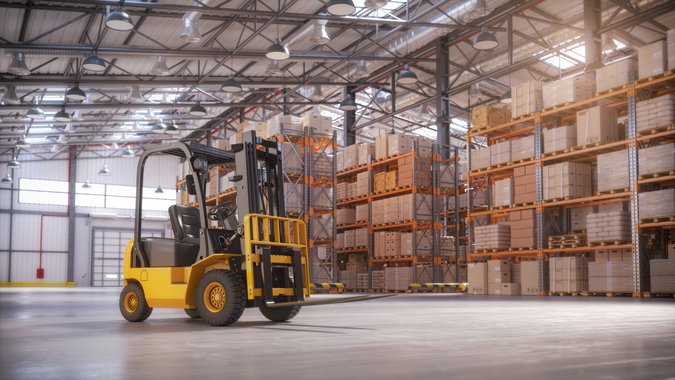

Follow one pallet of components through a Michigan week. It is bought abroad or across the river, and from the moment your purchase terms say so, it is yours. It rides a trailer over the Ambassador Bridge or through the Detroit–Windsor Tunnel — still yours. It sits in a customs queue while paperwork resolves — still yours. It is held duty-unpaid in a zone building in Wayne or Macomb County waiting to be called to a line — still yours. Only at the very end of that sequence does it reach a rack in a warehouse, which is the one and only stretch a commercial property policy was actually written to cover.
That is the Michigan owner’s problem, and it is a geography problem before it is an insurance problem. This is the busiest commercial land crossing between the United States and Canada, and the freight crossing it is overwhelmingly automotive and industrial. If you buy inventory, carry it on your own books, and sell it onward, most of your product’s life is spent somewhere a property form does not reach.
Stock throughput, and the leg that runs through customs
Stock throughput is one marine-family policy that follows your owned product across the entire span — supplier, transit, the crossing, the customs hold, the warehouse, and out to the customer. It exists precisely because the alternative is a patchwork: commercial property insures inventory while it sits in a scheduled building and stops at the walls; a cargo policy insures it while it moves; and between the two are seams. For a Michigan parts wholesaler, the seams are the business.
The word marine in that description is a historical artifact of where the coverage came from. It applies just as cleanly to a trailer in a queue at a bridge as to a hull on the water, and the Michigan owner will use it more on I-94 than on any ocean. What matters is what the form does: it insures the goods on one wording for the whole journey, rather than making you argue about which of two policies owned the moment the loss happened.
Two practical notes. First, the duty-deferred angle: owned inventory sitting in a zone building under customs control is not simply valuable, it is valuable and encumbered — a loss there carries customs consequences on top of the loss of the stock, and that should be understood before it is discovered. Second, the question importers most often answer by accident: when does risk of loss actually pass to you? Your purchase terms may hand you ownership at the supplier’s dock, at the port of loading, or on arrival — and if your coverage starts later than your ownership does, there is a stretch of highway and water on which your own goods are traveling uninsured by you.
The one product class a Michigan owner cannot hold
Michigan is a control state, but a narrow one, and the shape of that narrowness matters. The state occupies the wholesale tier only, and only for spirits: the Liquor Control Commission is the sole wholesaler of distilled spirits, buying from suppliers and reselling to retail licensees. Retail is entirely private. Beer and wine run through ordinary licensed private wholesalers.
So a Michigan owner of beverage inventory owns beer and wine. Spirits are the one product class it cannot hold at wholesale, because the state is standing in that spot.
And the way the state stands there is genuinely instructive, because it draws the axis this whole trade turns on in a single arrangement. The Commission certifies private companies as authorized distribution agents — businesses that warehouse the state’s spirits and deliver them to retailers. The liquor in those buildings belongs to the Commission. The operator is holding it as an agent, not an owner. That is a business whose entire risk is about goods it does not own, sitting inside a control regime, and it is not the business this page is written for. You buy your inventory. It goes on your balance sheet. It stays there until you sell it. Everything below follows from that one difference.
Regulated on what is in the box
The same logic runs through the rest of the Michigan owned-goods economy: the license attaches to the product, not to the shell around it. Wholesale drug distribution is licensed by the Michigan Board of Pharmacy within the Department of Licensing and Regulatory Affairs — a facility-level license, a required pharmacist-in-charge or facility manager, and a filed floor plan of the licensed area, which means the state has a description of your building before any underwriter walks it. Food processing, food warehousing, and dairy distribution are licensed through the Department of Agriculture and Rural Development, which also runs the state dairy program. If you own food or drugs, you are credentialed on that basis, and the credential travels with the goods.
Drift load, and what winter does to a roof over your stock
Michigan’s defining warehouse peril is not wind and it is not hail. It is winter, and specifically it is drift. Lake-effect snow off Lake Michigan piles onto the western side of the state, and on a wide low-slope distribution roof the danger is not the depth of the snowfall but the unbalanced load that collects against parapets, roof steps, and rooftop units. The load concentrates where the geometry says it will, and a big-box roof either answers that or it does not — with your inventory directly beneath the part that does not.
Hard, sustained freezes are the second act. They threaten wet-pipe sprinkler systems in unheated or partially heated bays, where the water that arrives does more damage to stored goods than any fire would have, and they are a live risk to cold-chain refrigeration — which for a west Michigan food or produce distributor is a total stock loss on product that never burned and was never crushed, it simply stopped being sellable. Hail and severe convective wind reach the southern corridors. Flood is a separate placement, always.
Selling on a part you never made
A distributor who manufactured nothing can still be sued over what it sold. Products liability follows the chain of distribution to a seller, and buying a part and reselling it makes you one.
Michigan sharpens this twice. Once because of what the product is: a component ends up inside somebody else’s finished machine, so the claim is sized to the machine and not to the part — the pallet was cheap and the consequence is not. And once because of the border: an importer bringing components or finished goods in from Canada or overseas is the first U.S. seller, and when the actual maker sits beyond the practical reach of a U.S. claim, the importer is the party standing in the room. General liability answers this through the products-completed-operations hazard, and sizing those limits against the products you genuinely handle — rather than against a revenue band — is the work.
It is also the cleanest line between the two halves of this trade. A warehouse operator storing a defective part for its owner is largely outside the chain; the goods were never theirs to sell. A wholesaler who bought that part and resold it is squarely inside it.
Heavy unit loads, and the people moving them
Michigan is a private-market workers compensation state, and the claim picture is shaped by the density of the freight. Automotive components arrive heavy: a building handling engine parts, castings, or steel stock sees forklift and clamp-truck incidents with heavy unit loads, crush injuries at the dock, workers struck by racked material, and the sustained lifting and reaching strain of sequencing parts to a plant’s schedule. That is a different claim set than a parcel operation produces, and it is a more severe one.
The route fleet is the second, separate exposure, and commercial auto is where it lands — drivers loading, unloading, and working a lift gate through a Michigan winter. A necessary note on the vocabulary this trade cannot avoid: your insurance carrier is the company that writes your policy, and a motor carrier or freight carrier is a company that hauls freight for hire. Both words live in the same sentence here constantly. Above the primary lines, umbrella liability is what a plant customer or a landlord usually demands once the contract limits climb, and a route-based distribution operation is where that severity shows up first.
What underwriters actually look at for a Michigan distributor
We do not print premiums, and any site that does is guessing. What genuinely drives the conversation for an owner of inventory here:
- How much of your product’s life is spent crossing a border — and whether anything covers it there.
- Duty-deferred inventory held under customs control, and what a loss on it triggers beyond the value of the goods.
- What the product is — a machine component, a temperature-dependent food, and a case of beer are three different appetites.
- Roof geometry and snow-drift load, plus sprinkler freeze protection in partially heated bays.
- The concentration of owned stock — how much value stands in one building on the worst day.
- Unit weight on the dock, fleet size, and the split between warehouse and driver payroll.
Where Michigan distributors and wholesalers concentrate
Detroit and the river crossings
The busiest commercial land crossing between the United States and Canada, carried by the Ambassador Bridge and the Detroit–Windsor Tunnel, with the Gordie Howe International Bridge adding a span across the same water. A distributor whose owned components cross here is exposed on both sides of the river and in the customs hold in between — a span that begins and ends outside any building a property policy names.
Romulus and the airport district
Air-cargo-fed distribution close to the Detroit gateway, where high-value and time-critical parts land. Airfreighted inventory is expensive per pallet and short on dwell time, which means the value concentration in the building spikes and falls in ways an annual average will never show an underwriter.
The duty-deferred zone counties
Greater Detroit Foreign-Trade Zone, Inc. is the grantee across Wayne, Oakland, Macomb, Washtenaw, Monroe, Lenawee, and Livingston — the heart of the automotive supply base. Owned inventory can sit here duty-unpaid until it is called to a line, and a loss on duty-deferred goods carries customs consequences on top of the value of the stock itself.
Grand Rapids and west Michigan
Food, produce, office furniture, and agricultural distribution, with cold storage attached. Owned perishable stock fails differently than owned steel: the product is never burned, it simply stops being sellable, and whether a policy responds to a temperature excursion in transit is a question to settle before the summer.
Lansing
Aftermarket parts and e-commerce distribution on the I-96 and I-69 crossing. A parts wholesaler here carries a very deep catalog of slow-moving stock-keeping units, which is a concentration problem in disguise: the value is spread across thousands of bins in one building, and it all shares one roof.
Kalamazoo and the I-94 corridor
Pharmaceutical, industrial, and consumer-goods distribution along the southern spine. Michigan licenses wholesale drug distribution at the facility level, with a pharmacist-in-charge or facility manager and a filed floor plan — so a drug wholesaler’s building is described to the state before it is described to an underwriter.
Port Huron
The second international crossing, feeding the I-69 lane. Goods routed through here spend a meaningful stretch of their owned life on a truck and in a queue, and transit is the exact span a commercial property form was never written to reach.
If the goods are not yours, you are on the wrong page
An honest signpost. This page is for the business that owns what it stores. If your operation holds other companies’ freight for a fee — a public, contract, third-party, or cold-storage warehouse, or an authorized distribution agent warehousing the Commission’s spirits — then the goods on your floor are not owned stock at all, they are a bailment, and none of the above is your lead exposure. Your program begins with warehouse legal liability, the bailee line for goods in your care, custody, and control, and it turns on your storage contract rather than on your purchase terms. That is a genuinely different risk with a different policy stack, and it has its own page: warehouse insurance in Michigan.
A good many Michigan businesses do both — they distribute their own product and warehouse a manufacturer’s alongside it. If that is you, we place both, and we draw the line between them before anything binds.
Michigan distributor and wholesaler insurance FAQs
Why can I not wholesale spirits in Michigan?
Because the state does it. Michigan is a control state at the wholesale tier only, and only for spirits: the Liquor Control Commission is the sole wholesaler of distilled spirits, buying from suppliers and reselling to retail licensees, while retail is entirely private. Beer and wine run through ordinary licensed private wholesalers, so those are the beverage classes a Michigan owner can actually hold on its own account. What makes the arrangement worth understanding is how the state performs its wholesale role: it certifies private companies as authorized distribution agents that warehouse the Commission’s spirits and deliver them to retailers. Those companies are holding goods they do not own, as agents. You, buying and reselling your own beer and wine inventory, are doing the opposite thing — and the difference between those two businesses is the difference between two entirely separate insurance programs.
What happens to my coverage while my goods are crossing the border or sitting in customs?
That is the Michigan question, and a commercial property policy is the wrong instrument to answer it. Property covers owned inventory while it sits in a scheduled building and stops at the walls. It does not follow a trailer over the Ambassador Bridge, it does not sit with your components in a customs hold, and it does not ride back across the river with them. Stock throughput does — it is one marine-family form written to follow the owned product across the whole span, including the international transit leg and the time your goods spend under customs control. For a Michigan parts wholesaler whose inventory moves between Ontario and Michigan as a matter of routine, that is not an edge case; that is the ordinary week.
What is the real winter exposure for a Michigan building full of my own inventory?
Drift, not snowfall. Lake-effect snow off Lake Michigan piles onto the western side of the state, and on a wide low-slope distribution roof the danger is not the depth of the fall but the unbalanced drift load that collects against parapets, roof steps, and rooftop units — the load concentrates, and a big-box roof either answers that or it does not. Underneath that, hard sustained freezes threaten wet-pipe sprinkler systems in unheated or partially heated bays, and they are a live risk to cold-chain refrigeration, which for a food distributor is a total stock loss rather than a water-damage claim. Hail and severe convective wind reach the southern corridors, tornado exposure is lower than farther west but not absent, and flood is a separate placement.
Am I in the products-liability chain if I only distribute parts somebody else manufactured?
Yes. Products liability follows the chain of distribution to a seller, not only to the manufacturer, and a wholesaler who bought a part and resold it is a seller. Michigan sharpens it in two ways. The first is the nature of the product: an automotive or industrial component ends up inside somebody else’s finished machine, so the size of the eventual claim has far more to do with the machine than with the part. The second is importing. A distributor bringing components or finished goods in from Canada or overseas is the first U.S. seller of them, and when the actual manufacturer sits beyond the practical reach of a U.S. claim, the importer is the party who is realistically there to answer for it. General liability responds through the products-completed-operations hazard, and the limits belong sized against what you actually handle.
Does Michigan license me because of the goods I distribute?
It does, and it is worth knowing which agency reaches which product. Wholesale drug distribution is licensed by the Michigan Board of Pharmacy within the Department of Licensing and Regulatory Affairs, with a facility-level license, a required pharmacist-in-charge or facility manager, and a filed floor plan of the licensed area — the state knows the layout of the building before an underwriter ever walks it. Food processing, food warehousing, and dairy distribution are licensed through the Michigan Department of Agriculture and Rural Development, which also runs the state dairy program. Both regimes attach to the product, which is the type-D pattern: you are regulated because of what you own, not because of the shell it sits in.
Is workers compensation different for a distribution business in Michigan?
The system is ordinary — Michigan is a private-market comp state — but the exposure is not. The claim picture here is shaped by the goods being moved: automotive components arrive heavy and dense, and a building handling engine parts, castings, or steel stock sees different injuries than a parcel-fulfillment operation. Forklift and clamp-truck incidents with heavy unit loads, crush injuries at the dock, workers struck by racked material, and the sustained lifting and reaching strain of sequencing parts to a plant schedule are what generate the claims. A distribution business also carries a second and separate injury exposure in its route drivers, who are loading, unloading, and working a lift gate all day, often in a Michigan winter.
Get a Michigan distributor insurance quote
Quotes in 1–2 hours during business hours.