
States we serve · Michigan
Warehouse business insurance in Michigan
In Michigan a warehouse operator can be holding inventory that belongs to the state government — and, across the aisle, components a manufacturer needs on a line tomorrow. Neither is yours, and the consequences of losing them are not the same.
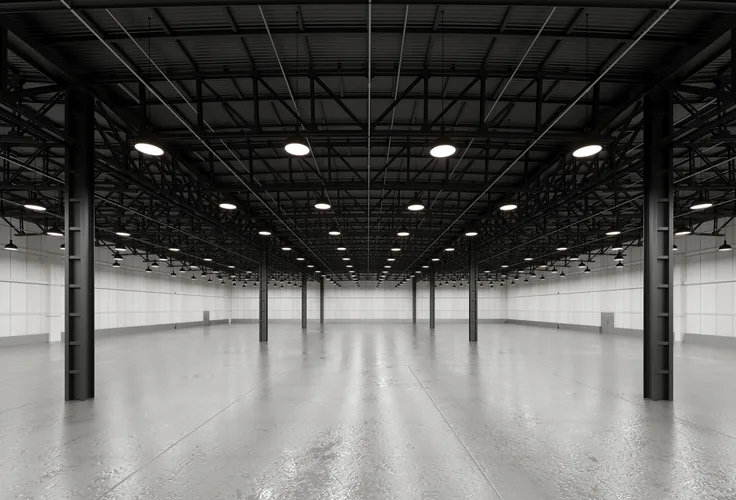

There is a warehouse in Michigan holding inventory that belongs to the state government. Not metaphorically — legally.
Michigan is a control state at the wholesale tier for spirits: the Liquor Control Commission is the sole wholesaler of distilled spirits, buying from suppliers and reselling to retail licensees. But it performs that role through private companies certified as authorized distribution agents, which warehouse the state’s spirits and deliver them to retailers. The bottles on those racks are the Commission’s. The operator is holding them as an agent, not an owner.
It is the cleanest illustration of care, custody, and control without ownership that this trade offers anywhere in the country — and it is the frame for everything else in a Michigan warehouse. Whatever is on your floor, somebody else owns it. The only question is what happens to them when it is damaged.
The automotive track: when the loss is not the pallet
Michigan’s other bailee story is contractual and unforgiving. Warehousing demand here is pulled by the automotive supply chain more than by consumer fulfillment: sequencing centers, parts consolidation warehouses, and cross-dock buildings exist to feed assembly plants on a schedule, with a large aftermarket parts economy sitting on top of that.
Which changes the shape of the exposure entirely. A third-party warehouse holding a manufacturer’s components is exposed not only to physical damage to the parts but to the consequences of not getting them to the line. The value of a damaged pallet of castings is beside the point; the plant that stopped is the point. That is why the storage agreement, and the warehouse legal liability cover standing behind it, carry weight far beyond the value of the goods — and why the limitation-of-liability language in an automotive storage contract gets negotiated harder here than almost anywhere else in this trade.
What the general liability form quietly takes away
Underneath both stories sits the same structural fact. A standard general liability policy excludes damage to personal property in your care, custody, or control. The components staged for a plant, the aftermarket parts on a rack, the state’s spirits in an agent’s building — all of it is exactly that.
So the loss a Michigan operator fears most is carved out of the foundation policy by the form’s own terms, and no general liability limit reaches it. Warehouse legal liability is the line written to answer what the exclusion removes, and it leads the warehouse program here — ahead of the building, ahead of everything.
The Grain Dealers Act is not your warehouse law
Michigan has no general public-warehouse licensing statute. Operators who go looking find one that sounds close and is not: the Department of Agriculture and Rural Development licenses grain dealers under the Grain Dealers Act, Public Act 141 of 1939, which governs the storage and warehousing of farm produce and prescribes what a warehouse receipt issued to a producer must contain.
It is a real, enforced regime, and it protects farmers. It does not reach a sequencing center in Romulus or a contract building in Kalamazoo. Outside farm produce, a Michigan warehouse operator’s duty to the goods it holds is a bailment duty defined by the storage contract — which is where any claim will be argued, because there is no license to argue it against.
Two other regimes do reach a warehouse and are worth knowing. Wholesale drug distribution is licensed by the Michigan Board of Pharmacy with a facility-level license, a required pharmacist-in-charge or facility manager, and a filed floor plan of the licensed area — the state literally has a drawing of your building. Food processing, food warehousing, and dairy distribution are licensed through the agriculture department, which also runs the state’s dairy program.
The border, the zone, and customs status on the rack
Michigan’s logistics identity is the border. The Detroit–Windsor corridor is the busiest commercial land crossing between the United States and Canada, and Greater Detroit Foreign-Trade Zone, Inc. is the grantee of the Detroit-area zone, covering Wayne, Oakland, Macomb, Washtenaw, Monroe, Lenawee, and Livingston counties — the heart of the automotive supply base. Other zones serve Grand Rapids and the western side.
Zone and bonded storage here is therefore shaped by cross-border manufacturing: components moving between Ontario and Michigan plants, held duty-deferred in a distribution building until they are called to the line. For a bailee, that means much of the inventory in the building has a customs status attached to it as well as an owner — two masters over one pallet, and a shortage that becomes a formal event rather than a phone call.
Drift on the western side
Michigan’s defining warehouse peril is winter, and the danger is not the snow itself. Lake-effect snow off Lake Michigan piles onto the western side of the state, and on a wide low-slope distribution roof the real risk is unbalanced drift load against parapets, roof steps, and rooftop units — a structural question a big-box building either answers or does not, above racking full of customer-owned inventory.
Hard, sustained freezes threaten wet sprinkler systems in unheated storage bays and are a live risk to cold-chain refrigeration in the west Michigan food economy — a cargo loss and a property loss in one event. Hail and severe convective wind reach the southern corridors, tornado exposure is lower than farther west but not absent, and flood is a separate placement. Commercial property answers for what is yours and stays put: the shell, the racking, the income that stops. It does not answer for what is on the racks.
Heavy, dense, and unforgiving: the comp picture
Michigan is a private-market workers compensation state, and the loss picture is shaped by what is being moved. Automotive components arrive heavy and dense, so a building handling engine parts, castings, or steel stock sees different injuries than a parcel-fulfillment operation: forklift and clamp-truck incidents with heavy unit loads, crush injuries at the dock, workers struck by racked material, and the sustained lifting and reaching strain of sequencing parts to a plant schedule. Severity is the question here, not just frequency.
An umbrella sits over the liability stack, and commercial auto attaches the moment your own equipment carries a customer’s freight beyond the yard.
What drives cost for a Michigan bailee
- The value of the goods in your care — and, in an automotive account, the consequence of a delay, which the storage agreement either caps or does not.
- Contract terms. Michigan storage agreements are negotiated harder than most, and the liability cap is the first thing we read.
- Customs and zone posture, and how inventory carrying duty-deferred status is reconciled.
- The roof’s drift-load design, especially on the lake-effect side of the state.
- Load weight and equipment — clamp trucks and dense unit loads are a severity conversation on the comp side.
- Claims history, which moves pricing more than almost anything else on this list.
Major Michigan warehouse markets
Detroit and the Windsor crossing
The busiest commercial land crossing between the United States and Canada, carried by the Ambassador Bridge and the Detroit–Windsor Tunnel, with the Gordie Howe International Bridge adding a new span across the same river. The freight is overwhelmingly automotive and industrial — which means the goods in a Detroit bailee’s building frequently have a customs status attached to them as well as an owner.
The sequencing centers
Buildings that exist to feed assembly plants on a schedule. A third-party operator here is holding a manufacturer’s components, and the exposure is not only physical damage to the parts — it is the consequence of not getting them to the line. That is why the storage agreement, and the coverage standing behind it, carry weight far beyond the value of a pallet.
Romulus
Airport-adjacent distribution and cross-dock space handling expedited and high-value freight. Air-side bailment concentrates value in a small footprint and runs on a short clock, so a mishandling here is measured against a customer’s production schedule rather than against a replacement cost.
Grand Rapids and west Michigan
Office furniture, food processing, and agricultural distribution, with real cold-storage clusters attached to the food economy. This is also the lake-effect side of the state, where unbalanced drift load against parapets, roof steps, and rooftop units is a structural question that a big-box roof answers, or does not, above racked customer inventory.
Lansing
E-commerce fulfillment and parts distribution serving the interior. Fulfillment bailment is unit-level rather than pallet-level: thousands of small customer-owned items moving daily, where the loss is rarely one catastrophic event and more often an accumulation of shrink, mis-ships, and handling damage.
Kalamazoo
On the I-94 line between Detroit and Chicago, holding industrial and consumer freight for owners on both ends. A warehouse taking custody mid-journey puts the storage agreement — not any Michigan license — at the center of any claim over damaged goods.
Port Huron
A second border crossing, and a second place where inventory in a bailee’s custody carries customs status on top of ownership. Duty-deferred goods put a customs obligation on top of the ordinary duty of care: two masters over one pallet, and a shortage that becomes a formal event.
The authorized distribution agents
Private companies certified by the Liquor Control Commission warehouse the state’s spirits and deliver them to retailers — goods that legally belong to the Commission, in a private operator’s building. It is the cleanest illustration of care, custody, and control without ownership that this trade offers, and the operator’s exposure to it is a bailee exposure from start to finish.
If the goods are yours, you are on the wrong page
An honest signpost. Everything above is for the operator holding other people’s goods. If your Michigan business owns what it stores — an automotive aftermarket or industrial parts wholesaler, a food or produce distributor in the west of the state, or a beer or wine wholesaler licensed by the Liquor Control Commission (spirits being the one class an owner cannot hold at wholesale, since the state occupies that tier) — then nothing on your floor is a bailment. Your inventory crosses an international border constantly, which puts it at risk in transit and at customs as well as in the building, and an importer bringing in components or finished goods becomes the first U.S. seller in the products-liability chain. That is stock throughput territory: distributor and wholesaler insurance in Michigan.
If you do both — and in this state a great many companies do — we place both sides, the distribution operation and the wholesale operation, and we map the seam between them first.
Michigan warehouse insurance FAQs
Is it true a Michigan warehouse can be holding the state’s own inventory?
Yes, and it is the clearest illustration of this trade’s central fact anywhere in the country. Michigan is a control state at the wholesale tier for spirits: the Liquor Control Commission is the sole wholesaler of distilled spirits, buying from suppliers and reselling to retail licensees. But it performs that role through private companies certified as authorized distribution agents, which warehouse the state’s spirits and deliver them to retailers. The goods in those buildings belong to the Commission. The operator is holding them as an agent, not an owner. Care, custody, and control without ownership — written into a state’s liquor system, and insured by warehouse legal liability like any other bailment.
Why is automotive bailment different from ordinary warehousing?
Because the loss is not the pallet. A third-party warehouse holding a manufacturer’s components is exposed not only to physical damage to the parts but to the consequences of not getting them to the line — a sequencing center exists to feed an assembly plant on a schedule, and a failure to deliver has a cost that has nothing to do with the replacement value of what was damaged. That is why the storage agreement and the warehouse legal liability cover behind it carry weight far beyond the value of a pallet, and why the limitation-of-liability language in an automotive storage contract is negotiated harder than it is almost anywhere else in this trade. Read it before a loss, not during one.
Does Michigan license a public warehouse?
No. Michigan has no general public-warehouse licensing statute. Its warehousing statute is agricultural: the Department of Agriculture and Rural Development licenses grain dealers under the Grain Dealers Act, Public Act 141 of 1939, which governs the storage and warehousing of farm produce and prescribes what a warehouse receipt issued to a producer must contain. That is a farm-produce regime, and it does not reach a contract, fulfillment, or sequencing warehouse. Outside farm produce, a Michigan warehouse operator’s duty to the goods it holds is a bailment duty defined by the storage contract — which is where a claim will be argued, because there is no license to argue it against.
If a customer’s components are destroyed in my building, does general liability pay?
No. A standard general liability policy excludes damage to personal property in your care, custody, or control, and the components, the aftermarket parts, and the state’s spirits on your racks are exactly that. So the loss you fear most is carved out of your foundation policy by the form’s own terms. Warehouse legal liability is the line written to answer precisely what that exclusion removes — loss or damage to a customer’s goods while they sit in your care as a bailee — and it leads a Michigan warehouse program ahead of the building itself.
What does winter actually do to a Michigan distribution building?
Michigan’s defining warehouse peril is winter, and the danger is not the snowfall itself. Lake-effect snow off Lake Michigan piles onto the western side of the state, and on a wide low-slope distribution roof the real risk is unbalanced drift load against parapets, roof steps, and rooftop units — a structural question that a big-box building answers or does not, and the racked inventory beneath it belongs to your customers. Hard, sustained freezes threaten wet sprinkler systems in unheated storage bays and are a live risk to cold-chain refrigeration in the west Michigan food economy. Hail and severe convective wind reach the southern corridors, tornado exposure is lower than farther west but not absent, and flood is a separate placement.
How do heavy automotive loads change the workers compensation picture?
Michigan is a private-market workers compensation state, and the loss picture is shaped by what is being moved. Automotive components arrive heavy and dense, so a distribution center handling engine parts, castings, or steel stock sees different injuries than a parcel-fulfillment building — forklift and clamp-truck incidents with heavy unit loads, crush injuries at the dock, workers struck by racked material, and the sustained lifting and reaching strain of sequencing parts to a plant schedule. Severity, not just frequency, is the underwriting question, and an underwriter will want to know how heavy loads are handled and how equipment traffic is separated from people on foot.
Get a Michigan warehouse insurance quote
Quotes in 1–2 hours during business hours.