
States we serve · Minnesota
Distributor and wholesaler business insurance in Minnesota
For the medical-device, food, and industrial wholesalers whose owned inventory is worth more per pallet position than the building around it — and whose territory reaches across the upper Midwest.
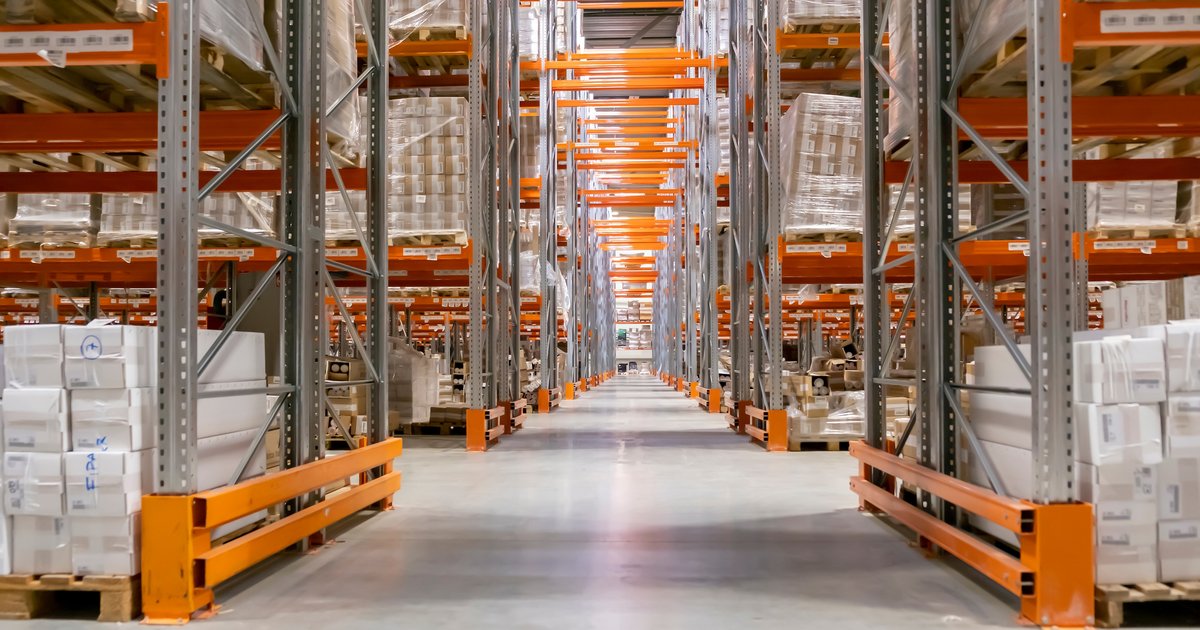

In the Twin Cities, a single pallet position of owned inventory can be worth more than a truckload of ordinary consumer goods. That sentence should reshape an entire insurance program, and usually it has not.
Minnesota’s owned-goods economy runs on food, agricultural products, healthcare and medical supplies, and industrial and electrical goods — with a distinct high-value tier around the metro’s medical-device cluster. The buildings look like ordinary buildings. The racking looks like ordinary racking. And the value sitting in it is nothing like what a square-footage view of the property would suggest, which is exactly why a limit derived from the size of the building will be wrong in the direction that costs money.
Add the territory. The Twin Cities are the regional consolidation point for a very large, thinly populated area reaching into the Dakotas and Wisconsin, so Minnesota goods arrive by rail and truck rather than by container ship and then move onward across a very wide upper-Midwest run. Owned stock here spends real time in transit — and as the seller of goods it did not make, a Minnesota distributor carries the products-liability chain along with it.
Value density: insure the value, not the floor space
Take the high-value case seriously, because it changes more than one line of the program. A small-footprint, high-value owned inventory shifts the property limit, shifts the transit limit under a stock throughput placement, and shifts the theft and pilferage conversation, because a compact high-value product is a target in a way a pallet of bulk goods is not.
It also puts the temperature question front and center, since a great deal of the state’s high-value stock is temperature- and traceability-sensitive. The failure mode there has nothing to do with fire: a product that left the acceptable range is unsellable and unusable, and the building looks perfectly fine while it happens. That is an owned-inventory loss, in full, with an intact roof over it.
Stock throughput across a several-state territory
Stock throughput is the lead line for an owner of inventory, and the Minnesota argument is reach rather than an ocean. It is one marine-family policy covering your owned product across the whole span — at the supplier, in transit, in the warehouse, and out to the customer. It is written in the marine family of coverage, which is where the ocean-cargo and inland-marine vocabulary comes from; the goods do not need to see salt water for the form to be the right one.
Commercial property answers for the building, the racking, and the owned stock that stays put, plus the business income lost while a site cannot ship. It stops at the walls. A cargo policy picks the goods up only while they move. Between them are seams — and a Minnesota wholesaler running from the metro out to the Dakotas, up to Duluth, or across into Wisconsin has an inventory that lives in those seams for days at a time, on iced roads, in a yard, on a rail car.
Minnesota is not a container seaport state, so foreign-trade zone use here is inland-style: the Greater Metropolitan Area Foreign Trade Zone Commission is grantee of the Minneapolis–St. Paul zone, with subzones out at manufacturers well beyond the metro, and imported components or finished goods are held duty-deferred at a Twin Cities distribution building rather than at a marine terminal. Zone status defers the duty on goods a distributor already owns. It does nothing about the risk of loss.
The building is named in the license — and the customer may be a city
Minnesota is a license state, and its alcohol regulator sits somewhere most states do not put one: the Alcohol and Gambling Enforcement Division, inside the Department of Public Safety. The division issues the manufacturing and wholesale licenses, and it defines a wholesaler as a business selling alcoholic beverage products to retailers from its licensed warehouse. The building is written into the license.
Retail is where Minnesota gets genuinely unusual. Many cities own and run their own municipal liquor stores, which means a Minnesota beverage wholesaler’s customer list includes city governments alongside private retailers. The inventory is entirely yours, the tiers behave in the ordinary way, and the delivery and receivables profile is unlike anywhere else in the country.
Licensed on what you own
Minnesota regulates a distributor on its goods. The Department of Agriculture licenses wholesale food handlers — the class written for businesses that hold, store, and distribute food to other businesses, packaged-food warehouses included — under its manufactured food program. The Board of Pharmacy licenses drug wholesalers facility by facility.
And here is the line-drawing worth pausing on: the pharmacy board also registers third-party logistics providers, and its own guidance notes that Minnesota defines a third-party logistics provider around products rather than drugs — which pulls a broader set of warehousing operations into the regime than in some states. That is the state itself distinguishing the operator that owns what it sells from the operator that only warehouses and ships it for someone else. If you buy, carry, and resell, you are the first of those, and this page is your page.
The chain of distribution, and the seller of a device
A distributor who never made anything can still be sued over what it sold. Products liability follows the chain of distribution to a seller — not only to a manufacturer — and a Minnesota wholesaler that buys and resells is inside it.
The product mix sharpens the exposure. A wholesaler of medical and healthcare products carries a products-liability profile with a bodily-injury character that industrial hardware does not, and a food wholesaler carries an ingestion profile. General liability answers this through the products-completed-operations hazard, and sizing those limits against what you actually handle rather than against a generic revenue band is most of the work. It is also the clearest divergence between the two halves of this trade: the warehouse that merely stored a defective product for its owner never sold it, and is largely outside the chain — while a wholesaler who bought and resold that same pallet is squarely inside it.
Snow, drift, and prolonged cold
Snow load is the structural question for any large Minnesota roof, and it is the drifting — against parapets, roof steps, and rooftop refrigeration units — that actually gets a long-span distribution roof into trouble, not a uniform blanket. Extreme and prolonged cold is a peril in its own right: sprinkler systems in unheated bays, refrigeration and ammonia plant on a cold-storage building, and frozen service lines.
For an owner, all of those are inventory losses wearing a building’s clothes. A burst sprinkler soaks the racking. A refrigeration failure ruins a food or medical inventory in an otherwise untouched building. Severe convective storms bring damaging hail across the southern and western parts of the state, tornado exposure is real on the prairie side, and spring flooding along the Red, Minnesota, and Mississippi rivers is a separate, separately placed peril.
Crews, drivers, and the pricing conversation
Minnesota is a private-market workers’ compensation state. The warehouse exposures carry a cold-weather overlay that lasts a large part of the year: iced dock aprons and yard surfaces, slip-and-fall on tracked-in snow at the dock door, and freezer work in the state’s substantial refrigerated storage base — layered on top of the universal forklift strikes, falls from racking and mezzanines, and the lifting and repetitive-reach strain of a pick-and-pack operation.
A distributor carries a second injury exposure a pure warehouse does not: the route drivers. Commercial auto answers that fleet, and in a state with long winter runs the severity is not theoretical. A note on language this trade cannot avoid: your insurance carrier is the company that writes your policy, which is an entirely different thing from a motor carrier that hauls goods for hire. Umbrella liability sits above the primary lines, usually because a national health system or retailer put a limit in a contract.
On price, we publish no premiums, and any site that does is guessing. What genuinely drives the conversation for a Minnesota owner is the value of the inventory rather than its volume, how much of it sits in one building, whether it is temperature-sensitive, what the product is behind the products exposure, the transit territory and how many of the miles are yours, and claims history.
Where Minnesota distributors and wholesalers concentrate
Minneapolis
The convergence of I-94, I-35, and I-90 with Class I rail and air cargo, and the consolidation point for a very large, thinly populated territory reaching into the Dakotas and Wisconsin. A wholesaler here holds one owned book that has to serve several states — which means the inventory is out on the road far more than a metro-sized business would expect.
St. Paul
Where a beverage wholesaler’s licensed warehouse is literally named in its license, and where the customer list is unlike anywhere else — private retailers alongside city governments running their own municipal liquor stores. Owned stock, ordinary tiers, a genuinely unusual accounts-receivable and delivery profile.
Eagan and Shakopee
The southern and eastern metro suburbs where e-commerce fulfillment and consumer-goods distribution have built out. This is where owned inventory concentrates into large single-site holdings — and a long-span roof carrying a Minnesota winter is holding a distributor’s entire replenishment book underneath it.
Rochester
A medical economy pulling specialized distribution with it. Temperature- and traceability-sensitive owned stock has a failure mode that has nothing to do with fire: a product that left the acceptable range is unsellable and unusable, and the building will look perfectly fine while it happens.
Duluth and the Twin Ports
The leading bulk cargo port on the Great Lakes and the far end of the St. Lawrence Seaway, moving iron ore, grain, coal, limestone, and project cargo. An importer taking title to bulk or project cargo here owns a shipment large enough that a single loss is a year-shaped event rather than a line item.
St. Cloud
Central Minnesota’s regional wholesaling market, working the long runs north and west. Owned stock spends real hours on iced roads here, and a commercial property policy stopped covering it the moment the trailer doors closed.
If the goods on your racking belong to your customers
An honest signpost, and Minnesota makes it a legal one. This is one of the very few states where holding other people’s goods is a licensed activity: under the Minnesota Warehouse Act, a general merchandise warehouse operator storing goods for compensation must be licensed by the Department of Agriculture, issue warehouse receipts, satisfy a security requirement, and pass a facility inspection. If that describes your business, the inventory in your building is not owned stock at all — it is a bailment, and none of the above is your lead exposure. Your program starts from warehouse legal liability, the bailee line for goods in your care, custody, and control. That is a different risk with a different policy stack, and it has its own page: warehouse insurance in Minnesota.
Some Minnesota businesses do both — they own and sell their own book and store another company’s goods alongside it. If that is you, we place both, and we draw the line between the two before anything binds.
Minnesota distributor and wholesaler insurance FAQs
Why does Minnesota’s alcohol regulator sit inside the Department of Public Safety?
It is an unusual placement and worth knowing, because it tells you how the state thinks about the middle tier. Minnesota is a license state, and its alcohol regulator is the Alcohol and Gambling Enforcement Division — inside the Department of Public Safety rather than a revenue or commerce agency. The division issues the manufacturing and wholesale licenses and defines a wholesaler as a business selling alcoholic beverage products to retailers from its licensed warehouse. Note the phrasing: the building is named in the license. For an owner, that means the warehouse is not incidental to the business; it is a condition of it, and the owned inventory in that building is the licensed activity. Retail is where Minnesota gets genuinely unusual — many cities own and run their own municipal liquor stores, so a Minnesota beverage wholesaler’s customer list includes city governments alongside private retailers.
What is stock throughput and why does a Minnesota wholesaler need it?
Stock throughput is one marine-family policy that follows your owned product across the whole span it travels — from the supplier, through transit, into the warehouse, and out to the customer. A Minnesota wholesaler needs it because the territory is enormous: the Twin Cities are the regional consolidation point for a very large, thinly populated area reaching into the Dakotas and Wisconsin, so a Minnesota distributor’s inventory spends real time in transit rather than on a rack. Goods here arrive by rail and truck rather than by container ship, and they often move onward across several states. A commercial property policy insures inventory only while it sits in a scheduled building; a cargo policy only while it moves; between them are seams. The form is written in the marine family of coverage — hence the ocean-cargo and inland-marine vocabulary — and it does not require salt water to be the right instrument.
My inventory is small in volume but very high in value. How should that be insured?
Deliberately, and not by square footage — which is the mistake that shows up in the Twin Cities medical-device economy again and again. Owned inventory in a single pallet position here can be worth more than a truckload of ordinary consumer goods, and an inventory limit derived from the size of the building will be wrong in the direction that hurts. Value density changes three things at once: the property limit, the transit limit under a stock throughput placement, and the theft and pilferage conversation, because a high-value, small-footprint product is a target in a way a pallet of bulk goods is not. It also raises the temperature question, since so much of the state’s high-value stock is temperature- and traceability-sensitive. All of that belongs in the placement conversation before binding, not in a schedule nobody has read since it was set.
Minnesota registers third-party logistics providers around “product,” not “drug.” Why does that matter to me?
Because it is the state drawing the whose-goods line — and it draws it wider than most. The Minnesota Board of Pharmacy licenses drug wholesalers facility by facility and separately registers third-party logistics providers, and its own guidance notes that the state defines a third-party logistics provider around products rather than drugs, which pulls a broader set of warehousing operations into the regime than in some states. If you buy product, carry it on your balance sheet, and resell it, you are the wholesaler — the owner — and this page is written for you. The third-party logistics class is the other side of that line: an operator that warehouses and ships goods it does not own. Which side you sit on determines which coverage leads your program, and Minnesota has already put the distinction in writing.
Do I need a license to hold and distribute food in Minnesota?
Very likely, yes. The Minnesota Department of Agriculture licenses wholesale food handlers — the license class written for businesses that hold, store, and distribute food to other businesses, packaged-food warehouses included — under its manufactured food program. So a food or grocery wholesaler that owns its inventory is licensed on the goods it owns and the handling it does, which is exactly the pattern you would expect for an owner. That sits alongside the pharmacy board’s licensing of drug wholesalers facility by facility. The practical upshot for a distributor carrying both food and healthcare lines is that the regulatory weight follows the pallet, not the building.
What does a Minnesota winter actually do to a distribution building?
Snow load is the structural question for any large Minnesota roof, and drifting against parapets, roof steps, and rooftop refrigeration units is the way a long-span distribution roof actually gets into trouble — not a uniform blanket of snow but an uneven one. Extreme and prolonged cold is a peril in its own right: sprinkler systems in unheated bays, refrigeration and ammonia plant on a cold-storage building, and frozen service lines. For an owner, every one of those is an inventory loss wearing a building’s clothes — a burst sprinkler line soaks the racking, and a refrigeration failure ruins a food or medical inventory in a building that is otherwise untouched. Severe convective storms bring damaging hail across the southern and western parts of the state, tornado exposure is real on the prairie side, and spring flooding along the Red, Minnesota, and Mississippi rivers is a separate placement.
Get a Minnesota distributor insurance quote
Quotes in 1–2 hours during business hours.