
States we serve · Minnesota
Warehouse business insurance in Minnesota
Minnesota is one of the only states that licenses the general merchandise warehouse — and one of the only states whose licensing statute will accept your bailee policy in place of a bond. If you store goods for compensation here, you are a licensed operator, and the coverage behind that license is the program.
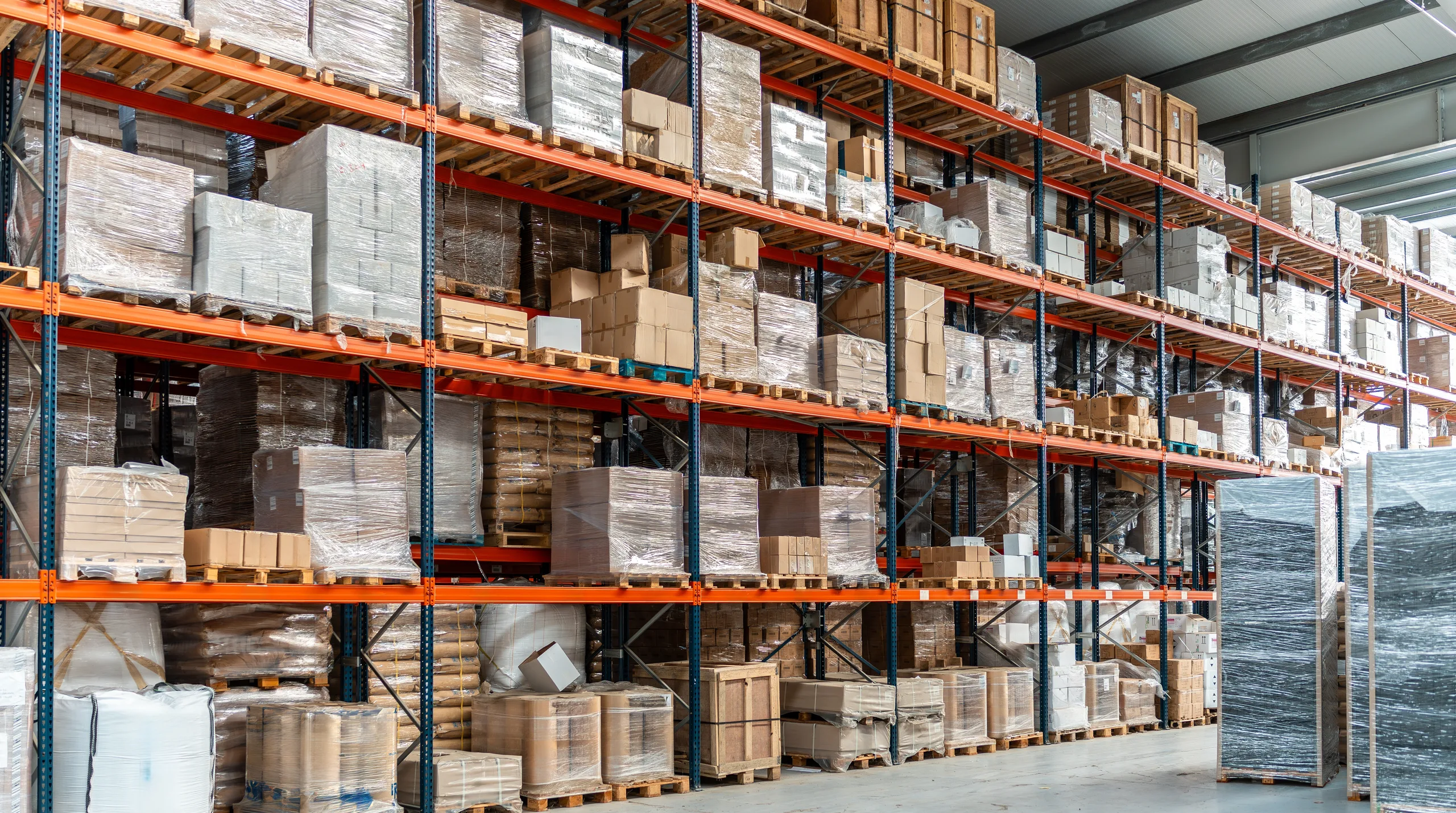

Ask a warehouse operator in most of the country whether the state licenses them and the answer is no. Ask it in Minnesota and the answer is yes — and then something genuinely unusual happens.
Under the Minnesota Warehouse Act, Minnesota Statutes Chapter 231, anyone who stores goods, wares, records, or merchandise for compensation must hold a warehouse operator license from the Minnesota Department of Agriculture. Not grain — grain and household goods sit in their own separate regimes, and household goods warehouse operators are licensed in a separate class. This statute reaches general merchandise. It reaches the contract warehouse in Eagan and the fulfillment building in Shakopee and the multi-tenant house on the St. Paul river flats. If you take other companies’ pallets in exchange for money, Minnesota has a license with your name on it.
And the license carries a security requirement — which can be satisfied by proof of warehouse operator’s legal liability insurance rather than a bond. That sentence is the reason this page reads differently from the other forty-seven. The state of Minnesota has written the bailee policy — the coverage that answers when a customer’s goods are destroyed in your care — into its own licensing statute, and will accept it as the security standing behind your right to operate. Your coverage and your license are not two conversations. They are one.
Why the statute needed that coverage in the first place
The reason the law reaches for that specific policy is the same reason this brand leads every warehouse program with it. When a customer’s freight is destroyed on your floor — a fire in a rack aisle, a sprinkler head letting go over a pallet, a theft out of a trailer, a freezer drifting warm through a Saturday night — the property that was lost belonged to somebody else. And your general liability policy will not pay for a dollar of it.
That is the form working as designed, not failing. A standard general liability policy excludes damage to personal property in your care, custody, or control, and the goods a warehouse stores are exactly that. The loss you fear most is carved out of your foundation policy by its own terms. Warehouse legal liability is the line written to answer precisely what that exclusion removes — and Minnesota, alone among the states you might operate in, has noticed and legislated accordingly.
The inspection is an underwriting file you did not know you were building
Minnesota does not hand out the license on paper alone. It is conditioned on a facility inspection covering fire protection, floor capacity, aisle clearance, and pest control, and it is tied to the specific city and buildings named in your application — so it belongs to the building as much as to the business.
Look at those four items again from an underwriter’s chair. Fire protection is the sprinkler conversation, and it is the first thing anybody asks about a warehouse. Floor capacity governs what can be racked and how high, which is the rack-collapse question. Aisle clearance is a fire-spread question and a forklift-collision question at the same time. Pest control is the line between a clean food account and a contamination claim. A licensed Minnesota operator walks into a submission with a state-inspected building, and if the file is presented properly, that is leverage rather than paperwork. It is one of the few places in this trade where regulation and risk management genuinely point the same direction.
Warehouse receipts are required too — which matters, because the receipt is the document a bailee claim gets argued against. In most states the receipt is a private paper you drafted. Here it is a condition of the license.
Cold storage, and the loss where nothing is damaged
Minnesota runs a real public refrigerated warehousing sector, because it has a real food economy underneath it: grain, dairy, and food processing across the state, and a Department of Agriculture that licenses wholesale food handlers — the class written for businesses that hold, store, and distribute food to other businesses, packaged-food warehouses included. So the refrigerated bailee here is often carrying two licenses and holding somebody else’s protein.
Refrigerated bailment fails in a way dry storage does not. Nothing burns. Nothing collapses. The temperature simply drifts, and by morning a customer’s load is a total loss with the racking and the building untouched. There is no property claim in that event at all — there is only a bailee claim, and if the warehouse legal liability limit was sized against the value of the shell instead of the value of the food, the operator discovers the shortfall at the worst possible moment. Extreme and prolonged cold cuts the same way from the other side: it is the peril that breaks sprinkler lines in unheated bays and stresses the refrigeration and ammonia plant that is holding the cold chain together.
Rochester, the high-value tier, and a broader 3PL definition
Rochester’s medical economy pulls specialized distribution with it, and the Twin Cities carry a large medical-device and healthcare-products cluster — high-value, temperature- and traceability-sensitive goods, where a single pallet position can hold more value than a truckload of ordinary consumer freight. The Minnesota Board of Pharmacy licenses drug wholesalers facility by facility and registers third-party logistics providers, and its own guidance notes that the state defines a third-party logistics provider around products rather than drugs — which pulls a broader set of warehousing operations into the regime than the equivalent rule does in other states.
For a bailee, that is worth knowing before you sign the account rather than after. A high-value healthcare customer does not just raise your limits question; it can change which registrations your building needs.
Snow on the roof, ice in the yard
Snow load is the structural question for any large Minnesota roof, and the failure is rarely the snowfall itself — it is unbalanced drift against parapets, roof steps, and rooftop refrigeration units on a long low-slope span. What sits under that span is racked inventory belonging to your customers, which is why a roof event in this state is a bailee event before it is a property event. Hail reaches the southern and western parts of the state, tornado exposure is real on the prairie side, and spring flooding along the Red, Minnesota, and Mississippi rivers is its own placement.
The same winter shows up in the workers compensation file. Minnesota is a private-market comp state, so the placement itself is ordinary — but the exposures carry a cold-weather overlay running most of the year: iced dock aprons and yard surfaces, slip-and-fall on tracked-in snow at the dock door, and freezer work in the refrigerated base, all layered on top of the universal forklift strikes, falls from racking and mezzanines, and lifting strain of a pick-and-pack floor.
What you own, and what an umbrella sits over
Against all the customer-owned goods stands the shorter list of what is genuinely yours: the building, the racking and material-handling systems, and the income that stops when the facility does. That is commercial property. It answers for what is yours and stays put; warehouse legal liability answers for what is theirs and sits in your care. An umbrella sits above the liability stack, and commercial auto attaches whenever your own equipment moves a customer’s freight off the property. That is the shape of the warehouse program, and in Minnesota it starts from the license and works outward.
What drives cost for a licensed Minnesota warehouse
No numbers here — any site quoting a figure for a warehouse it has never seen is guessing. What an underwriter actually weighs:
- The value of the goods in your care, which sizes the bailee limit and is also the number your licensing security has to stand behind.
- Temperature. A licensed frozen-food house and a dry consumer-goods building are not the same risk, and the freezer’s worst loss involves no physical damage at all.
- The building’s inspection posture — fire protection, floor capacity, aisle clearance, pest control. You are already inspected on those; present the file.
- The roof, and its drift-load design. Snow is the Minnesota property variable and it is not negotiable.
- Your storage agreements and the warehouse receipts the license requires you to issue.
- Claims history, which moves pricing more than almost anything else on this list.
Major Minnesota warehouse markets
Minneapolis
Where I-94, I-35, and I-90 converge with Class I rail and airport freight, and where the licensed general merchandise warehouse is a working business rather than a legal curiosity. A license under the Minnesota Warehouse Act is tied to the specific city and buildings named on the application — so an operator that opens a second Minneapolis building is amending a state license, not just signing a lease.
St. Paul
The older industrial and river-adjacent storage half of the Twin Cities, with multi-tenant buildings holding freight for many bailors at once. Concentration is the underwriting question here: one fire or one roof failure in a mixed-customer building reaches a dozen owners’ goods simultaneously, and the warehouse legal liability limit has to be sized against the whole floor rather than against the largest single account.
Eagan
Southeast-metro distribution space built for regional replenishment across the upper Midwest. Buildings here take custody of freight mid-journey — inbound from a coastal port or a rail ramp, outbound to the Dakotas and Wisconsin — which makes the storage agreement, and the inspection standard the state license imposes on the building, the two documents that decide a claim.
Shakopee
The southwest fulfillment corridor, where e-commerce bailment runs at unit level: thousands of small customer-owned items moving daily. The loss profile is different from bulk storage — rarely one catastrophic event, more often an accumulation of shrink, mis-ships, and handling damage, and the state’s facility inspection standard for aisle clearance is not unrelated to how fast that floor is allowed to run.
Rochester
A medical economy that pulls specialized distribution with it — high-value, temperature- and traceability-sensitive goods held for owners who are hospitals, health systems, and device companies. The Minnesota Board of Pharmacy licenses drug wholesalers facility by facility and registers third-party logistics providers, and its guidance notes the state defines a third-party logistics provider around products rather than drugs, which pulls a broader set of warehousing operations in than in many states.
Duluth and the Twin Ports
The Minnesota half of the leading bulk cargo port on the Great Lakes and the far end of the St. Lawrence Seaway, moving iron ore, grain, coal, limestone, and project cargo. Bailment here is industrial and heavy — project cargo held for an owner who is a contractor or a manufacturer, in a place where a cargo insurance conversation and a property conversation are genuinely different conversations.
St. Cloud
Central-Minnesota regional storage serving a very large, thinly populated territory. A warehouse here is often the only building between a manufacturer and a hundred miles of customers, which raises the business-income question sharply: when the building stops, the customer’s supply chain stops with it, and the storage contract is where that consequence is allocated.
The refrigerated tier
Minnesota runs a real public refrigerated warehousing sector serving grain, dairy, and food processing, and the Department of Agriculture licenses wholesale food handlers — the class written for businesses that hold, store, and distribute food to other businesses. In a freezer, the bailee’s worst day is not a fire: the temperature drifts, a customer’s food is a total loss, and the building is untouched.
If the goods are yours, you are on the wrong page
A signpost before the questions. Everything above is written for the operator holding other people’s goods under a Chapter 231 license. If your Minnesota business buys, holds, and resells its own stock — a food or industrial wholesaler, a Twin Cities medical-device distributor whose owned inventory is worth more per pallet than most freight, or a beverage wholesaler shipping from a named warehouse to a customer list that includes municipal liquor stores — then your inventory is not a bailment at all. Your program leads from stock throughput and products liability, because a seller of goods it did not make carries the chain of distribution with it. That is its own page: distributor and wholesaler insurance in Minnesota.
Many Minnesota companies do both, and the seam is where programs leak. If yours does both, we place both sides — the distribution operation running your own product and the wholesale operation buying and reselling it — and we map the seam before we quote either one.
Minnesota warehouse insurance FAQs
Do I need a warehouse license in Minnesota?
If you store goods for compensation, almost certainly yes — and Minnesota is one of very few states where that answer is yes. Under the Minnesota Warehouse Act, Minnesota Statutes Chapter 231, anyone who stores goods, wares, records, or merchandise for compensation must hold a warehouse operator license from the Minnesota Department of Agriculture. This is not a grain program dressed up in general language; it covers general merchandise warehousing on its own terms. Household goods warehouse operators are licensed separately, in their own class. The license requires warehouse receipts, carries a security requirement, is conditioned on a facility inspection, and is tied to the specific city and buildings named in the application — so it travels with the building, not with the company.
Can my insurance satisfy the licensing security requirement?
Yes, and this is the single most useful fact on this page. The Minnesota Warehouse Act’s security requirement can be satisfied by either a bond or warehouse operator’s legal liability insurance. Read that again: the state names the bailee coverage — the exact line this brand leads every warehouse program with — inside its licensing statute, and accepts it in place of a surety bond. It means the coverage that answers a customer’s claim and the security that keeps your license current can be the same instrument, if the placement is built correctly. It also means a lapse is not just an insurance problem. We build the Minnesota placement with that in mind rather than discovering it at renewal.
What does a customer’s goods loss actually route to?
Warehouse legal liability — the bailee line. When you take in a customer’s freight, you hold property that is not yours and you answer for it while it is in your care, custody, and control. Your general liability policy will not do that job, because a standard form excludes damage to personal property in your care, custody, or control, and the goods you store are precisely that. The loss a Minnesota warehouse fears most — a fire in a rack aisle, a sprinkler discharge over a pallet, a theft, a freezer that drifts warm overnight — is carved out of general liability by that exclusion. Warehouse legal liability exists to answer what the exclusion removes, and in Minnesota it does double duty by standing behind the license as well.
What is the state actually inspecting when it licenses my building?
Things an underwriter cares about. The license is conditioned on a facility inspection covering fire protection, floor capacity, aisle clearance, and pest control. Those are not bureaucratic boxes — they are four of the questions a property and bailee underwriter asks about a warehouse anyway. Fire protection is the sprinkler conversation. Floor capacity governs what you can rack and how high. Aisle clearance is both a fire-spread question and a forklift-collision question. Pest control is the difference between a clean food account and a claim. A Minnesota operator arrives at an underwriting submission with a state-inspected building, and that is an asset if the file is presented properly.
How does Minnesota weather threaten goods I do not own?
Through the roof and through the cold. Snow load is the structural question for any large Minnesota roof, and drifting against parapets, roof steps, and rooftop refrigeration units is how a long-span distribution roof actually gets into trouble — and the racked goods under that span belong to your customers. Extreme and prolonged cold is a peril in its own right: sprinkler systems in unheated bays, refrigeration and ammonia plant on a cold-storage building, and frozen service lines. Severe convective storms bring damaging hail across the southern and western parts of the state, tornado exposure is real on the prairie side, and spring flooding along the Red, Minnesota, and Mississippi rivers is a separate placement from the property policy.
Is workers compensation different here?
The market is ordinary — Minnesota is a private-market workers’ compensation state — but the exposures carry a cold-weather overlay that lasts a large part of the year. Iced dock aprons and yard surfaces, slip-and-fall on tracked-in snow at the dock door, and freezer work in the state’s substantial refrigerated storage base sit on top of the universal warehouse pattern: forklift and powered-industrial-truck strikes, falls from racking and mezzanines, and lifting and repetitive-reach strain on a pick-and-pack floor. One thing that helps: a licensed Minnesota warehouse operator’s obligations to the goods are formal, and that formality tends to sharpen the operating discipline inside the building — which shows up in the loss runs.
Get a Minnesota warehouse insurance quote
Quotes in 1–2 hours during business hours.