
States we serve · Montana
Distributor and wholesaler business insurance in Montana
For the regional wholesalers who supply towns hundreds of miles from anywhere — food and beverage, building materials, agricultural inputs, veterinary product, equipment parts — and who own every pallet of it the whole way out.
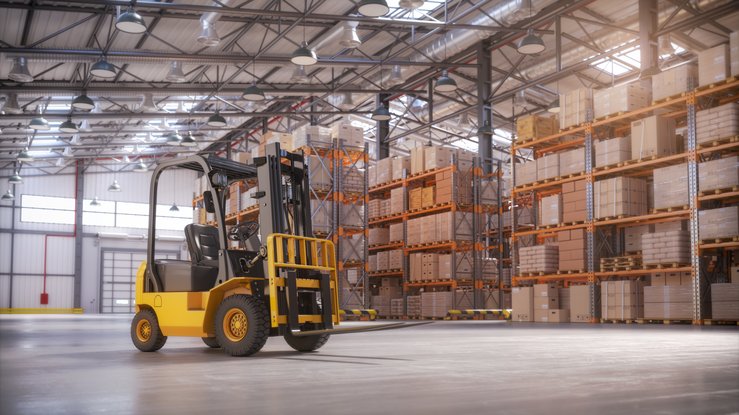

A Montana wholesaler’s inventory does not really live in a warehouse. It lives in a trailer, on a highway, between one town and the next town four hours away.
That is not a figure of speech, it is the operating reality of the state. There is no seaport, no major intermodal complex, and no big-box distribution corridor here — freight distances are enormous, and a route is measured in hours between stops. Somebody still has to hold the food, the beverage, the building materials, the agricultural inputs, the veterinary product, and the equipment parts that supply communities hundreds of miles from any metro, and that regional wholesaler’s building in Billings or Missoula is doing work a coastal distribution center never has to do. Demand here comes from distance, not density.
And the goods are yours the whole way. You bought them, you are carrying them on your balance sheet through the mountain pass, and no one is holding them for you. That single fact — owner, not bailee — is what the rest of this page is about.
The state is the spirits wholesaler, and it runs a warehouse to do it
Montana is a control state at the wholesale tier for distilled spirits, and only there — a narrower arrangement than Utah’s and a different one from Idaho’s.
Distilleries, in-state and out, must ship the spirits they intend to sell here to the state liquor warehouse. The Department of Revenue’s Alcoholic Beverage Control Division runs that warehouse and the wholesale distribution out of it, and the agency liquor stores that sell the product at retail are privately operated. So the state is not merely regulating a middle tier — it is occupying one, and running a distribution building to do it.
Beer and table wine are the private opening: those move through licensed private distributors in the ordinary way. A Montana beverage distribution business is therefore a beer-and-wine business, and that inventory is unambiguously the distributor’s own. It is bought, held, trucked, and sold on the distributor’s balance sheet — which is precisely why it belongs on a stock throughput form rather than being treated as goods in somebody’s care.
One policy for goods that are almost never standing still
Stock throughput is one marine-family policy that follows your owned product across the whole journey — at the supplier, in transit, in the warehouse, and out to the customer. It replaces a patchwork: commercial property covers inventory while it sits in a scheduled building and stops at the walls; a cargo policy covers it while it moves; between them sit seams, and losses fall into seams.
In most states that is an argument about mid-import and transload. In Montana it is an argument about Tuesday. When a route runs four hours to its first stop and the trailer is full of product you own outright, the share of your inventory value in motion at any given moment is far higher than a metro wholesaler’s — and the property policy, by design, is not looking at it.
The bonded picture is small and border-flavoured and there is no point inflating it: grantees include the Great Falls airport authority, Butte-Silver Bow, and a zone at Sweetgrass on the Canadian line. Bonded storage here is a northern-border and air-cargo matter rather than a seaport one, and most Montana warehousing has nothing to do with customs at all. Where it does apply, duty-deferred goods are still your goods, and a loss on them reaches the customs position as well as the value.
Two ways Montana ruins your goods without a fire
Winter is the governing peril and it works through the roof and through the thermometer at the same time. Sustained deep cold and heavy accumulated snow on a wide-span, low-slope roof is a genuine structural load problem, and what a roof failure damages is whatever is racked underneath it. Hard freeze reaches sprinkler piping, dock seals, and product that simply cannot take the cold — a heating failure over a long January weekend can ruin a rack of goods in a building that is otherwise perfectly intact.
Then, six months later, the opposite. Wildfire is a serious exposure across the western forests and the eastern rangeland, and smoke and ash can contaminate stored goods without any flame reaching the property. The fire never arrived; the inventory is unsellable anyway. High wind loads a large roof plane, hail turns up on the eastern plains, and flood is its own placement. Earthquake is not the Montana story.
Read all of that as an owner. In both signature cases — the freeze and the smoke — nothing burned, nothing was stolen, and the building is standing. The goods are simply gone as a saleable asset, and they were your goods.
Sued for a product you never made
Products liability follows the chain of distribution, and a claim over a product that injures somebody or damages property can reach a seller in that chain — not only the manufacturer. Any Montana distributor who puts a private label on a product, or who is the first U.S. seller of an imported one, is inside that chain regardless of who made it, and the importer’s position is the exposed one: when the actual maker sits beyond the practical reach of a U.S. claim, the importer is the party a claim can actually reach. General liability answers this through the products-completed-operations hazard.
On the people side, Montana is a workers compensation private market — a competitive state fund alongside private insurers, which is not the monopolistic arrangement Wyoming has next door. The injuries are forklift contact, dock and trailer falls, product off racking, and lifting strain, with ice in the yard driving frequency for half the year. And a distribution business has two injury populations, not one — the warehouse crew and the route drivers who spend the day on commercial auto exposure. One point of vocabulary this trade forces: your insurance carrier writes the policy; a motor carrier hauls the freight. Umbrella liability sits above all of it when a customer contract asks for limits the primary lines cannot reach.
Where Montana distributors and wholesalers concentrate
Billings
The state’s largest wholesale base, sitting on I-90 and supplying an eastern trade area measured in hours rather than miles. Owned inventory here is deep because resupply is slow — a distributor cannot run lean when the next delivery is a day away, so the value on the rack is structurally higher than a metro peer would carry.
Missoula
The western distribution anchor on I-90, serving mountain communities where a truck may cross a pass to reach a single customer. That transit leg is the exposure: owned goods spend a large share of their working life on the road, and a property policy that stops at the building walls does not follow them onto it.
Great Falls
The I-15 corridor north toward the Canadian line, with a foreign-trade zone grantee at the airport authority. Bonded storage in Montana is a northern-border and air-cargo phenomenon rather than a seaport one, and an importer holding duty-deferred goods here owns product on which duty has not yet been paid — so a loss touches the customs position as well as the value.
Bozeman
The fastest-growing consumer market in the state, pulling food, beverage, and building-materials wholesalers into a replenishment role they did not previously carry. Rapid turnover is not a lower exposure: it means the value on hand at any moment understates the annual volume passing through the chain of distribution, and the products liability that follows it.
Butte and Helena
The I-15 and I-90 junction country, and the mining and industrial supply distribution that goes with it. Heavy, high-value, slow-moving inventory means a single damaged pallet can be a meaningful share of a season’s margin — and the replacement lead time, not the repair time, is what drives the business-income conversation.
Kalispell and the northwest
Regional wholesaling into the Flathead, where wildfire season and deep winter both reach the same warehouse. Smoke and ash can contaminate stored goods without a flame ever touching the property, which is a loss of owned product that no fire report will ever describe.
If the goods are not yours, you are on the wrong page
A signpost. This page is for the business that owns what it sells. If your Billings or Missoula building holds another company’s inventory for a fee — or if you are a state-licensed commodity warehouse taking in a producer’s crop, issuing a state-form warehouse receipt and standing behind it with surety — then the goods are not owned stock. They are a bailment, and your lead line is warehouse legal liability, not stock throughput. That turns on the storage terms and the receipt rather than on your purchase terms, and it has its own page: warehouse insurance in Montana.
Some Montana businesses run both models under one roof — their own distribution book alongside storage for somebody else. If that is you, we place both, and we draw the line between them before anything binds.
Montana distributor and wholesaler insurance FAQs
Can I distribute spirits at wholesale in Montana?
No. Montana is a control state at the wholesale tier for distilled spirits, and only there. Distilleries — in-state and out — must ship the spirits they intend to sell in Montana to the state liquor warehouse; the Department of Revenue’s Alcoholic Beverage Control Division runs that warehouse and the wholesale distribution out of it, and the agency liquor stores that sell the product at retail are privately operated. So the state is running a distribution warehouse of its own. Beer and table wine are different: those move through licensed private distributors in the ordinary way. A private Montana beverage distribution business is therefore a beer and wine business, and that inventory is genuinely the distributor’s own — bought, held, and sold on its own balance sheet, which is what makes it a stock-throughput exposure rather than a bailment.
Why does a landlocked wholesaler need a marine-family policy?
Because the form follows goods, not water. Stock throughput is one marine-family policy that covers your owned product across the whole span — at the supplier, in transit, into your warehouse, and out to the customer. Montana has no seaport, no major intermodal complex, and no big-box distribution corridor, and it would be dishonest to pretend otherwise. What Montana has instead is distance. Freight distances here are enormous and a wholesaler’s route is measured in hours between stops, which means owned inventory spends more of its life moving than a coastal distributor’s does. A commercial property policy insures that inventory while it sits in a scheduled building and stops at the walls; a cargo policy insures it while it moves; and between the two sit seams. Stock throughput closes them on one form. The marine name is a historical artifact of where the coverage came from, not a description of where it works.
How does deep cold actually cause a loss to my inventory?
Two ways, and neither involves a fire. The first is direct: hard freeze reaches sprinkler piping, dock seals, and any product that cannot take it, and freeze damage to stored goods is a genuine loss cause in Montana in a way it simply is not in a desert state. A heating failure over a long weekend in January can ruin a rack of product with the building otherwise untouched. The second is structural: sustained deep cold and heavy accumulated snow on a wide-span, low-slope warehouse roof is a real load problem, and what a roof failure damages is whatever is stacked beneath it. Both are property-side events for goods at rest, which is why the property placement matters here — but both also reach goods in transit, on a truck crossing a pass in February, where a property policy does not follow.
Can wildfire smoke destroy goods that never caught fire?
Yes, and it is one of the more expensive surprises in this state. Wildfire is a serious summer exposure across the western forests and the eastern rangeland, and smoke and ash are capable of contaminating stored goods without any flame reaching the property — food, packaging, textiles, and anything with a porous surface are the obvious candidates. The building is intact, the fire never arrived, and the inventory is unsellable. For an owner of goods that is a total loss, and how a policy responds to smoke and contamination rather than to fire damage is a wording question worth reading before the season rather than after it.
Is Montana a monopolistic workers compensation state?
No, and the distinction matters because Wyoming next door is a different arrangement. Montana runs a private-market workers’ compensation line: the state has a competitive fund that competes with private insurers rather than a monopolistic fund that excludes them, so a Montana warehouse employer buys comp in the open market. The exposures are forklift and powered-industrial-truck contact, dock and trailer falls, product coming off racking, and lifting strain — with a cold-weather layer that genuinely matters, because ice on a dock apron and in a yard is a slip-and-fall generator for five or six months of the year. Cold-room and freezer work in a food-distribution building adds its own injury pattern. And a distributor has two injury populations rather than one: the warehouse crew and the route drivers.
Am I in the products-liability chain if I only resold the product?
Yes. Products liability follows the chain of distribution, and a claim over a product that injures a person or damages property can reach a seller in that chain, not only the manufacturer. Any Montana distributor who puts a private label on a product, or who is the first U.S. seller of an imported one, sits in that chain regardless of who made it — and the first-U.S.-seller posture is the sharper one, because when the actual maker is beyond the practical reach of a U.S. claim, the importer becomes the party a claim can actually reach. Standard general liability answers this through the products-completed-operations hazard. Commodity dealers licensed by the Department of Agriculture, who buy grain on their own account, hold owned inventory in the most literal form there is and should read their limits with that in mind.
Get a Montana distributor insurance quote
Quotes in 1–2 hours during business hours.