
States we serve · Montana
Warehouse business insurance in Montana
For the commodity warehouse issuing a state-form receipt, the third-party operator in Billings or Missoula holding stock for owners who have never seen the building, and the cold rooms that supply towns a truck-hour apart.
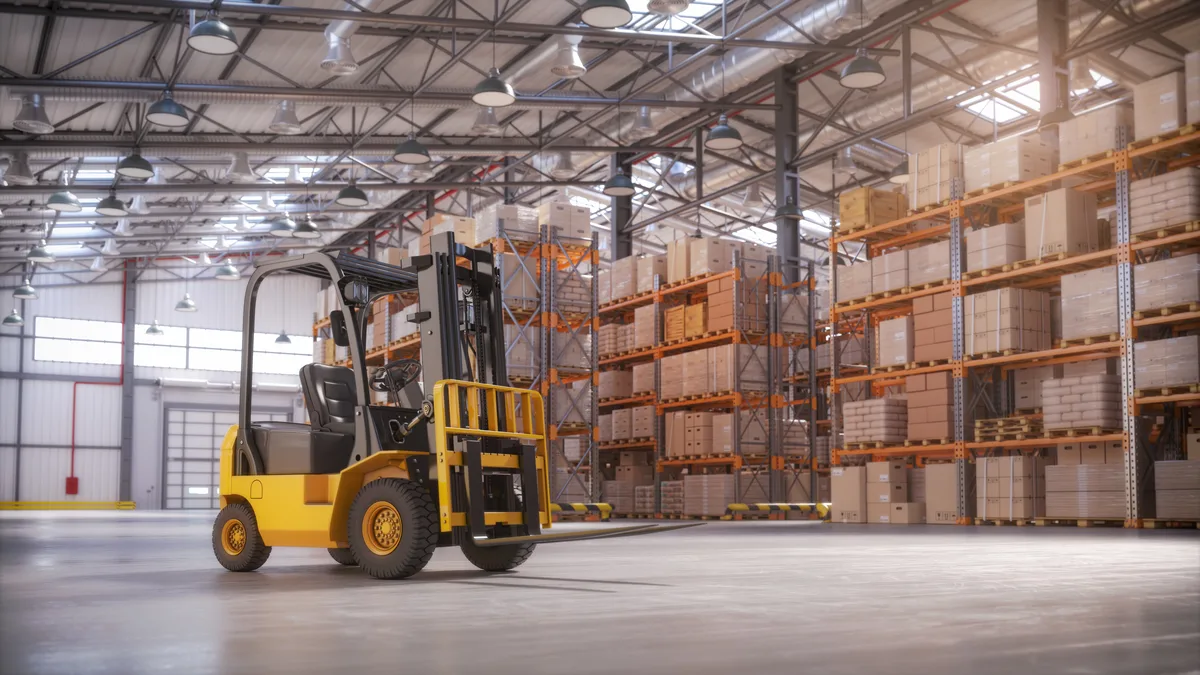

Montana’s warehousing demand comes from distance, not density. Somebody has to hold the food, beverage, building materials, agricultural inputs, and equipment parts that supply towns hundreds of miles from any metro — and that regional warehouse in Billings or Missoula is doing work a coastal distribution center never has to do. This is not a fulfillment-corridor state, there is no seaport, no major intermodal complex, and no big-box belt, and there is no point pretending otherwise. What there is, is a smaller number of buildings holding a larger share of what the state depends on.
A great many of those buildings hold goods that belong to somebody else. That is the entire subject of this page.
A receipt that has to admit what it is
The Montana warehouse that holds other people’s goods is, more often than not, holding grain. The Department of Agriculture’s Commodity Services Bureau licenses commodity warehouses — elevators, mills, and grain storage facilities paid to store or handle commodities — with a surety requirement, mandatory records of everything stored and shipped, and a detail worth pausing on: a state-form warehouse receipt that must state on its face that the warehouse operates under a state license. The document has to declare its own regulator. That is a bailment with a license and a bond wrapped around it, and the producer who hands over a crop can read the protection right off the paper.
Now put that next to the other Montana warehouse — the third-party operator in Billings holding pallets for a company that has never seen the building. Its receipt says nothing of the kind, because there is nothing to say. Montana has no general public-warehouse licensing statute for merchandise or fulfillment warehousing. Outside commodities, the bailment and the receipt govern, and that is the whole of the operator’s position.
Custody without a license
Accepting another company’s freight makes you a bailee: you hold property that is not yours, and you answer for it while it sits in your care, custody, and control. Your general liability policy will not answer for a loss to those goods, and that is not an oversight — a standard form excludes damage to personal property in your care, custody, or control, which describes the entire contents of your building with uncomfortable accuracy.
So the loss you worry about most is carved out of your foundation policy by its own terms. Warehouse legal liability exists to answer exactly what that exclusion removes, and it leads a Montana program. What sizes the limit is the value of goods that never appear in your accounts — and in a state where a single regional building may hold a meaningful share of a customer’s entire western inventory, that number is bigger than the operator’s own balance sheet suggests. The storage agreement and its limitation-of-liability language is the other half of the sizing, and it is the only document in the file that will have anything useful to say after a loss.
Smoke reaches goods that fire never touches
Most states give a warehouse one way to lose a customer’s inventory to fire: the building burns. Montana gives you two. Wildfire is a serious summer exposure across the western forests and the eastern rangeland, and smoke and ash can contaminate stored goods without any flame reaching the property.
Think about what that means for a bailee. The building stands. The racking is straight. The sprinklers never ran, and your commercial property policy is looking at a structure that is essentially undamaged. And a customer’s food, packaging, textiles, or consumer goods are unsaleable — a total loss, in a clean warehouse. There is no property claim of any consequence here, and there is a very large bailee claim. It is the sharpest illustration in this state of why the two lines are not substitutes: property covers what is yours and stays put; warehouse legal liability covers what is theirs and sits in your care. This is the model we build the warehouse insurance program around.
Winter, which governs
The other half of the year runs the other way. Sustained deep cold and heavy accumulated snow on a wide-span, low-slope roof is a real structural load problem in Montana, and hard freeze reaches sprinkler piping, dock seals, and any product that cannot take it. Freeze damage to stored goods is a genuine loss cause here — a heating or roof failure in a deep freeze can ruin a customer’s inventory in a building that never caught fire and never blew down. Cold and freezer storage for food distribution is a modest but real bailment business in this state, and it carries a peril most bailees elsewhere never think about.
A competitive fund, and not the one next door
Montana workers compensation is a private-market line. The state has a competitive fund that competes with private insurers — not a monopolistic fund, and not the arrangement Wyoming has across the border. Coverage here is placed and priced.
The exposure is forklift and powered-industrial-truck contact, dock and trailer falls, product coming off racking, and lifting strain, with a cold-weather layer that is not decorative: ice on a dock apron and in a yard is a slip-and-fall generator for five or six months of the year, and cold-room and freezer work in a food-distribution building adds its own injury pattern on top.
What moves the price of a Montana warehouse program
We do not publish figures. What underwriters actually look at here:
- The value of the customers’ goods in your care, which sizes the bailee limit and is the number owners consistently understate.
- Wildfire exposure at the site — the surrounding fuel, the defensible space, and the smoke and contamination question as distinct from the flame question.
- The roof and the heat — snow-load design, drift geometry, and what happens to stored product when the building loses temperature.
- What you hold — commodities under a state license, food and cold-chain product, drugs under a per-location pharmacy license, or dry consumer freight.
- Your storage agreements, and whether a large customer negotiated the limitation of liability away.
- Claims history, which moves pricing further than the rest of this list put together.
Major Montana warehouse markets
Billings
The largest regional distribution point in the state, on I-90, and the natural place to hold inventory for owners who are not in Montana. A bailee here serves a trade area measured in hours rather than in miles, which means goods sit longer, and a long dwell time shifts the loss away from handling damage and toward the single catastrophic event.
Missoula
Western distribution in a forested valley, where wildfire is not a background statistic but a summer operating condition. Smoke and ash can contaminate a customer’s stored goods with no flame ever reaching the building — a bailee loss with an undamaged warehouse standing over it.
Great Falls
An air-cargo zone held by the airport authority and a northern position on I-15 running up to the Canadian line. Bonded custody exists here in a modest way, and a warehouse that admits duty-deferred goods answers to customs on top of its duty of care to the owner — an obligation most Montana operators never take on and should not assume they have avoided by accident.
Butte
A zone grantee at the I-90 and I-15 junction, and a mining- and industrial-supply custody market. The goods held here are heavy and expensive per unit, and heavy goods produce damage claims that are hard to argue about after the fact.
Bozeman
A fast-growing consumer market pulling regional replenishment space into a valley with limited industrial land. A smaller building holding a larger share of somebody else’s inventory raises the ceiling on a bailee loss without changing anything visible about the operation.
Kalispell
Northwestern distribution serving a dispersed population, with hard winters and a fire season on both sides of it. A cold room in this part of the state is exposed at both extremes — a heating failure in February and a smoke event in August threaten the same customer’s goods for opposite reasons.
If the goods are yours, this is the wrong page
A signpost before the questions. This page is for the operator holding other people’s property. If your Montana business owns what it sells — a regional food, beverage, restaurant-supply, building-materials, or animal-health wholesaler covering an enormous territory, or a commodity dealer buying grain on its own account — then your inventory is not a bailment, and your program leads from stock throughput and products liability rather than from warehouse legal liability. In a state where a delivery route crosses distances that would cross three states elsewhere, more of your owned stock is in transit for longer, which is exactly the gap a warehouse-only property policy leaves open. That has its own page: distributor and wholesaler insurance in Montana.
In a state this size, a good many operators do both. If yours does, we place both halves — the distribution operation running your own goods out across the territory and the wholesale book behind it — and the seam between what you hold and what you own is the first thing we map.
Montana warehouse insurance FAQs
Does Montana license warehouses?
Only agricultural ones. There is no general public-warehouse licensing statute here for merchandise or fulfillment warehousing. What the state licenses is commodities: the Montana Department of Agriculture’s Commodity Services Bureau licenses commodity warehouses — elevators, mills, and grain storage facilities paid to store or handle commodities — with a surety requirement, mandatory records of everything stored and shipped, and a state-form warehouse receipt that must state on its face that the warehouse operates under a state license. Facilities licensed under the federal warehouse act are not separately state-licensed. None of that reaches a distribution warehouse. Outside commodities, the bailment and the receipt govern, and that is the whole of it.
What answers for a customer’s goods when they are damaged in my building?
Warehouse legal liability — the bailee line. When you accept another company’s property you take on care, custody, and control of goods that are not yours, and you answer for them while they are in your keeping. Your general liability policy will not: a standard form excludes damage to personal property in your care, custody, or control, which is an exact description of everything in your racking. The loss you actually fear is carved out of your foundation policy by its own terms, and warehouse legal liability is written to answer precisely what that exclusion removes.
Can wildfire damage stored goods without burning the building?
Yes, and in Montana that is the version of the peril worth planning for. Wildfire is a serious summer exposure across the western forests and the eastern rangeland, and smoke and ash are capable of contaminating stored goods without any flame reaching the property at all. For a bailee this is a peculiar and expensive loss: the building is intact, the racking is intact, the sprinklers never ran — and a customer’s inventory is unsaleable. The claim is not about the property. It is about the goods, and about who owns them.
Is Montana a monopolistic workers compensation state?
No, and it is important not to confuse it with Wyoming next door. Montana workers compensation is a private-market line: the state has a competitive fund that competes with private insurers, which is a different arrangement entirely from a monopolistic fund. Coverage is placed, and it is priced. The warehouse exposure here is forklift and powered-industrial-truck contact, dock and trailer falls, product coming off racking, and lifting strain — with a cold-weather layer that matters, because ice on a dock apron and in a yard is a slip-and-fall generator for five or six months of the year, and cold-room and freezer work in a food-distribution building adds its own injury pattern.
I store pharmaceuticals for a manufacturer. Does Montana license that?
It does, and the rule is aimed straight at warehouses. The Montana Board of Pharmacy, inside the Department of Labor and Industry, licenses wholesale drug distributors and third-party logistics providers annually, and requires a separate license for every separate location where drugs are stored. A contract warehouse that holds and ships drugs it never owns is therefore licensed — building by building — precisely because the goods belong to somebody else. Care, custody, and control is written into the license.
What is the peril that most reliably threatens a Montana warehouse roof?
Winter, and it governs. Sustained deep cold and heavy accumulated snow on a wide-span, low-slope roof is a real structural load problem here, and hard freeze reaches sprinkler piping, dock seals, and any product that cannot take it — freeze damage to stored goods is a genuine loss cause in Montana in a way it simply is not in a warm state. High wind loads a large roof plane and hail turns up on the eastern plains. Flood is its own placement. Earthquake is not the Montana story, and we will not pretend otherwise.
Get a Montana warehouse insurance quote
Quotes in 1–2 hours during business hours.