
States we serve · New Hampshire
Distributor and wholesaler business insurance in New Hampshire
For the beer wholesalers, consumer-goods distributors, and importers who own what they sell — in a state that keeps the spirits and wine wholesale tier for itself and leaves the rest of the shelf to you.
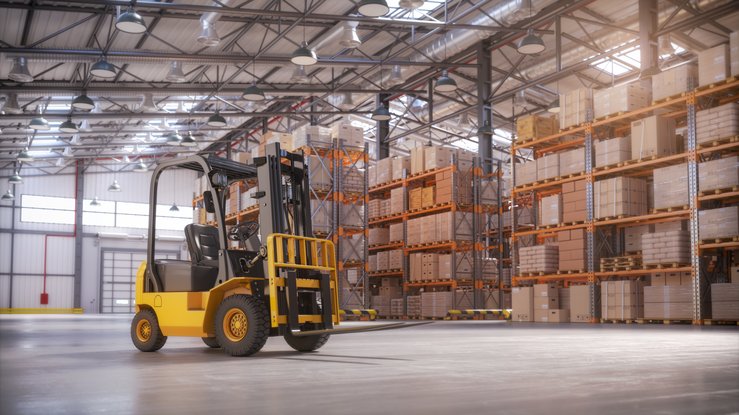

There is a shelf in New Hampshire that no private wholesaler will ever own, and it is the biggest one in the store.
The New Hampshire Liquor Commission is both the wholesaler and the retailer for spirits and wine. It runs the state’s own liquor and wine outlets — including the famous ones built directly on I-93 and I-95, selling to travellers in a state with no general sales tax. There is no private spirits or wine wholesale tier to enter, because the state already occupies it at both ends; a supplier looking for the New Hampshire market seeks a vendor listing with the Commission, not a distributor. What is left to the private side is beer. Malt beverages move through private wholesale distributors licensed by the Commission, and that is the whole of the opening. A New Hampshire beverage distribution business is, in practice, a beer business.
That is unusually clarifying for an insurance conversation, because it tells you immediately what is on the balance sheet. The beer is yours. You bought it, you hold it, you sell it, and it is your inventory at every point in between. So is everything else a New Hampshire wholesaler carries — the consumer goods heading into the border trade, the components landing at Portsmouth, the freight coming through Manchester by air. The goods are yours. That is the page.
Stock throughput does not need an ocean
New Hampshire is not a container gateway, and it would be dishonest to write it as one. Portsmouth is a working bulk and breakbulk port; Manchester carries air freight; the rail is thin and the trucks do the work. So the reflex answer — “stock throughput is for importers with ships” — deserves a straight response.
Stock throughput follows goods, not water. It is one marine-family policy that covers your owned product across the whole span: at the supplier, in transit, through a port or an airport, into your building, and out to the customer. The marine name is a historical artifact of where the coverage came from, and the form travels perfectly well down I-93 on a pallet. What it replaces is the patchwork: commercial property insures inventory while it sits in a scheduled building and stops at the walls; a cargo policy insures it while it moves; and between the two are seams where a loss falls through. For a wholesaler whose product spends most of its working life on a truck between Nashua and the far side of the state, that seam is not theoretical.
The state’s foreign-trade zone is granted to the Pease Development Authority at Portsmouth and its sites run well past the waterfront — the marine terminal, the Portsmouth industrial park, Pease International Tradeport, and Manchester’s airport are all inside it, and a reorganisation extended the service area across most of southern and central New Hampshire. So a distributor here can hold imported components in a duty-deferred posture without living on the coast. Those goods are still yours, and a loss on them touches the customs position as well as the value.
Snow, and the season underneath it
Snow load is the New Hampshire warehouse peril, full stop. A big flat roof accumulates snow, then ice as thaw and refreeze work on it, and the failure modes are drainage backup, drift loading against parapets and rooftop units, and in a hard winter structural deflection over racked inventory.
Read that as an owner rather than as a landlord. The building can be repaired. The owned stock underneath it is the loss, and it is a loss that arrives without a fire, without a break-in, and often without much warning. Freeze runs a close second and works the same way: an unheated or partially heated bay is where a wet sprinkler line lets go and soaks a rack of product that was perfectly fine an hour earlier. The seacoast at Portsmouth and Hampton takes nor’easter wind and coastal flooding, but the industrial base is inland, along I-93 and the Merrimack valley, where weight on the roof is what matters.
Selling what somebody else made
A wholesaler that never manufactured anything can still be sued over what it sold. Products liability follows the chain of distribution, and a claim over a product that injures a person or damages property can reach a seller in that chain — not only the maker.
It is sharpest for the importer. A distributor taking title to components through the Portsmouth marine terminal, or to freight arriving by air at Manchester, is the first U.S. seller of a product it did not design and could not fully inspect; when the actual manufacturer sits beyond the practical reach of a U.S. claim, the importer becomes the realistic target. General liability answers this through what the standard form calls the products-completed-operations hazard, and the honest work is sizing those limits against the products you genuinely handle. A beer wholesaler and a distributor of imported aerospace components are not the same underwriting conversation, and they should not receive the same limit by default.
The trucks, the crew, and the ice
A distribution business moves its own product, which means commercial auto on the route fleet — and a note on language this trade cannot avoid: your insurance carrier is the company that writes your policy, which is an entirely different thing from a motor carrier that hauls goods for hire. In a contract discussion the two words are not interchangeable.
Workers compensation is a private-market line here, and the exposure has two populations, not one: the warehouse crew lifting, picking, and taking product out of racking, and the route drivers loading, unloading, and working a lift gate. From November through March, ice in the yard and on the dock plate is a frequency driver for both of them. Above it all, umbrella liability is what a national customer or a landlord asks for once contract limits climb past the primary lines.
Where New Hampshire distributors and wholesalers concentrate
Manchester
The state’s commercial center and the anchor of the I-93 corridor, with the regional airport carrying air freight and sitting inside the state’s foreign-trade zone. An importer bringing goods in by air here takes on first-U.S.-seller status the moment the freight is its own — which is a products exposure attached to a shipment that never touched a container terminal.
Nashua and Salem
The border towns, where the absence of a general sales tax pulls Massachusetts consumption north across the line. That builds a genuine retail-facing wholesale book — but it also means a distributor’s owned inventory is sized for a customer base that lives in another state, so a demand shock at the border is a slow-moving inventory problem rather than a fast one.
Londonderry
Distribution buildings on the I-93 spine serving Greater Boston at New Hampshire land costs. Owned stock concentrates here in large single-site holdings, which is a catastrophe-accumulation question before it is a logistics one: one roof failure in a February thaw reaches the whole season at once.
Portsmouth
The state’s marine terminal, run by the Port Authority under the Pease Development Authority, and the center of the foreign-trade zone. It is a working bulk and breakbulk port rather than a container gateway, so the owned inventory arriving here is raw material and aerospace or advanced-manufacturing components — high value per unit, long lead times, and a business-income tail if a shipment is lost.
Pease and the seacoast
Advanced manufacturing and aerospace generate inbound component storage, and the Pease International Tradeport sits inside the foreign-trade zone alongside the Portsmouth industrial park. A distributor holding duty-deferred components owns goods on which duty has not yet been paid — so a loss there touches the customs position as well as the value.
Concord and Rochester
Regional wholesaling into a dispersed population, north of the Boston overflow belt. Route trucks cover long distances between stops through five months of winter, which puts owned product on the road in conditions where the transit exposure is genuinely larger than the storage exposure.
If the goods are not yours, you are on the wrong page
A signpost, honestly meant. This page assumes you own what you store. If your building along I-93 holds other companies’ inventory for a fee — a public, 3PL, contract, or cold-storage operation, much of it serving customers whose end market is Massachusetts — then the goods are not owned stock. They are a bailment, and the lead exposure is not stock throughput but warehouse legal liability, the bailee line for goods in your care, custody, and control. That turns on your storage contract rather than on your purchase terms, it is a different policy stack, and it has its own page: warehouse insurance in New Hampshire.
Some New Hampshire businesses do both — they distribute their own product and warehouse someone else’s in the same building. If that is you, we place both, and we draw the line between them before anything binds.
New Hampshire distributor and wholesaler insurance FAQs
Can I start a spirits or wine wholesale business in New Hampshire?
No — and this is the defining fact of beverage distribution here. New Hampshire is a control state, and it controls more of the chain than almost anywhere else: the New Hampshire Liquor Commission is both the wholesaler and the retailer for spirits and wine, operating the state’s own liquor and wine outlets, including the ones built directly on I-93 and I-95 that sell to travellers in a state with no general sales tax. There is no private spirits wholesale tier to join. A supplier seeks a vendor listing with the Commission rather than a distributor. Beer and malt beverages are the opening: those move through private wholesale distributors licensed by the Commission. So a New Hampshire beverage distribution business is, in practice, a beer business — and the inventory in that business is genuinely yours, which is exactly why it is a stock-throughput exposure rather than a bailment.
What is stock throughput, and does it matter in a state with no container port?
It matters, and the reason it matters is that the coverage follows goods rather than water. Stock throughput is one marine-family policy that covers your owned product across the whole span — at the supplier, in transit, through a port or an airport, into your warehouse, and out to your customer. New Hampshire is not a container gateway; Portsmouth is a bulk and breakbulk port and Manchester carries air freight. But the marine-family form does not require an ocean: it follows owned inventory across land transit and inland movement just as readily. The alternative is a patchwork — property covering the goods only while they sit in a scheduled building, cargo covering them only while they move, and a seam between the two where a loss can fall. For a wholesaler whose product spends its life on I-93, that seam is where the exposure actually lives.
Why is snow load the peril underwriters ask about first?
Because it is the peril that reaches your inventory through the roof. A big, flat distribution roof accumulates snow, then ice as thaw and refreeze work on it, and the failure modes are drainage backup, drift loading against parapets and rooftop units, and — in a bad winter — structural deflection or collapse over racked goods. Freeze runs a close second: an unheated or partially heated bay is where a wet sprinkler line breaks and soaks stored product without a fire ever starting. The seacoast at Portsmouth and Hampton takes nor’easter wind and coastal flooding, but the state’s industrial base is overwhelmingly inland along I-93 and the Merrimack valley, where wind is secondary and weight on the roof is not. For an owner of goods the point is simple — the building can be repaired; the season underneath it may not be recoverable.
Am I exposed to products liability if I only distribute what somebody else made?
Yes. Products liability follows the chain of distribution, and a claim over a product that injures somebody or damages property can reach a seller in that chain, not only the manufacturer. The exposure is sharpest for the importer — a New Hampshire distributor bringing goods in through the Portsmouth marine terminal or by air freight through Manchester is the first U.S. seller of that product, and when the actual maker sits beyond the practical reach of a U.S. claim, the importer is the party a claim can reach. Standard general liability answers this through the products-completed-operations hazard, and sizing those limits against the products you actually handle is the work.
Does a New Hampshire food or beverage distributor need a state license?
On the food side, yes, and the reach is broader than people expect: anyone who manufactures, processes, stores or distributes food in New Hampshire must be licensed by the Food Protection Section of the Department of Health and Human Services — that reaches wholesale distributors and storage operations, not merely kitchens. Prescription-drug wholesale distribution is licensed by the New Hampshire Board of Pharmacy through the Office of Professional Licensure and Certification, and applies to resident and non-resident distributors alike. Beyond that the state keeps its food and drug distribution regime lean — there is no separate agriculture-department warehouse registration layered on top. Beer wholesalers hold a distributor license from the Liquor Commission.
Is workers compensation a private-market line in New Hampshire?
Yes — comp is bought from private insurers here. Inside a distribution business the exposures are physical and predictable: powered-industrial-truck contact and tip-over, workers struck by product falling out of racking, lifting and repetitive strain on pick lines, and dock injuries at the trailer. Winter adds a layer a warmer state does not carry — ice in the yard and on the dock plate is a real frequency driver from November through March. And remember that a distributor has two injury populations rather than one: the warehouse crew doing the lifting and picking, and the route drivers loading, unloading, and working a lift gate in the same weather.
Get a New Hampshire distributor insurance quote
Quotes in 1–2 hours during business hours.