
States we serve · New Jersey
Distributor and wholesaler business insurance in New Jersey
For the importers, beverage wholesalers, food and pharmaceutical distributors, and consumer-goods houses whose containers are opened at Elizabeth — and whose inventory is theirs from the foreign supplier’s dock all the way to the customer.
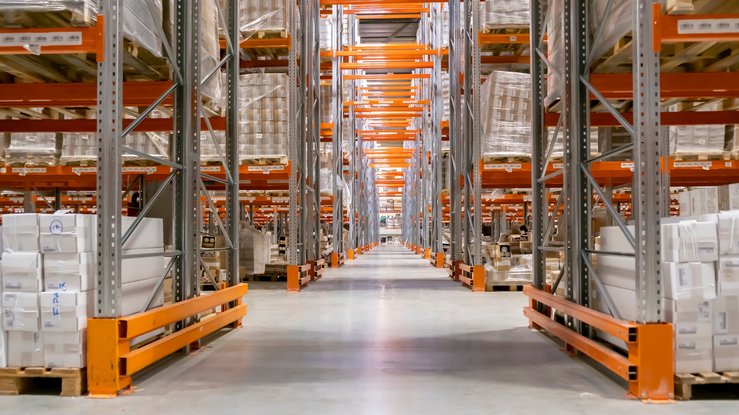

New Jersey is where the container gets opened. That is not a slogan — it is the economic fact the entire state’s warehouse map arranges itself around, and it is the single most important thing about insuring a distributor here.
The Port of New York and New Jersey — Port Newark, the Elizabeth marine terminals, Bayonne, the Global terminal in Jersey City — is the Northeast’s principal container gateway. Goods land, and they have to go somewhere within a drayage turn, which is why the buildings cluster tight along the Turnpike and out to Exit 8A rather than spreading across the state. And at some point in that arc, a box of merchandise made on the other side of the world stops being a foreign supplier’s inventory and becomes yours: bought, owned, on your balance sheet, and staying there until a customer takes it off your hands.
New Jersey is the place that transition happens. Which means New Jersey is where two exposures are at their sharpest anywhere in the country — the span your owned goods travel before they ever reach you, and the position you inherit as the first U.S. seller of a product you did not make.
The span begins at the foreign supplier, not at your dock
Ask an importer when its risk starts and the answer is usually “when the truck backs in.” Ask the purchase terms and the answer is often weeks earlier and an ocean away. That gap is where uninsured losses live.
Stock throughput is one marine-family policy written to cover your owned product across the entire span — at the foreign supplier, in ocean cargo on the water, at the marine terminal, through the drayage move, on the rack, and out to the customer. It exists because the alternative is a patchwork. Commercial property insures inventory while it sits in a scheduled building and stops at the walls. A cargo policy insures it while it moves. Between the two lie seams — mid-ocean, on the terminal, in a transload, in somebody else’s facility — and a New Jersey importer’s stock spends most of its working life in precisely those places.
So the question that actually matters is: when does the risk of loss pass to you? Your terms of sale may hand you ownership at the supplier’s dock, at the port of loading, or on arrival. Whichever it is, that is when your exposure begins — and if your coverage begins later, there is a stretch of ocean where your own inventory is traveling under somebody else’s policy, on somebody else’s terms, with your money on it. A throughput placement is written to start where your risk actually starts. We read the purchase terms alongside the policy for that reason, and not after a loss.
The customs position reinforces the point. Foreign-Trade Zone 49 covers the New Jersey side of the harbour with the Port Authority as grantee, and its service area reaches across Hudson, Essex, Union, Bergen, Middlesex, Morris, Passaic, Somerset, and Monmouth counties. That is genuinely unusual: zone status is available across the very counties where the state’s distribution buildings already stand, so duty-deferred and bonded storage is an ordinary option here rather than an exotic one. Duty-deferred goods are still your goods — and a loss on them touches the duty as well as the value.
The importer at the head of the chain
A distributor who never manufactured anything can still be sued over what it sold. Products liability follows the chain of distribution, and a claim over a product that injures a person or damages property reaches a seller in that chain — not only the maker.
For the New Jersey importer this is the defining liability of the business. You cleared a container in Elizabeth. You are the first U.S. seller of goods designed and assembled somewhere else, goods you could not fully inspect and had no part in making. And when the actual manufacturer sits beyond the practical reach of a U.S. claim, you are the party a claim can actually reach. General liability answers this through what the standard form calls the products-completed-operations hazard, and sizing those limits against the products you genuinely handle — rather than against a revenue band — is most of the work. A pallet of industrial components and a pallet of a consumable good are not the same underwriting question, and they should not get the same limit by default.
It is also the cleanest way the two halves of this trade divide. A wholesale business bought the product and resold it, so it is inside the chain. A warehouse that merely stored the same defective product for its owner is largely outside it — the goods were never theirs to sell. Same pallet, same building, entirely different liability.
Water at dock-door height
The peril that actually defines New Jersey warehousing is not fire and it is not wind. It is water.
The port lowlands, the Meadowlands, and the Turnpike-adjacent industrial flats sit low and drain slowly. Tropical remnants and coastal storms have repeatedly pushed water into ground-level dock doors — which is exactly the height at which inventory sits. A distributor’s roof can be perfectly intact and its entire floor-level stock ruined, and that is the loss this state produces over and over.
Which is why flood is its own placement, not an afterthought bolted to the property policy, and why a New Jersey distribution owner should expect the flood question first rather than last. Wind and hurricane exposure on large roof planes is real as well; hail is a lesser concern than it is inland; seismic is not a New Jersey story. Commercial property remains the right instrument for the building, the racking, the owned stock that stays put, and the business income lost while the site is down. It is simply not the instrument for the water, and it is not the instrument for goods that have left.
A licensed middle tier, administered from the Attorney General’s office
New Jersey is a license state on a strict three-tier footing. The state sells nothing at wholesale. Private wholesalers hold state-issued licenses that the Division of Alcoholic Beverage Control administers from within the Office of the Attorney General — an unusual home for a beverage regulator, and one that colours the compliance relationship.
A beverage wholesaler here buys from suppliers and sells only to licensed retailers and other licensed wholesalers, and the tiers are held apart by ownership rules: a supplier may not own its distributor, and a distributor may not own the retail accounts it serves. One structural quirk is worth knowing — wholesale licenses are issued at the state level rather than the municipal level, which is the reverse of how New Jersey handles most retail licenses.
For an insurance program the consequence is direct. Your inventory is genuinely yours at every step of the middle tier. Nobody is holding it for you; you are holding it for yourself. That is a stock-throughput exposure and a products exposure, and it is not a bailment.
Food, drugs, and a form that asks whose warehouse it is
New Jersey is unusually explicit about warehouses on the food side. The Department of Health licenses wholesale food and cosmetic establishments, and its application asks the operator to declare whether the facility is a public or a company warehouse and whether it is refrigerated. The state is naming the owner-versus-bailee distinction on its own form — which is the same distinction this page is built on, and a useful reminder that the regulator can already tell the difference.
Drug and medical-device manufacturers and wholesalers register separately with the Department of Health rather than with a pharmacy board, which is a departure from most states and reliably catches multi-state distributors out.
And a trap worth naming: the Public Movers and Warehousemen Licensing Act is a household-goods statute administered by the Division of Consumer Affairs. It does not license a contract, public, or fulfillment warehouse holding another company’s pallets, and a distributor should never be told it does. New Jersey has no general commercial public-warehouse license.
The fleet, the crew, and what underwriters actually ask
A distribution business runs its own product to market, which puts commercial auto on the schedule — and a note on language this niche makes unavoidable: your insurance carrier is the company that writes your policy; a motor carrier or freight carrier is a company that hauls goods for hire. In a contract discussion the two are not interchangeable.
Workers compensation runs through the private market here, with an assigned-risk mechanism behind it. In a state whose buildings are largely high-throughput import and fulfillment centers, the claim pattern is dominated by the dock and the aisle: powered-industrial-truck strikes and pinch injuries where lift traffic crosses pedestrian paths, falls from dock edges and trailer gaps, and repetitive lifting strain on pick lines running at port-driven volume. Above it, umbrella liability is what a national retail customer or a landlord asks for once contract limits climb past the primary lines.
We do not print premiums, and any site that does is guessing. What we can tell you is what genuinely drives the pricing conversation for a New Jersey owner of inventory:
- Where the risk of loss passes on your purchase terms — and whether your coverage starts there or later.
- The value under one roof at peak, not the annual sales figure and not an average day.
- What the product is. A products exposure for fasteners and one for a consumable, a child’s product, or anything with an ingestion or contact risk are different conversations.
- Your flood position — dock-door height, the drainage, and whether the placement exists at all.
- How much of the journey you own — ocean leg, terminal, drayage, transload, third-party storage, and your own fleet miles.
- The split between warehouse and driver payroll, and your claims history over the last several years.
Where New Jersey distributors and wholesalers concentrate
Port Newark and the Elizabeth marine terminals
The Northeast’s principal container gateway, and the specific place where an importer’s goods stop being a foreign supplier’s problem and start being an owned asset on a U.S. balance sheet. A distributor clearing here is very often the first U.S. seller of merchandise it did not make and cannot fully inspect — which puts it at the head of the domestic products-liability chain for somebody else’s design.
Bayonne and the Global terminal in Jersey City
The other side of the harbour complex, feeding the same drayage economy. For an owner of goods the exposure begins well before the box lands: ocean cargo sits on the water for weeks under somebody’s policy, and if that policy is the seller’s rather than yours, the handoff point is where a loss becomes an argument rather than a claim.
Carteret
Turnpike-adjacent industrial flats packed with high-throughput import buildings on ground that sits low and drains slowly. Owned inventory here concentrates fast and sits at pallet height, which makes a single-location property limit look thin and makes the flood question the first one on the list rather than the last.
The Exit 8A corridor — Cranbury and Monroe
One of the country’s recognisable distribution submarkets, and the place a container’s contents come to rest after the drayage turn. This is single-site owned-inventory accumulation at a scale most owners underestimate: the value under one roof at peak, not the annual sales figure, is the number an underwriter needs.
Edison
The consumer-goods and electronics distribution belt on the I-287 and Turnpike side of the metro. Fast inventory turnover here is deceptive — high turn means the value on hand at any given moment understates the annual product volume passing through the chain of distribution and the products liability trailing behind it.
The Meadowlands
Low, wet ground with a very large amount of distribution space on it. Tropical remnants and coastal storms have repeatedly put water into ground-level dock doors, which is precisely the height at which inventory sits — a flood loss to owned goods in a building whose roof was never touched.
Newark Liberty and the air-cargo belt
Air freight into the same metro, carrying the high-value and time-critical end of an importer’s book — pharmaceuticals, electronics, and apparel. The stock throughput span for air cargo is shorter in time and far denser in value, which changes the limit conversation without changing who owns the goods.
Trenton and Camden
The southern and Delaware-facing end of the state, serving Philadelphia’s market as much as New York’s. Beverage wholesalers here hold state-issued licenses and own their inventory outright, and their route trucks put a meaningful share of that owned product on the road rather than on a rack at any given moment.
If the goods are not yours, you are on the wrong page
An honest signpost. Everything above assumes you own what you store. If your building instead holds other companies’ freight for a fee — a port-adjacent public or contract warehouse living on transloading and deconsolidation, stripping a box and holding the goods under somebody else’s name until a retailer calls for them — then your inventory is not owned stock. It is a bailment, and your lead exposure is warehouse legal liability, the bailee line for goods in your care, custody, and control. It turns on your storage contract rather than on your purchase terms, it is a different policy stack, and it has its own page: warehouse insurance in New Jersey.
A great many New Jersey businesses do both — they import and distribute their own product and warehouse someone else’s in the same port-adjacent building. If that is you, we place both, and we draw the line between them before anything binds.
New Jersey distributor and wholesaler insurance FAQs
Why is stock throughput the lead coverage for a New Jersey importer?
Because in New Jersey the goods become yours a very long way from your warehouse. Stock throughput is one marine-family policy that follows your owned product across the whole span — the foreign supplier, the ocean leg, the marine terminal at Elizabeth or Newark, the drayage move, the rack at Exit 8A, and the outbound trip to the customer. The alternative is a patchwork: a commercial property policy that covers inventory only while it sits in a scheduled building, plus a cargo policy that covers it only while it moves, with seams between them where a loss falls. A New Jersey importer’s stock spends most of its life in exactly those seams — on the water, on the terminal, in drayage, in a transload. Stock throughput closes them on a single form, and it is largely a manuscript, non-standard market rather than an off-the-shelf one, which means the wording is negotiated: an advantage if somebody reads it, a liability if nobody does.
I only import the product — am I really exposed to products liability?
Yes, and New Jersey is where that exposure is at its sharpest in the country. Products liability follows the chain of distribution, and a claim over a product that injures somebody or damages property can reach a seller in that chain, not only the manufacturer who made it. An importer that clears a container in Elizabeth is the first U.S. seller of that product — it sits squarely in the chain for merchandise it did not make and often cannot fully inspect. When the actual foreign manufacturer sits beyond the practical reach of a U.S. claim, the importer becomes the realistic target for it. Standard general liability answers this through the products-completed-operations hazard, and the work is sizing those limits against the products you actually handle rather than against a generic revenue band: a distributor of industrial components and a distributor of a consumable or a child’s product are not having the same conversation.
When does the risk of loss actually pass to me on an import?
That depends on your terms of sale, and it is the question importers most often answer by accident. Ownership and risk of loss can pass to you at the foreign supplier’s dock, at the port of loading, or on arrival — and whichever it is, that is the moment your exposure begins, not the moment the goods reach your New Jersey warehouse. If risk passes early and your coverage begins late, there is a stretch of ocean where your owned inventory is traveling uninsured by you, under somebody else’s policy, on somebody else’s terms. A stock throughput placement is written to start where your risk actually starts, which is why we read the purchase terms alongside the policy rather than after a loss.
How does the New Jersey three-tier system work for a beverage wholesaler?
New Jersey is a license state on a strict three-tier footing: the state itself sells nothing at wholesale, and private wholesalers hold state-issued licenses that the Division of Alcoholic Beverage Control administers from the Attorney General’s office. A beverage wholesaler buys from suppliers and sells only to licensed retailers and other licensed wholesalers, and the tiers are held apart by ownership rules — a supplier may not own its distributor, and a distributor may not own the retail accounts it serves. One structural quirk is worth knowing: wholesale licenses are issued at the state level rather than the municipal level, which is the reverse of how New Jersey handles most retail licenses. For an insurance program the consequence is simple and important — your inventory is genuinely yours at every step, which makes it a stock-throughput exposure rather than a bailment.
Is flood really the first question for a New Jersey distribution building?
It is, and the reason is the height at which inventory sits. The port lowlands, the Meadowlands, and the Turnpike-adjacent industrial flats sit low and drain slowly, and tropical remnants and coastal storms have repeatedly put water into ground-level dock doors — which is exactly where pallets are. Flood is its own placement, not a property-policy afterthought, so a New Jersey distribution owner should expect the flood question first rather than last. Wind and hurricane exposure on large roof planes is real as well; hail is a lesser concern than it is inland, and seismic is not a New Jersey story. The point for an owner is that the building can be dried out and the inventory usually cannot.
What licensing does a New Jersey food or drug distributor need?
New Jersey is unusually explicit about warehouses on the food side. The Department of Health licenses wholesale food and cosmetic establishments, and its application asks the operator to declare whether the facility is a public or a company warehouse and whether it is refrigerated — the state is naming the owner-versus-bailee distinction on the form itself. Drug and medical-device manufacturers and wholesalers register separately with the Department of Health rather than with a pharmacy board, which is a departure from most states and catches multi-state distributors out. Note what does not apply: the Public Movers and Warehousemen Licensing Act administered by the Division of Consumer Affairs reaches household-goods moving and storage. It is not a license for a commercial distribution warehouse, and it should not be treated as one.
Get a New Jersey distributor insurance quote
Quotes in 1–2 hours during business hours.