
States we serve · North Carolina
Warehouse business insurance in North Carolina
For the contract, 3PL, cold-storage, and pharmaceutical logistics operators along I-85 and I-40 — holding goods that mostly arrived through somebody else’s port and belong to somebody else entirely.
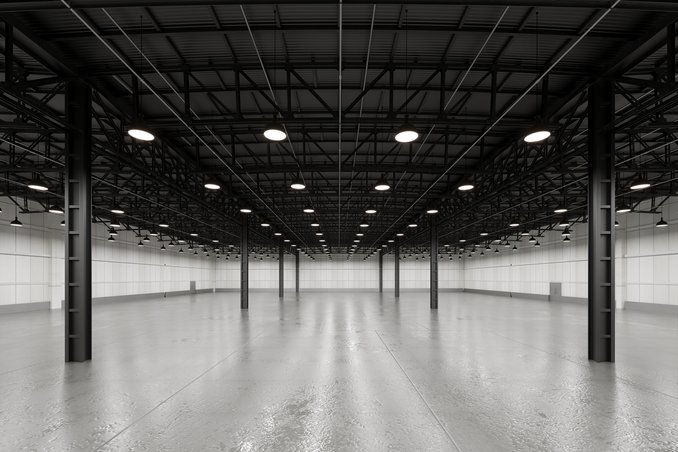

If you run a warehouse in North Carolina that stores pharmaceuticals for a manufacturer, the inspector who walks your floor works for the Department of Agriculture and Consumer Services. Not the Board of Pharmacy. The Drug Program inside the Food and Drug Protection Division licenses drug wholesalers, repackagers, reverse distributors, and third-party logistics providers, while the pharmacy board handles pharmacy, device, and medical-equipment permits instead. The same agriculture division carries the food side.
That is odd enough to be worth a paragraph on its own, and it is also the single clearest statement of what this page is about. A third-party logistics provider that warehouses drugs in North Carolina takes no ownership of them — that is the definition — and it must be licensed to do it. Care, custody, and control, written into a state licensing scheme. The state is not licensing you because you sell something. It is licensing you because you hold something that belongs to someone else.
Cotton, grain, and nothing else
Everywhere outside pharmaceuticals and food, the state has very little to say. North Carolina does license warehouses, but only a narrow slice: under the cotton warehouse law, the agriculture department licenses and bonds a warehouseman who stores cotton for hire, and it also licenses grain dealers. That is the extent of it. There is no general public-warehouse license in North Carolina. A contract, public, or fulfillment warehouse operates under its contract and its warehouse receipt, not a state permit.
So the enormous contract- and third-party-warehouse economy strung along I-85 and I-40 — the Triad crossroads, the Charlotte ring, the cold storage in the east — runs on paperwork the operator wrote rather than a license the state issued. And accepting another company’s freight makes you a bailee: you hold property that is not yours and you answer for it while it is in your care, custody, and control.
Your general liability policy will not answer for a loss to those goods. That is the form working as designed — a standard general liability form excludes damage to personal property in your care, custody, or control, which is exactly what everything in your racking is. The loss you fear most is carved out of your foundation policy by its own terms, and warehouse legal liability exists to answer precisely what that exclusion removes.
Flood is not a coastal problem here
North Carolina is the state that proved it. Hurricane and tropical wind take the coastal plain and the roof planes of warehouses near Wilmington, and that is real. But the more instructive losses have come from rainfall — first the eastern river basins, and then Helene tearing through the mountain corridor around Asheville, hundreds of miles from salt water.
Which means flood is a separate placement everywhere in this state, and a warehouse owner in the Piedmont or in the mountains cannot treat it as somebody else’s problem. For a bailee the consequence is not abstract: water in the building is water in the customer’s inventory, and a flood policy that was never bought because the building is nowhere near the ocean is a decision that reaches a customer’s goods rather than only your own. Convective wind, hail on wide roofs, and tornado are the routine perils in between, and winter ice periodically closes the I-40 and I-77 corridors.
The building, the racking, and the half that is actually yours
Against the customers’ goods sits the much smaller set of things you genuinely own: the building, the racking and material-handling systems, and the income that stops when the facility does. That is commercial property, and keeping the two straight is the discipline this whole trade runs on. Property covers what is yours and stays put. Warehouse legal liability covers what is theirs and sits in your care. They do not overlap and they do not substitute.
A rack collapse makes the point in one event: your steel is a property loss and the inventory on the floor beneath it is a bailee loss, and two separate lines answer for the two halves of the same instant. An operator carrying a generous property limit against a thin bailee limit in North Carolina has insured the cheap half of the building — and in a state where a great deal of stored value is pharmaceutical, cold-chain, or high-value medical, the cheap half is a great deal cheaper than it looks. This is the model the warehouse insurance program is built around.
Bulky freight, and the two files it produces
Workers compensation is written in the private market and administered by the North Carolina Industrial Commission. The exposure is the standard warehouse set — powered-industrial-truck strikes, dock and trailer falls, racking collapse and falling stock, lifting and repetitive strain on the pick line — with a heavier furniture and appliance component around the Triad, where the unit loads are bulky and awkward and two-person handling injuries are common.
That freight is worth noticing precisely because it produces two claims from one mistake. A dropped sofa or a scraped appliance injures the handler and damages a customer’s goods — and the damage is cosmetic, which in home goods means it is obvious, which means it is claimed. The comp file and the bailee file arrive together, and an underwriter reading them will notice whether you separated them at the time or reconstructed them afterwards.
An inland port, and goods that came through somebody else’s
The Port of Wilmington and the Port of Morehead City are the water gateways, and the state ports authority runs an inland terminal in Charlotte connecting them by rail to the largest metro. But the honest description of North Carolina’s import position is a modest one: Wilmington is a working container port, not a mega-gateway, and much of the state’s import volume actually arrives overland from ports in neighboring states. North Carolina warehouses a lot of goods that arrived through somebody else’s port.
For a bailee that shapes the custody question. You are frequently taking possession of freight that has already been handled at a terminal you never saw, moved by a motor carrier you did not hire, and sealed by somebody whose paperwork you inherited. Where zone status applies — the zone covering Wilmington and Morehead City is administered through the state transportation department and reaches the Global TransPark inland, with coverage around Charlotte and the Triad — admitting duty-deferred goods adds a customs obligation on top of your ordinary duty of care to the owner.
What drives the cost of a North Carolina warehouse program
We do not put figures on a web page. What underwriters actually weigh:
- The value of the customers’ goods in your care — the number that sizes the bailee limit and the one owners most often understate.
- Flood siting, inland as well as coastal, which is its own placement and the first question in this state.
- What you hold — pharmaceutical and clinical material under an agriculture-department license, poultry and food under refrigeration, or furniture and appliances that damage visibly.
- Refrigeration and its backup, where a temperature excursion is a total loss with no property claim beside it.
- Your storage agreements and the limitation of liability inside them.
- Claims history, which moves pricing harder than most of this list combined.
Major North Carolina warehouse markets
Charlotte
The state’s largest metro, where the state ports authority runs an inland terminal connecting Wilmington and Morehead City to the city by rail. A bailee at an inland port takes custody of containers that have already traveled — the seal was or was not intact when it arrived, and who held the goods at the moment of damage is precisely what a claim will turn on.
Greensboro and the Piedmont Triad
Where I-40 and I-85 meet — the state’s natural crossroads for distribution space, with air-cargo ambitions at Greensboro and the Global TransPark. This is the densest contract- and third-party-warehouse cluster in North Carolina, and a great deal of what sits in it belongs to companies with no presence in the state at all.
High Point and Hickory
Furniture and home-goods custody, which is a distinctive underwriting animal. The unit loads are bulky and awkward, damage is cosmetic and therefore obvious and therefore claimed, and two-person handling injuries are common — so the same freight drives the bailee file and the comp file at once.
Raleigh and Durham
The Research Triangle pulls pharmaceutical, biotech, and medical-device distribution, which is a cold-chain and high-value business. A temperature excursion in a customer’s clinical material is a total loss with no property damage beside it — and the warehouse holding it is licensed for the privilege by an agriculture agency.
Wilmington
A working container port rather than a mega-gateway, with the foreign-trade zone that covers it administered through the state transportation department. Bonded custody here adds a customs obligation on top of the ordinary duty of care — and the coastal plain takes hurricane and tropical wind, with roof planes and the goods below them on the exposed edge.
Fayetteville and the eastern counties
Food and poultry processing, and the cold storage that follows it. Refrigerated bailment fails differently from dry: the building never burns, the temperature simply drifts, and a customer’s protein is a total loss with the racking untouched.
Winston-Salem
Piedmont distribution off I-40, holding consumer and industrial freight for owners elsewhere. The exposure here is not a headline peril but the ordinary one — convective wind, hail on wide roofs, and water that reaches a customer’s inventory long before anyone gets on the roof to look.
If the goods are yours, you are on the wrong page
An honest signpost. This page is for the operator holding other people’s property. If your North Carolina business buys, holds, and resells its own product — a beer or wine wholesaler working the private tier the state left open when it took the spirits wholesale tier for itself, a medical-device, pharmaceutical, industrial, furniture, or food wholesaler with high-value owned stock — then your inventory is not a bailment at all. Your goods usually arrive overland from Savannah, Charleston, or Norfolk before they reach your dock, which puts the owned-inventory risk in the trucking and rail legs as much as in the building, and that is a stock throughput conversation. A distributor of an imported medical device or component is also squarely in the products-liability chain as a first U.S. seller. That has its own page: distributor and wholesaler insurance in North Carolina.
Many North Carolina businesses do both. If yours does, we place both sides — the distribution operation running your own product to market and the wholesale operation buying and reselling it — and the seam between what you hold and what you own is the first thing we map.
North Carolina warehouse insurance FAQs
Does North Carolina license public warehouses?
Only a narrow agricultural slice of them. Under the state’s cotton warehouse law, the Department of Agriculture and Consumer Services licenses and bonds a warehouseman who stores cotton for hire, and the department also licenses grain dealers. Outside those lanes there is no general public-warehouse license in North Carolina — a contract, public, or fulfillment warehouse operates under its contract and its warehouse receipt, not a state permit. So the enormous distribution economy along I-85 and I-40 runs on paperwork the operator wrote, not on a license the state issued.
Is it true that an agriculture agency licenses pharmaceutical warehouses here?
It is, and it is one of the strangest and most useful facts in this trade. North Carolina puts pharmaceutical distribution licensing somewhere almost no other state does: the Drug Program inside the Food and Drug Protection Division of the Department of Agriculture and Consumer Services licenses drug wholesalers, repackagers, reverse distributors, and third-party logistics providers — not the Board of Pharmacy, which handles pharmacy, device, and medical-equipment permits instead. That same division carries the food side. For a distributor or a 3PL it means the agency inspecting your warehouse is an agriculture agency. And the license exists precisely because a 3PL takes no ownership of the drugs it warehouses — care, custody, and control, written into a state licensing scheme.
What covers a customer’s goods while they are in my building?
Warehouse legal liability — the bailee line, and the reason it leads this page. Accepting another company’s freight makes you a bailee: you hold property that is not yours and you answer for it while it is in your care, custody, and control. Your general liability policy will not do that job, because a standard form excludes damage to personal property in your care, custody, or control — an exact description of everything in your racking. The loss you fear most is carved out of your foundation policy by its own terms, and warehouse legal liability is written to answer precisely what that exclusion removes. With the state license reaching only cotton and grain, the warehouse receipt and the storage agreement are what a claim gets argued against.
How seriously should an inland warehouse take flood?
As seriously as a coastal one, and that is not a figure of speech in this state. North Carolina is the state that proved inland flooding is not a coastal problem. Hurricane and tropical wind take the coastal plain and the roof planes of warehouses near Wilmington — but the more instructive losses have come from rainfall: first the eastern river basins, then Helene tearing through the mountain corridor around Asheville, hundreds of miles from salt water. Flood is a separate placement everywhere in North Carolina, and a warehouse owner in the Piedmont or the mountains cannot assume it is somebody else’s problem. For a bailee the consequence is direct — water in the building is water in the customer’s inventory.
Why does furniture and appliance freight change my workers compensation profile?
Because of how it has to be moved. Workers compensation is written in the private market here and administered by the North Carolina Industrial Commission. The exposure in a distribution building is the standard warehouse set — powered-industrial-truck strikes, dock and trailer falls, racking collapse and falling stock, lifting and repetitive strain on the pick line — but there is a heavier furniture and appliance component around the Triad, where the unit loads are bulky and awkward and two-person handling injuries are common. The same freight that produces a comp claim also produces a cosmetic damage claim on a customer’s goods, which is why we look at the two files together rather than separately.
What does bonded and foreign-trade-zone storage mean in North Carolina?
Less than it would in Savannah, and we would rather say so. The zone that covers the Port of Wilmington and the Port of Morehead City is administered through the state transportation department rather than the ports authority itself, and it reaches the Global TransPark air-cargo site inland as well, with additional coverage around Charlotte and the Triad. But Wilmington is a working container port, not a mega-gateway, and much of the state’s import volume actually arrives overland from ports in neighboring states. Where bonded custody does exist, the obligation is real: admit duty-deferred goods and you answer to a customs regime on top of your duty of care to the owner.
Get a North Carolina warehouse insurance quote
Quotes in 1–2 hours during business hours.