
States we serve · North Dakota
Distributor and wholesaler business insurance in North Dakota
For the wholesalers who own what they sell in a state that stores it hard and cold — the agricultural-input distributors whose whole year lands in one spring window, the energy-supply houses whose inventory sits on a yard, and the regional wholesalers working out of Fargo and Bismarck.
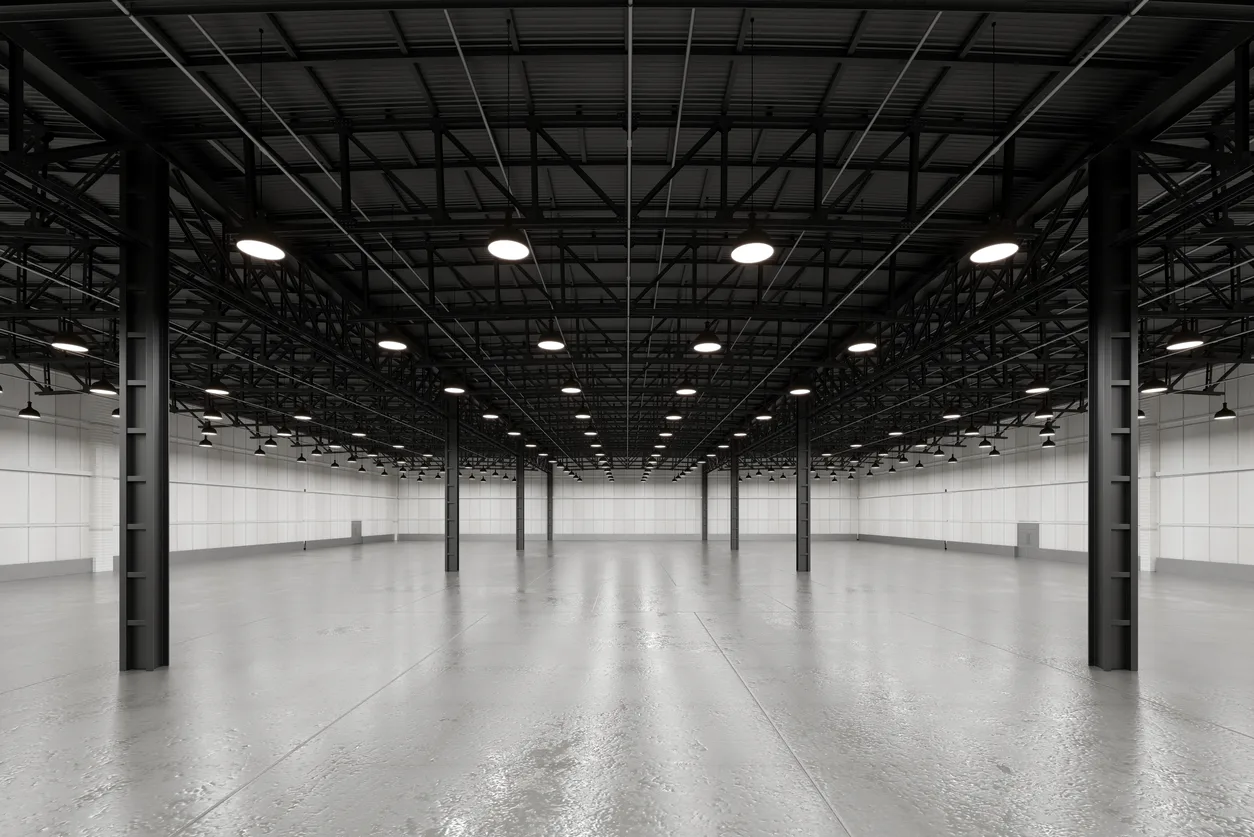

North Dakota does not do steady. A seed, fertilizer, and crop-chemistry distributor in the Red River Valley spends most of the calendar carrying a modest book — and then, for a few weeks in the spring, holds the largest inventory position it will hold all year, right before the only window in which growers can actually use it. Out west past Dickinson, an energy-supply wholesaler owns the opposite problem: heavy, expensive, slow-turning equipment that barely moves at all, a great deal of it sitting on an open yard rather than under a roof. Both of them own their stock outright. Neither of them looks anything like the warehouse next door holding somebody else’s pallets.
That is the whole subject of this page. If you buy product, carry it on your own balance sheet, and sell it onward, your insurance program is built around the goods — where they concentrate, when they concentrate, whether they are indoors, and how far they travel before they are yours to lose.
The season is the exposure
Underwriters price a property limit against a value, and a value implies a moment. The question a North Dakota agricultural-input distributor has to answer honestly is which moment — because the difference between an average inventory position and a pre-season peak is not a rounding error here, it is the entire business standing in one building at once.
A loss does not politely arrive in the trough. If the roof opens in the weeks when the whole spring program is stacked and staged, the limit that was comfortable in January is the limit you have. Worse, the product is hazard-classed as well as valuable: stored crop chemistry is not stacked cartons, and how a policy treats it — storage conditions, segregation, what the insurer’s appetite actually is for the class — is a conversation that has to happen before the season rather than during it. Commercial property is the right instrument for owned stock that is standing still in a scheduled building. It only works if the number on the declarations page was set against the worst week rather than the average one.
The yard is not the building
Go west and the shape of the risk changes completely. Energy-supply distribution runs on inventory that is heavy, high-value per unit, and slow to turn — and much of it is staged outdoors on a yard near the basin it serves, because that is where it is useful and because a building large enough to hold it would be absurd.
Property insurance is built around a described building and the contents inside it. Property in the open is a separate conversation with separate terms, and it is where an owner of yard-staged equipment most often discovers a sublimit they did not know was there. Hail, straight-line wind, and a North Dakota winter reach that inventory directly, without a roof in the way. None of that is a reason to panic; it is a reason to schedule the yard deliberately instead of assuming it into the building limit.
Stock throughput, and the miles before the rack
Then there is the inventory that is neither in the building nor on the yard, because it is on a truck. Stock throughput is one marine-family policy that follows your owned product across the whole span — supplier, transit, warehouse, customer — rather than waking up only when the goods arrive somewhere insurable.
North Dakota is a long way from where most of what it sells is made. Agricultural inputs come in from out of state on a compressed pre-season schedule. Equipment moves west to the basin. Consumer goods for the Fargo and Bismarck wholesalers run in over I-94 and I-29 from distant suppliers, and the cross-border traffic through the northern ports of entry adds a customs leg on top. That is a great many miles of ownership, and the marine-family form is written for exactly it — the word is a historical artifact of where the coverage came from, and it applies just as cleanly to a trailer on a frozen interstate as to anything on salt water. The seam it closes is the one between a property policy that only covers goods at rest and a cargo policy that only covers goods in motion, which is precisely the seam a loss likes to land in.
The middle tier the Tax Commissioner licenses — and the licenses on the goods themselves
North Dakota is a license state: the beverage middle tier is held by private companies, not by the government, and it is regulated where this state puts regulation of consequence — with the Office of State Tax Commissioner, which administers the licensing, regulation, and taxation of alcohol manufacturers and wholesalers, and licenses the alcoholic beverage wholesalers along with the farm wineries, the microbrew pubs, the out-of-state direct shippers, and every supplier shipping into a North Dakota wholesaler. Retail licensing is largely a municipal matter. The middle tier is private, small, and it reports — a beer wholesaler files a monthly report of gallonage purchased — which means the state carries a running record of what is supposed to be on the rack. After a loss, that record is a compliance document as well as a claim exhibit.
The regulatory point generalizes beyond alcohol, and it is a type-D point rather than a warehouse one: in North Dakota you are regulated on the goods you own. Health and Human Services licenses food processing where product is manufactured, packaged, labeled, or stored for wholesale with no direct sale to a consumer, with federal food-facility registration expected alongside it. The Board of Pharmacy licenses wholesale drug distributors — its license category expressly reaches warehouse operations, and it conditions licensure on accreditation or certification the board recognizes. A distributor of food or drugs here is credentialed because of what is in the boxes, not because of the building the boxes are in.
Selling what you did not make
A distributor who never manufactured anything can still be sued over what it sold. Products liability follows the chain of distribution to a seller, and buying a product and reselling it makes you one.
It bites in two places here. Agricultural chemistry and inputs are products that go out and do something on somebody else’s ground, and the consequences of a wrong label or a wrong container are real. And the importer — the company bringing goods across the northern border, or holding them at the zone sites attached to the Fargo and Grand Forks airports — is the first U.S. seller of what it sells. When the actual maker sits beyond the practical reach of a U.S. claim, the importer becomes the party standing in the room. General liability answers this through the products-completed-operations hazard, and the limit belongs sized against the products you actually handle.
A comp line you cannot shop, and the gap behind it
North Dakota is one of only four states where workers compensation is monopolistic. Coverage is not purchased from an insurer at all: it runs exclusively through Workforce Safety & Insurance, the state fund, which is the sole provider and administrator of the system. There is no private market for the statutory line and no self-insurance route. Every employee is covered before work begins — full-time, part-time, or seasonal — and even high-hazard operations are guaranteed coverage.
So comp is not something we place, and any broker who offers to shop it here is telling you something untrue. What we do place is the piece the state fund does not provide: employers’ liability, the coverage that answers a lawsuit rather than a benefits claim. That is a real gap and it is easy to leave open, and a distribution business has two distinct injury exposures feeding it — the warehouse crew doing the lifting and the racking work, and the route drivers loading, unloading, and running a delivery vehicle across a state with genuine winter in it.
Those drivers are also why commercial auto matters more here than the size of the fleet would suggest. A note on the word this trade cannot avoid: your insurance carrier is the company writing your policy, and a motor carrier or freight carrier is a company hauling goods for hire. They are different things, and this niche says both constantly. Above the primary lines, umbrella liability is usually what a national supplier or a landlord asks for when the contract limits climb.
What actually drives the pricing conversation here
We do not print premiums, and any site that does is guessing. What moves the conversation for a North Dakota owner of inventory:
- Peak versus average inventory value — and whether the limit was set against the peak.
- What the product is — hazard-classed agricultural chemistry, heavy equipment, food, drugs, and packaged consumer goods are not one appetite.
- How much of your stock sits outdoors, and whether property in the open has been scheduled rather than assumed.
- The transit span you actually own — where risk of loss passes, and how far the goods travel before they reach your rack.
- Roof, snow load, and heat — the structural and freeze protections on a building full of your own goods.
- Whether you import, which sets both the products posture and the length of the throughput span.
Where North Dakota distributors and wholesalers concentrate
Fargo and West Fargo
Where I-94 and I-29 cross, and the state’s distribution point of record. A regional wholesaler here is holding stock for a trade area far larger than the population it serves, which means the on-hand inventory at any one moment is deep relative to the size of the business — a concentration question rather than a throughput one.
Williston and the western basin
Energy-supply distribution, and the state’s clearest example of owned stock that does not live indoors. Drilling and completion equipment is heavy, expensive, and slow-turning, and a great deal of it sits on an open yard. A property policy written around a building does not automatically answer for inventory parked outside of one.
Grand Forks
A northern-border trade city with a foreign-trade zone attached to its international airport and industrial park. The importers who use it are few, but each one is the first U.S. seller of what it brings in — which is the position that puts a distributor into the products-liability chain for goods somebody else designed and built.
Bismarck and Mandan
Regional wholesaling into a thinly populated trade area, where a single warehouse serves a quarter of a state. That geography is an availability problem before it is an insurance problem: if the building goes down, there is rarely a second one nearby to run the book out of, which is what makes business income the line worth reading closely.
The Red River Valley
Agricultural-input distribution — seed, fertilizer, and crop chemistry — moving out to growers through a season that is short and unforgiving. The inventory here is hazard-classed as well as valuable, and how a policy treats stored chemistry is a very different conversation than how it treats stacked cartons.
Minot
A rail and highway crossing serving the north-central counties and the border ports beyond them. Owned goods routed through here spend real time on a truck or a railcar rather than on a rack, and transit is precisely the span a commercial property form was never written to follow.
Dickinson
Oilfield service supply on the western end of I-94, where equipment inventory is staged near the basin it serves. The exposure profile is unusual for a wholesaler: high value per unit, low turns, and much of it in a yard where hail, wind, and a hard winter reach it directly.
If the goods are not yours, you are on the wrong page
An honest signpost. This page is for the business that owns what it stores. If you hold other companies’ freight for a fee — a public, contract, third-party, or cold-storage warehouse, or the country elevator holding a producer’s grain under a receipt — then the inventory on your floor is not owned stock, it is a bailment, and none of the above is your lead exposure. Your program begins with warehouse legal liability, the bailee line for goods in your care, custody, and control, and it turns on your storage contract rather than on your purchase terms. That is a different risk with a different stack, and it has its own page: warehouse insurance in North Dakota.
Plenty of North Dakota businesses do both — they sell their own product and store somebody else’s in the same building. If that is you, we place both, and we draw the line between them before anything binds.
North Dakota distributor and wholesaler insurance FAQs
Why would a North Dakota distributor need stock throughput rather than just a property policy?
Because a property policy insures your owned inventory while it stays put inside a scheduled building, and stops at the walls. Stock throughput is one marine-family form that follows the goods instead — from the supplier, across the transit leg, into your warehouse, and out to the customer. In North Dakota that gap is not theoretical. Agricultural-input stock arrives from out of state on a compressed pre-season schedule. Energy-supply equipment is trucked west to the basin. Consumer goods for the regional wholesalers come in over I-94 and I-29 from a long way away. All of that is inventory you already own, traveling, on your balance sheet, and outside the four walls a property form was written around.
What does it mean that alcohol licensing sits with the Office of State Tax Commissioner?
It means North Dakota puts the beverage middle tier where it puts tax. This is a license state — private companies hold the wholesale tier, not the government — and the Office of State Tax Commissioner administers the licensing, regulation, and taxation of alcohol manufacturers and wholesalers, licensing the alcoholic beverage wholesalers themselves along with farm wineries, microbrew pubs, out-of-state direct shippers, and every supplier shipping into a North Dakota liquor or beer wholesaler. Retail licensing is largely a municipal matter. The practical consequence for a distributor is that the state has a running record of what should be in the building — a beer wholesaler files a monthly report of gallonage purchased — so an inventory shortage after a loss is a reporting event as well as a claim.
Is my inventory covered while it is sitting on a yard rather than inside the building?
Not automatically, and this is the North Dakota question most worth asking out loud. Energy-supply and agricultural-equipment distributors in the west routinely hold owned stock outdoors — high-value, slow-turning equipment on a fenced yard rather than on a rack. Property coverage is built around a described building and its contents, and property in the open is treated on its own terms, usually with its own sublimit if it is addressed at all. If a meaningful share of what you own is sitting outside, that has to be scheduled deliberately rather than assumed into the building limit, and the hail, wind, and freeze that reach it out there are the same perils that would have been the roof’s problem indoors.
How does workers compensation work in North Dakota if I run a distribution business?
It works differently than anywhere except three other states. North Dakota is monopolistic: comp is not bought from an insurer at all. It runs exclusively through Workforce Safety & Insurance, the state fund, which is the sole provider and administrator — no private market for the statutory line, and no self-insurance route. Every employee must be covered before work begins, full-time, part-time, or seasonal, and even high-hazard operations are guaranteed coverage. So the comp line is simply not part of a competitive placement conversation here. What is still ours to place is the gap the state fund leaves: employers’ liability, which the monopolistic fund does not provide, and which is the coverage that answers a lawsuit rather than a benefits claim.
Am I in the products-liability chain if I only distribute what somebody else made?
Yes. Products liability follows the chain of distribution to a seller, not only to the manufacturer, and a distributor or wholesaler who bought a product and resold it is a seller. In North Dakota the exposure has two sharp faces. The first is agricultural chemistry and inputs, where the product is doing something on somebody else’s land and the consequences of the wrong thing in the wrong container are not small. The second is the importer: a company bringing goods across the northern border or holding them at the Fargo or Grand Forks zone sites is the first U.S. seller of what it sells, and when the foreign maker sits beyond the practical reach of a U.S. claim, the importer is the party actually standing there. General liability answers this through the products-completed-operations hazard, and the limits get sized against the product, not against a revenue band.
What is the real property peril for a North Dakota warehouse full of my own goods?
Weight and cold, not wind. A distribution roof is an enormous flat horizontal surface, and snow accumulates on it — with drift piling against parapets and roof steps, which is where the load actually concentrates and where a structural failure begins. Underneath that, extreme and sustained freeze puts wet-pipe sprinkler systems, partially heated bays, and dock-door seals at risk, and a heat-loss event in a building holding temperature-sensitive product becomes a total stock loss in hours without a single flame. Hail and severe convective wind occur but are not the defining exposure. Flood is: the Red River of the North drains northward and has repeatedly threatened Fargo and Grand Forks, and flood is its own placement, never a property-form assumption.
Get a North Dakota distributor insurance quote
Quotes in 1–2 hours during business hours.