
States we serve · Oklahoma
Distributor and wholesaler business insurance in Oklahoma
For the oilfield and industrial supply houses, aerospace and equipment distributors, protein and food wholesalers, and ABLE-licensed beverage distributors who own what they sell — at the crossroads of I-35 and I-40.
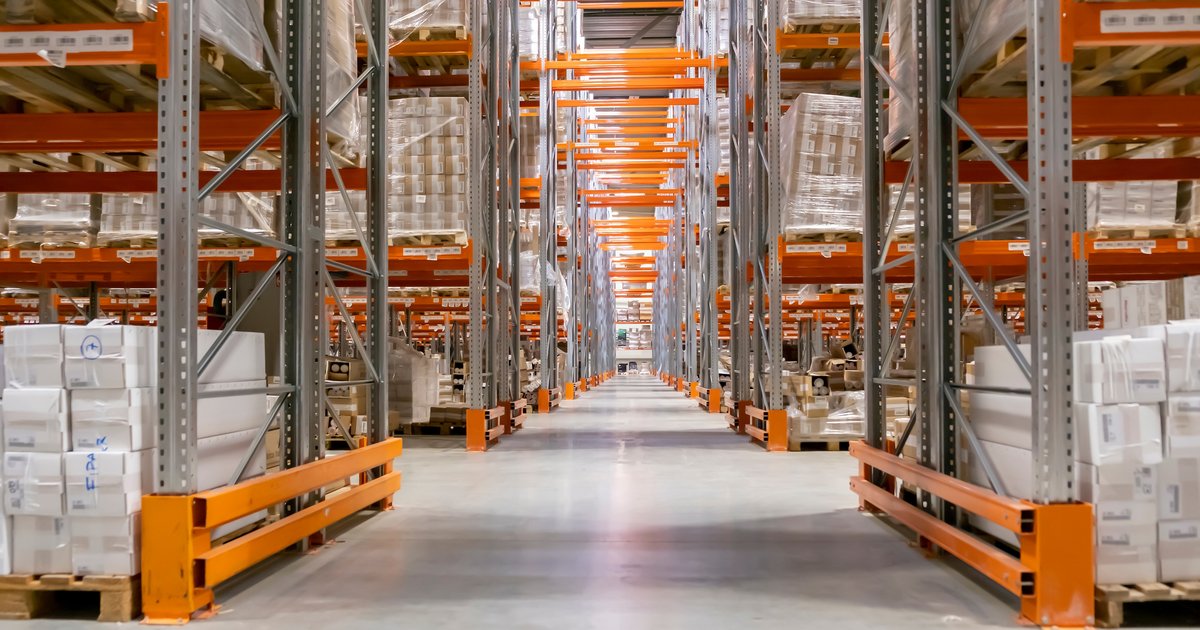

Nothing here is a gateway. Everything here is a crossroads — and that is a statement about inventory as much as about geography.
The Oklahoma distributor owns stock that tends to be heavy, technical, and slow-moving rather than fast-turning retail: oilfield and energy supply, industrial and aerospace parts, agricultural inputs, protein. It is expensive per pallet. It sits for long periods. And it moves in and out of the state on barge and rail as well as truck — the Tulsa Port of Catoosa is the head of navigation on the McClellan–Kerr system, so cargo reaches Oklahoma from the Mississippi without ever touching a seaport.
Every one of those characteristics pushes against the standard program. A policy that only covers your product while it is inside one warehouse leaves the expensive part of its life uncovered — the barge, the rail car in a yard, the long haul to a customer who is deliberately a thousand miles away, because a building placed at the I-35 and I-40 crossing was chosen for reach, not for proximity to anybody.
Stock that is worth a great deal and does very little
Start with what that inventory does to a schedule. Fast-turning consumer stock produces revenue continuously and is replaced continuously; a lost warehouse costs a few weeks of it. Heavy, slow-turning industrial stock is the opposite: the value sits still, month after month, and the business income it will eventually produce is concentrated in a season that has not happened yet.
Commercial property answers for the building, the racking, the owned stock that stays put, and the business income lost while a site is down. For an Oklahoma supply house that instrument is doing more work than it is in most states, because more of the product’s value is standing still — and it is worth knowing whether the limit and the business-income basis were built for a business that turns its inventory slowly, or copied from one that turns it fast.
Four modes, and the seams between them
Stock throughput is one marine-family policy that follows your owned goods across the entire span, whatever mode they are riding — supplier, transit, warehouse, customer, on a single form. The word marine is a historical artifact; the coverage does not care whether the water was an ocean, a navigation channel, or nothing at all.
What it cares about is the seams. A property policy covers goods in a scheduled building; a cargo policy covers them on a truck. A barge on the Arkansas River, a rail car in a classification yard, a container at an inland transload — these fall in between, and Oklahoma runs more of its freight through exactly those places than a highway-only state does. That is the argument for a single form that follows the goods rather than the address, and it is also the argument for reading the wording, because stock throughput is largely a manuscript, non-standard market rather than an off-the-shelf product.
A modern licensed middle tier
Oklahoma is a license state. The middle tier is privately held under licenses issued by the ABLE Commission — the agency that licenses manufacturers, wholesalers, retailers, and the people who serve. The state does not own beverage inventory at any tier.
One sequencing detail is worth having straight: wholesalers must hold the appropriate license before they can even register the brands they intend to carry, which makes brand registration a downstream consequence of the license rather than a parallel step. Oklahoma rewrote this system comparatively recently, so the distributor tier here is a modern one — a beverage wholesaler buys from producers, warehouses the product, and delivers it to licensed retail. The goods are the wholesaler’s own throughout, which is what makes this a wholesale exposure rather than a storage one.
Registered on the meat, licensed on the drugs
The Department of Agriculture, Food and Forestry’s Food Safety Division registers distributors, meat brokers, and public warehousemen who handle meat and poultry, and that registration brings compliance reviews with it. It is the distinctive Oklahoma requirement in this trade. A protein distributor’s building is a registered premises; a general merchandise warehouse across the road is not, and answers to its bailment alone.
On the pharmaceutical side, the Oklahoma State Board of Pharmacy licenses wholesale distributors, repackagers, and third-party logistics providers — which means a contract warehouse that merely stores and ships drugs for a manufacturer, without ever owning them, is nonetheless a licensed drug facility in its own right. That is a useful marker, because it is the exact line this page sits on the other side of. You own your inventory. The 3PL does not. Two different licenses, two different risks, two different lead coverages.
The biggest flat thing in the county
Oklahoma is a wind and hail state before it is anything else, and a distribution center is an unfortunate shape for both. Tornado exposure is genuine and severe across the state, and a large-footprint building cannot be sited out of it. But hail is the more frequent loss: a supercell bruises an entire membrane roof at once, and the resulting water damage reaches the racking and the stored goods long before anyone gets a repair crew on the roof. Straight-line wind events do comparable damage without the headline.
Winter brings ice loading and hard freezes that stress sprinkler piping. Flood is a localized, riverine problem rather than a statewide one, and it belongs in its own placement where it applies. Read those together and the pattern for an owner of goods is consistent: the building is rarely the expensive half of the claim. The stock underneath it is.
Dense freight, and the people who move it
Oklahoma is a private-market workers’ compensation state, administered through the state’s workers’ compensation commission — no state monopoly, and no Texas-style opt-out across the river. The warehouse claim profile is the standard one and none the milder for it: powered-industrial-truck strikes and tip-overs, falls from racking and mezzanines, loads coming down during putaway, dock-plate and trailer-creep injuries, and the repetitive lifting strain that quietly produces the most lost time in any distribution center.
The state adds its own emphasis. Heavy agricultural, energy, and manufacturing supply chains push more awkward, dense freight through these warehouses than a purely retail state would — and dense freight injures people differently than cartons do. The route drivers are a second population and need commercial auto behind them; and as always in this trade, your insurance carrier is the company that writes your policy, while a motor carrier or freight carrier is a company that hauls goods for hire. Umbrella liability sits above the primary lines when a customer contract requires it, which for an energy or aerospace account it invariably does.
The chain reaches an inland seller
Products liability follows the chain of distribution to a seller, not only to the manufacturer. An Oklahoma distributor that imports is a first U.S. seller like any other — it simply does so from an inland zone rather than a dock, and the geography of the entry point changes nothing about the position.
General liability answers this through what the standard form calls the products-completed-operations hazard, and here the sizing question has real teeth: a component sold into an energy or aerospace operation carries consequences a case of consumer goods does not. Limits built from a revenue band do not know that. A conversation about the product does.
What underwriters ask an Oklahoma distributor
We do not print premiums, and any site that does is guessing. The genuine drivers:
- Value per pallet, and dwell time — how much of your product’s life is spent standing still and expensive.
- Modes — how much arrives by barge and rail, and whether anything covers it there.
- Where the risk of loss passes on inbound freight, and whether the throughput span begins at the same moment.
- Roof age and hail history on every building holding owned stock.
- What the product does in the field — the only honest basis for a products limit in an energy and aerospace economy.
- Freight density and the payroll split between warehouse crew and route drivers.
Where Oklahoma’s owned inventory concentrates
Oklahoma City
The capital, and the site of a foreign-trade zone held by the city’s port authority serving a wide multi-county region. Duty-deferred storage here works for a distributor staging imported goods well inland — and it changes the customs bill rather than the ownership: the stock in a zone-status building is still on the distributor’s balance sheet, with the products exposure riding along.
Tulsa
Aerospace and maintenance distribution, with a zone held by the city and county port authority. Aerospace parts are the archetype of Oklahoma owned stock — expensive per pallet, technical, slow-turning, and traceable — which means the value sitting still in a building is high relative to the revenue it produces in any given month.
Catoosa
The head of navigation on the McClellan–Kerr system, where barge cargo reaches Oklahoma from the Mississippi without ever touching a seaport. Owned stock arriving by water is a real thing here, and it is exactly the mode a property-plus-cargo patchwork handles least consistently — a barge is neither a scheduled location nor a truck.
Broken Arrow
Industrial and equipment wholesaling in the Tulsa orbit. Dense, heavy freight injures people differently from cartons, and it damages differently too: a dropped unit is a total loss rather than a scuffed case, which puts the emphasis on handling equipment, storage method, and how the schedule values what is on the rack.
Norman
Central Oklahoma distribution serving a growing regional market, on the I-35 spine. A distributor here is placed for reach rather than for proximity, which means a large share of its owned product spends its life on a highway between the warehouse and a customer in another state — a transit exposure by design.
Edmond
The northern OKC corridor, where regional consumer and food-service wholesalers hold owned stock for a metropolitan market. Beverage distributors here work a licensed private middle tier under the ABLE Commission — bought from producers, warehoused, delivered to licensed retail, and owned at every step in between.
Lawton
Southwest Oklahoma, where the wind and hail exposure is at its most unforgiving and the buildings are the biggest flat things around. Hail bruises an entire membrane roof plane at once and the water follows it down into the racking, which turns what looks like a roof claim into a stock claim.
The I-35 and I-40 crossing
The reason the buildings are here at all. A distribution center placed at the crossing can reach an enormous share of the country inside a short truck cycle, so owned inventory is staged for national reach rather than local consumption — and the further the customer, the more of the product’s life is spent in transit rather than at rest.
If the goods are not yours, you are on the wrong page
An honest signpost. This page is written for the business that owns what it stores. If your operation holds another company’s inventory for a fee — the crossroads third-party warehouse holding freight in the middle of the country because the middle of the country is where the truck cycle works, the chartered and bonded grain elevator, or the contract warehouse holding prescription drugs under a third-party logistics license it needed precisely because it never owns a pill — then the goods on your racks are not owned stock. They are a bailment, and your lead line is warehouse legal liability, fixed by your warehouse receipt and storage agreement rather than by your purchase terms. It has its own page: warehouse insurance in Oklahoma.
A good many Oklahoma businesses do both — they distribute their own product and warehouse someone else’s alongside it. If that is you, we place both, and we draw the line between them before anything binds.
Oklahoma distributor and wholesaler insurance FAQs
My inventory is heavy and it sits. Why does that matter to an underwriter?
Because it changes the shape of the exposure. The Oklahoma distributor owns stock that tends to be heavy, technical, and slow-moving rather than fast-turning retail — oilfield and energy supply, industrial and aerospace parts, agricultural inputs, protein. That inventory is expensive per pallet and it sits for long periods, which means the value standing still in one building at any given moment is high relative to the revenue the business produces in a month. A fast-turning consumer wholesaler can lose a warehouse and lose a few weeks of stock; a business whose product sits for a season loses the season. The limit conversation, the concentration conversation, and the business-income conversation all shift accordingly.
Does stock throughput really apply if my goods arrive by barge and rail?
That is precisely when it applies. Stock throughput is one marine-family policy that follows your owned product across the whole span, whatever the mode — supplier, transit, warehouse, customer. Oklahoma moves inventory in and out on barge and rail as well as truck: the Tulsa Port of Catoosa is the head of navigation on the McClellan–Kerr system, so cargo reaches the state from the Mississippi without touching a seaport. The problem with the conventional patchwork is that each mode tends to sit under a different instrument — a property policy for the goods in a scheduled building, a cargo policy for the goods on a truck — and a barge or a rail car in a yard falls into the seam between them. A policy that only covers your product inside one warehouse leaves the expensive part of its life uncovered.
How does the ABLE Commission license work for a beverage distributor?
Oklahoma is a license state, and its middle tier is privately held under licenses issued by the ABLE Commission — the agency that licenses manufacturers, wholesalers, retailers, and the people who serve. One sequencing detail is worth knowing: wholesalers must hold the appropriate license before they can even register the brands they intend to carry, which makes brand registration a downstream consequence of the license rather than a parallel step. Oklahoma rewrote this system comparatively recently, so the distributor tier here is a modern one. A beverage wholesaler buys from producers, warehouses the product, and delivers to licensed retail — and the goods are the wholesaler’s own at every step, which is what puts them in the stock-throughput and products conversation rather than a storage one.
I distribute meat. Am I a registered premises?
You are. The Department of Agriculture, Food and Forestry’s Food Safety Division registers distributors, meat brokers, and public warehousemen who handle meat and poultry, and that registration brings compliance reviews with it. It is the distinctive Oklahoma requirement in this trade — administered through the state meat inspection service — and it means a protein distributor’s building is a registered premises while a general merchandise warehouse across the road is not. On the pharmaceutical side the Oklahoma State Board of Pharmacy licenses wholesale distributors, repackagers, and third-party logistics providers; that 3PL license exists for the operation that merely stores and ships drugs for a manufacturer without ever owning them, which is a useful marker of the line you are on the other side of.
What is the peril that costs Oklahoma distributors money?
Wind and hail, before anything else, and a distribution center is an unfortunate shape for both. Tornado exposure is genuine and severe across the state, and a large-footprint building cannot be sited out of it. Hail is the more frequent loss: a supercell bruises an entire membrane roof at once, and the resulting water damage reaches the racking and the stored goods long before anyone gets a repair crew onto the roof. Straight-line wind events do comparable damage without the headline. Winter brings ice loading and hard freezes that stress sprinkler piping. Flood is a localized, riverine problem rather than a statewide one, and it belongs in its own placement where it applies — the property policy does not carry it.
If I import into an inland zone, am I still the first U.S. seller?
Yes — the geography of the entry point does not change the position in the chain. An Oklahoma distributor that imports is a first U.S. seller in the products-liability chain like any other, but it does so from an inland zone rather than a dock. Products liability follows the chain of distribution to a seller, not only to the manufacturer, and when the maker is overseas and beyond the practical reach of a U.S. claim, the importer becomes the realistic target for it. General liability answers this through the products-completed-operations hazard, and the limits should be sized against what the product actually does. In this state that matters, because a component sold into an energy or aerospace operation carries consequences that a case of consumer goods does not.
Get an Oklahoma distributor insurance quote
Quotes in 1–2 hours during business hours.