
States we serve · Oklahoma
Warehouse business insurance in Oklahoma
For the contract, 3PL, protein, and fulfillment operators at the crossroads of I-35 and I-40 — holding somebody else’s oilfield equipment, aerospace parts, and freight in the middle of the country because the middle of the country is where the truck cycle works.
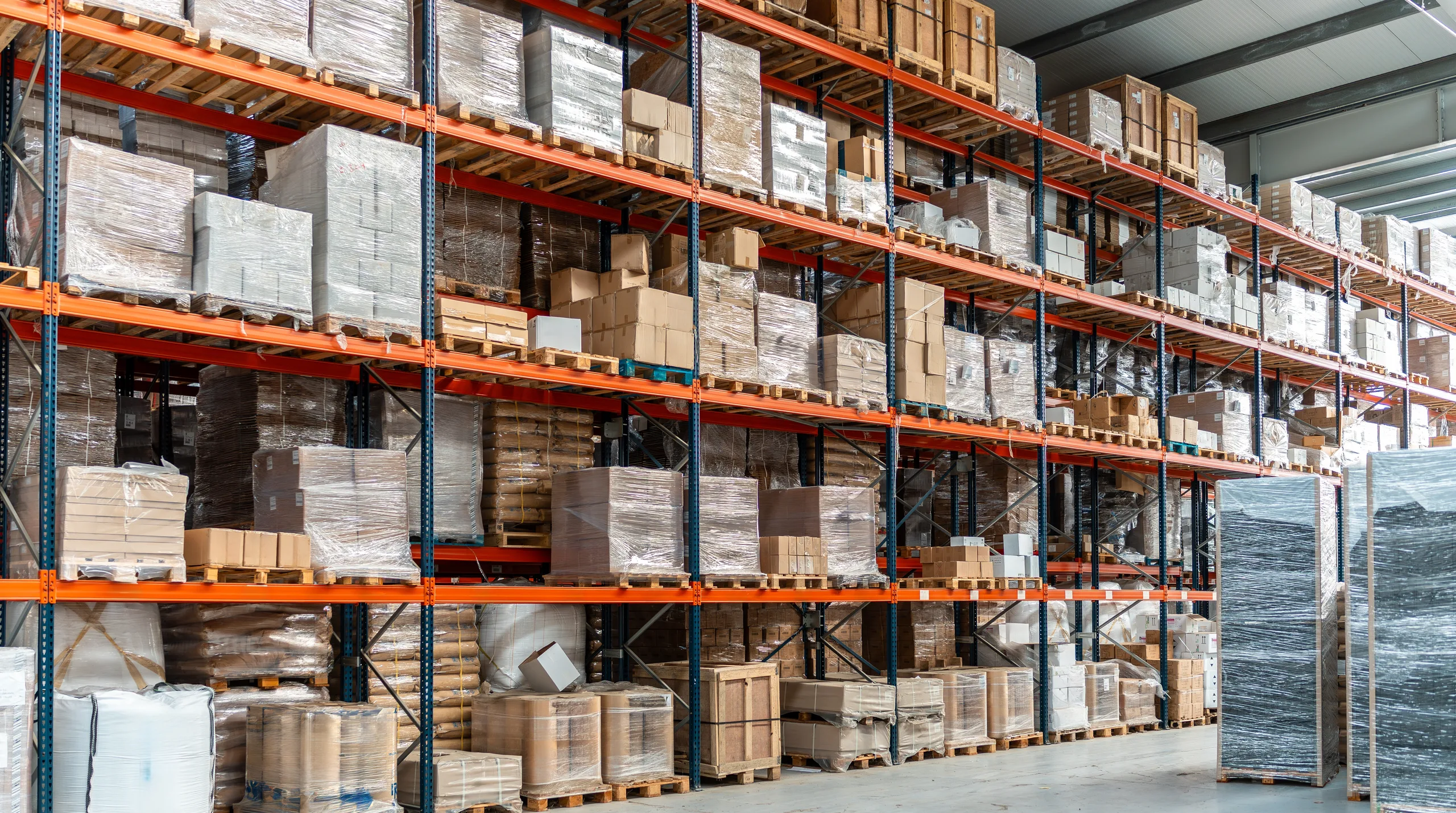

Somewhere in the Oklahoma statute book there is a law called the public warehouse and commodity indemnity act, and if you run a warehouse in this state you have probably heard of it, or heard of somebody who has. It sounds like the thing you were looking for. It sounds like the state has a program for people who store other people’s property, with a charter and an indemnity fund standing behind it.
It is a grain law. The Department of Agriculture, Food and Forestry charters public grain warehouses under it, and despite the words in its title the scope is commodities — not merchandise, not consumer freight, not aerospace parts, not the pallets on your floor. If you store goods for hire in Oklahoma City or Tulsa, that statute is not about you. It will not charter you, it will not indemnify you, and reading it as though it did is the most expensive mistake available in this state.
Which leaves a genuinely useful negative in its place. Oklahoma has no license for a general-merchandise or contract warehouse. No permit, no inspection, no statutory standard of care handed down to you. Your perimeter is the bailment — the warehouse receipt you issue and the storage agreement you signed — and everything on this page follows from that.
The one registration that does reach a warehouse for hire
There is an exception, and it is a strange and rather satisfying one. The agriculture department’s Food Safety Division registers distributors, meat brokers, and public warehousemen who handle meat and poultry, and that registration carries compliance reviews with it. So a protein warehouse in Oklahoma is a registered premises with a real regulator behind it — while a general warehouse across the road is registered as nothing at all and answers only to its bailment.
Oklahoma therefore manages to use the phrase public warehouseman in two unrelated programs, neither of which is a general warehouse license. One reaches grain. One reaches meat. If you hold neither, the state has nothing to say to you about how you look after your customers’ property — and that silence is the fact your insurance program has to answer for.
Care, custody, and control — and the exclusion built for it
Accepting another company’s freight makes you a bailee. You hold property that is not yours and you answer for it while it sits in your care, custody, and control. A fire in a rack aisle, a sprinkler head letting go over a customer’s pallets, a theft off a trailer in the yard, a load of protein lost to a refrigeration failure — in every case the ruined property belongs to somebody else, and your general liability policy will not pay for it.
That is not an oversight. A standard general liability form excludes damage to personal property in your care, custody, or control, and the freight in your building is precisely that. The loss you worry about most is carved out of your foundation policy by its own terms. Warehouse legal liability exists to answer exactly what that exclusion removes, and in a state whose only warehouse statutes reach grain and meat, it is the whole spine of the program.
What sizes the limit is the value of goods you do not own — inventory that appears on nobody’s balance sheet in Oklahoma and belongs to a company that chose your building for its drive time. The limitation-of-liability language in your storage agreement is the other half of that sizing, and it is worth reading before a loss rather than during one.
Crossroads custody: freight chosen for reach, not for proximity
Nothing in Oklahoma is a gateway; everything in Oklahoma is a crossroads. I-35 runs north–south from Texas to the upper Midwest, I-40 runs east–west from California to the Atlantic, and I-44 cuts the diagonal through Tulsa toward St. Louis. A distribution center placed near the crossing reaches an enormous share of the country inside a short truck cycle, and that arithmetic — not local consumption — is what fills the buildings.
Which shapes what an Oklahoma bailee is actually holding. The mix pulls in oilfield and industrial equipment, agricultural inputs, aerospace parts, and consumer freight, and the heavier of those are exactly the goods whose damage claims are hardest to argue about. A dented carton is a dented carton. A dropped drilling component with a traceability file attached to it is a very different conversation, and the customer’s loss does not stop at the value of the part.
Bonded storage adds another layer. Because Catoosa is the head of navigation on the McClellan–Kerr Arkansas River Navigation System, barge cargo reaches Oklahoma from the Mississippi without touching a seaport at all — and the zones at Tulsa and Oklahoma City hold duty-deferred goods well inland. Admit those goods and you are answering to two masters over the same pallet: the customer who owns the freight, and a customs regime that has not been paid.
Hail on a membrane roof, and what is underneath it
The building, the racking, the material-handling systems, and the income that stops when the facility does are the things you actually own — that is commercial property, and it is the smaller half of the exposure. Keeping the halves apart is the discipline the whole trade runs on: property covers what is yours and stays put; warehouse legal liability covers what is theirs and sits in your care. They do not overlap and they do not substitute.
Oklahoma tests that distinction more often than most states. Hail is the frequent loss here, and it does not level a building — it bruises an entire membrane roof plane in a single storm, and the water that comes through afterwards is what actually reaches the racking and the goods. Tornado exposure is severe and cannot be sited around. Straight-line wind does comparable damage without the headline, and winter ice loads the same roof and freezes the same sprinkler piping. Every one of those events produces two claims out of one storm: your steel, and somebody else’s inventory on the floor beneath it. This is the model the warehouse insurance program is built around.
Comp on a floor full of dense freight
Oklahoma is a private-market workers compensation state, administered through the state’s workers’ compensation commission — no state monopoly, and no Texas-style opt-out across the river, whatever a neighbor’s owner may have told you. The claim profile is the standard one and none the milder for it: powered industrial truck strikes and tip-overs, falls from racking and mezzanines, loads coming down during putaway, dock-plate and trailer-creep injuries, and the repetitive lifting strain that quietly produces the most lost time in any distribution center.
What sharpens it here is the freight itself. Oklahoma’s agricultural, energy, and manufacturing supply chains push more awkward, dense product through its warehouses than a purely retail state would, and dense freight injures people differently than cartons do. An underwriter will ask about it. Have an answer.
What drives the cost of an Oklahoma warehouse program
We do not publish figures — any site that does is guessing. What underwriters weigh:
- The value of the customers’ goods in your care, which sizes the bailee limit and is the number owners most often understate.
- What you hold — oilfield equipment, aerospace parts under traceability, registered protein, bonded import cargo, and consumer freight are five files in one building shell.
- The roof: its age, its membrane, and its hail history.
- Your storage agreement and the limitation of liability in it, including whether a large customer negotiated it away.
- Refrigeration and its backup, if you hold protein — a temperature failure spoils a customer’s inventory with the building untouched.
- Claims history, which moves pricing more than most of the rest combined.
Major Oklahoma warehouse markets
Oklahoma City
The big inland box, filled by arithmetic rather than by local consumption: a building placed near the I-35 and I-40 crossing reaches an enormous share of the country inside a short truck cycle. The Oklahoma City Port Authority holds a foreign-trade zone serving a wide multi-county region, so duty-deferred goods sit in buildings here that are nowhere near a dock — and the operator that admits them answers to customs as well as to the owner.
Tulsa and the Port of Catoosa
The head of navigation on the McClellan–Kerr Arkansas River Navigation System, with the zone held by the City of Tulsa–Rogers County Port Authority. Barge cargo reaches Oklahoma from the Mississippi without ever touching a seaport, and a warehouse taking custody at a barge transload is receiving goods that have already changed hands twice — which is exactly where a bailee claim finds its ambiguity.
Catoosa
The port town itself, where project cargo and heavy industrial freight come off the water. Bulk and breakbulk custody is not pallet custody: the goods are hard to count, hard to segregate, and hard to hand back in the same condition, which makes the storage agreement’s description of the goods the sentence that gets argued about.
Broken Arrow
Aerospace and maintenance supply in the Tulsa ring, where a bailee holds high-value parts with serial numbers and traceability requirements attached to them. A damaged component here is not simply a damaged component — it is a component that can no longer prove what it is, and the customer’s loss includes everything downstream of that.
Norman and Edmond
The metro’s regional fulfillment build-out, where consumer freight moves fast and in small units. Fulfillment bailment fails by accumulation rather than by catastrophe: shrink, mis-ships, and handling damage across thousands of customer-owned items, none of which triggers a claim on its own and all of which shows up in a year-end reconciliation.
Lawton and the southwest
Agricultural and industrial staging away from the metros, on the wide-open ground where hail and straight-line wind arrive with nothing in the way. A supercell bruises an entire membrane roof at once, and the water that follows reaches the racking and the customer’s goods long before anyone gets a repair crew up there.
If the goods are yours, you are on the wrong page
One signpost before the questions. This page is for the operator holding other people’s property. If your Oklahoma business buys and owns what it sells — an oilfield and energy-supply distributor with heavy, slow-turning stock, an industrial or aerospace parts wholesaler, a meat and poultry distributor registered with the agriculture department, or a beverage wholesaler under an ABLE Commission license — then your inventory is not a bailment at all. Your program leads from stock throughput and products liability, because your goods move in and out of the state on barge and rail as well as truck, and a policy that only covers them inside one building leaves the expensive part of their life uncovered. That is a different risk with a different stack, and it has its own page: distributor and wholesaler insurance in Oklahoma.
Plenty of operators here do both, because the crossroads rewards it. If yours does, we place both halves — the distribution operation running your own goods and the wholesale book behind it — and the seam between what you hold and what you own is the first thing we map.
Oklahoma warehouse insurance FAQs
Oklahoma has a public warehouse statute. Does it apply to my warehouse?
Almost certainly not, and this is the single most misleading name in this trade. The Department of Agriculture, Food and Forestry charters public grain warehouses under the state’s public warehouse and commodity indemnity statute — and despite the words in its title, the scope is commodities, not merchandise. A contract, 3PL, or fulfillment warehouse in Oklahoma City or Tulsa is not chartered under it, is not indemnified by it, and gains nothing from it. Read at face value, that statute would tell you that Oklahoma licenses public warehouses. It does not. What it licenses is grain.
Is there any Oklahoma registration that does reach a warehouse for hire?
Yes — one, and it is worth knowing about. The Department of Agriculture, Food and Forestry’s Food Safety Division registers distributors, meat brokers, and public warehousemen who handle meat and poultry, and that registration brings compliance reviews with it. So a protein warehouse in Oklahoma is a registered premises, using very nearly the same words the grain statute uses, and answering to a real regulator. A general warehouse across the road is not, and answers to its bailment alone. Oklahoma manages to use the phrase public warehouseman twice, in two unrelated programs, neither of which is a general license.
So what actually sets my duty to a customer’s goods?
The bailment — the warehouse receipt you issue and the storage agreement you signed — and nothing else. When you accept another company’s freight you take on care, custody, and control of property that is not yours, and you answer for it while it is in your keeping. General liability will not answer for that loss: a standard form excludes damage to personal property in your care, custody, or control, which describes every pallet on your floor. The loss you fear most is carved out of your foundation policy by its own terms, and warehouse legal liability is written to answer exactly what that exclusion removes. In a state whose only warehouse statutes reach grain and meat, the storage contract is the regulation.
I store drugs for a manufacturer but never own them. Am I licensed?
You are. The Oklahoma State Board of Pharmacy licenses wholesale distributors, repackagers, and third-party logistics providers — which means a contract warehouse that merely stores and ships drugs for a manufacturer, without ever owning a single unit, is nonetheless a licensed drug facility in its own right. That license exists precisely because the goods are not yours. It is the bailee relationship written into state law, and it is a useful thing to point at when an underwriter asks what kind of custody you are actually taking.
What does Oklahoma weather do to a distribution building?
Oklahoma is a wind and hail state before it is anything else, and a distribution center is an unfortunate shape for both. Tornado exposure is genuine and severe across the state, and a large-footprint building cannot be sited out of it. Hail is the more frequent loss: a supercell bruises an entire membrane roof at once, and the resulting water damage reaches the racking and the stored goods long before anyone gets a repair crew on the roof — which is the reframing that matters for a bailee, because the water lands on a customer’s inventory. Straight-line wind events do comparable damage without the headline. Winter brings ice loading and hard freezes that stress sprinkler piping. Flood is a localised riverine problem rather than a statewide one, and belongs in its own placement where it applies.
How does bonded storage work in a state with no seaport?
It works inland, which is the entire point of it here. The Tulsa zone is held by the City of Tulsa–Rogers County Port Authority and sits with the Tulsa Port of Catoosa; the Oklahoma City zone is held by the Oklahoma City Port Authority and serves a wide multi-county region around the capital. Because Catoosa is the head of navigation on the McClellan–Kerr system, barge cargo reaches Oklahoma from the Mississippi without touching an ocean terminal at all. Duty-deferred storage here therefore serves manufacturers and distributors staging goods well inland, and a warehouse that admits those goods takes on customs-bonded obligations on top of its ordinary duty of care to the owner — two masters, one pallet.
Get an Oklahoma warehouse insurance quote
Quotes in 1–2 hours during business hours.