
States we serve · Oregon
Distributor and wholesaler business insurance in Oregon
For the wholesalers, food distributors, and component importers who own what they sell in a state with no sales tax and a government that warehouses its own liquor — where the fire that ruins your inventory can burn a long way from your building.
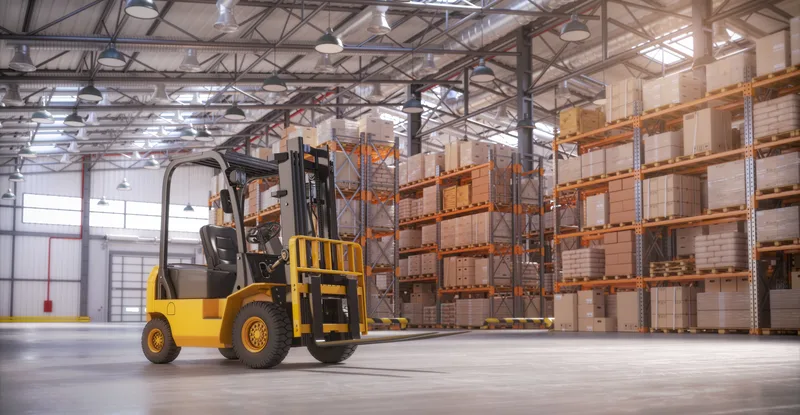

There is a warehouse in the Portland area full of distilled spirits, and it does not belong to a distributor. It belongs to the state. The Oregon Liquor and Cannabis Commission buys the spirits, warehouses them, and distributes them out to retail liquor stores — stores that are run by independent agents under contract rather than by state employees, so the government’s hand rests on the wholesale tier and on the product itself, not on the shop payroll. Beer and wine are a different world: those move through privately licensed wholesalers.
Which means an Oregon owner of beverage inventory owns beer and wine, and the spirits it might otherwise have handled never enter its building at all. That is a materially different balance sheet from the one a distributor carries in the license state next door — and it is a useful way into what this page is actually about, because everything here turns on the same question: which goods are genuinely yours, and where are they when something goes wrong?
What the state warehouses, and what is left for you to own
Set the beverage carve-out aside and Oregon’s owned-goods economy is broad and quite specific. Food and grocery wholesalers moving valley produce, dairy, and packaged goods. Wine and craft-beverage distribution out of the valley’s own producers. Wholesale drug distribution registered with the Board of Pharmacy. And the importers and component distributors serving the technology manufacturing cluster on Portland’s west side, whose product is bought from an overseas supplier and lands here by sea or by air.
What all of those have in common is that the goods are on your balance sheet, everywhere they go. That single fact reorders the whole insurance program, and it is why the lead line for an Oregon distributor is not the building policy.
The loss that leaves no mark
Start with the peril most Oregon owners underprice, because it does not look like a peril until it happens.
Oregon’s fire seasons have reached the valley margins, and smoke reaches a great deal farther than the flame does. A fire burning well away from your building can foul what is inside it: food, packaged consumer product, textiles, anything porous, anything that will ultimately be sold against an appearance or an odor standard. The building is untouched. The roof is fine. The photographs show nothing. And the inventory is no longer sellable.
For an owner, that is a total loss on goods you paid for — and it is precisely the kind of claim where the wording carries the whole outcome. What triggers coverage. What counts as damage rather than mere devaluation. Whether product that is technically intact but commercially dead is treated as a loss at all. These are questions worth settling in a policy review, calmly, in the spring, rather than in August with a plume on the horizon.
A long shake, and the goods in the aisle
The Cascadia subduction zone runs offshore, and for a warehouse the seismic exposure is not an abstraction about the building code — it is the racking. Racking that is not properly anchored, that is over-loaded, or that is not braced for a long-duration shake will fail before the shell does, and the goods on it end up in the aisle. For a distributor, every one of those pallets is inventory you bought, so the loss lands on your own books rather than as a customer’s claim against you.
And earthquake is its own placement. It does not ride the standard property form, and it is the placement decision a Willamette Valley distribution operator most often gets wrong by default. Commercial property remains the right instrument for the building, the racking, and owned stock that stays put in a scheduled location, together with the business income lost while the site is down — but the peril most likely to put your product on the floor has to be bought deliberately. Flood is a separate placement again, and it concentrates along the Willamette and Columbia floodplains where a great deal of industrial land happens to sit. Windstorm off the coast rounds it out. Hail and tornado are not the Oregon story and should not be dressed up as one.
Stock throughput: from an overseas supplier to a Washington County rack
Stock throughput is one marine-family policy that follows your owned product across the entire span — the supplier, the ocean or air leg, the Port of Portland, the terminal, the warehouse, and out to the customer. It replaces the patchwork of a property policy that only insures goods at rest inside a scheduled building and a cargo policy that only insures them in motion, with a seam in between where a loss can quietly land.
For an Oregon component importer that span is most of the product’s life. And it is worth being precise about the duty-deferred piece: the Port of Portland is the state’s foreign-trade zone grantee, the zone reaches sites across the metro, and it has supported production activity for the region’s semiconductor-equipment industry in Tualatin and Sherwood. Goods sitting duty-unpaid are valuable and encumbered at the same time — a loss there carries a customs consequence layered on top of the loss of the stock itself.
The question the form forces is the one importers most often answer by accident: when does risk of loss actually pass to you? Your purchase terms may hand you ownership at the supplier’s dock, at the port of loading, or on arrival — and if the coverage begins later than the ownership does, there is a stretch of ocean on which your inventory is traveling uninsured by you.
The importer at the head of the chain
A distributor who never manufactured anything can still be sued over what it sold. Products liability follows the chain of distribution to a seller, not only to the maker, and the importer — the first party to put a product into U.S. commerce — becomes the realistic target when the foreign manufacturer sits beyond the practical reach of a U.S. claim.
Oregon does not soften that, and the state’s tax posture does nothing to change it either. No sales tax is a real advantage for consolidation and fulfillment; it is not a shield. General liability answers this through the products-completed-operations hazard, and for a wholesaler of components, the limits belong sized against the system the part goes into rather than against the price of the part.
A license that covers the route and the warehouse behind it
Oregon licenses the food warehouse directly, which many states do not. The Department of Agriculture’s food-safety licensing covers food processing and warehousing: a facility that stores and distributes food for others holds a food-storage-warehouse license — though a processor warehousing its own finished product at the same site does not need a separate one, which is the whose-goods line drawn neatly inside a licensing statute. The state also draws a specific line for the bakery distributor, whose license covers both the delivery route and the warehouse behind it, which is about as clean a description of a distribution business as a regulator has ever written down.
On the drug side, the Board of Pharmacy registers drug outlets, with wholesalers registering by class. In both regimes the credential attaches to the product, which is the type-D pattern throughout: you are regulated because of what you own.
The crew, the route, and a wet dock
Oregon is a private-market workers compensation state — employers buy from insurers in the open market, with the Department of Consumer and Business Services overseeing the system. The warehouse loss picture is the familiar one: forklift and pallet-jack contact injuries on a congested dock, lifting and repetitive-motion strain on a pick line, falls from order-pickers and ladders at rack height, and struck-by injuries from stored material shifting off a beam.
Oregon adds one plain, practical wrinkle the drier states do not carry to the same degree: a long rainy stretch means slick dock plates and wet truck-court surfaces for months, and slip-and-fall is a real and repeated claim rather than an occasional one. On the road, commercial auto answers the route fleet — and a note on the word this trade cannot escape: your insurance carrier is the company that writes your policy; a motor carrier or freight carrier hauls goods for hire. Above the primary lines, umbrella liability is what a national customer or a landlord asks for once the contract limits climb, and a route-based distribution operation is usually where that severity first appears.
What drives the pricing conversation for an Oregon distributor
We do not print premiums, and any site that does is guessing. What actually moves the conversation for an owner of inventory here:
- Whether the policy responds to smoke and contamination on product that was never physically destroyed.
- Whether earthquake has been placed at all, and how the racked contents are treated when it has.
- The transit span you own — where risk of loss passes, and how much ocean sits between there and Portland.
- Duty-deferred inventory and what a loss on it triggers beyond the value of the stock.
- What the product is — perishable food, a technology component, and a case of beer are three different appetites.
- Fleet size and route profile, and the split between warehouse and driver payroll.
Where Oregon distributors and wholesalers concentrate
Portland and the Rivergate district
Where the Port of Portland runs marine terminals on the Columbia and Willamette, with a container berth, breakbulk, and a strong auto and bulk-commodity role. An importer taking title here has owned the goods since a supplier on the other side of an ocean, and the ocean leg is the part no property policy has ever reached.
Hillsboro and Washington County
The technology manufacturing cluster on Portland’s west side, fed by component and equipment distributors. Owned inventory here is high in value and low in cube, arriving by sea or by airfreight lane — and a distributor of components inherits a products exposure sized to the system the part goes into, not to the part.
Wilsonville and Tualatin
I-5 corridor distribution with duty-deferred zone activity attached, including the semiconductor-equipment production the Portland zone has supported. Goods held duty-unpaid are valuable and encumbered at once, and a loss on them carries a customs consequence layered on top of the loss of the stock.
Salem and the mid-valley
Food and agricultural distribution out of the Willamette Valley, where Oregon licenses the food warehouse directly through the Department of Agriculture. Owned produce and packaged goods are perishable or shelf-life-dated, which means a loss can take the form of product that is simply no longer sellable rather than product that was visibly destroyed.
Eugene and the southern valley
Wood products, food, and regional wholesaling, and the part of the corridor where wildfire has reached the valley margins. Smoke and ash travel far past a fire perimeter, and stored goods can be contaminated in a building the flame never touches — a real loss path for an owner of inventory.
Medford and the Rogue Valley
Wine, produce, and regional distribution at the southern end of I-5, close to the California line. The transit legs are long in both directions from here, and owned stock spends a large share of its life on a truck rather than on a rack — which is the span stock throughput exists to insure.
Bend
Consumer, outdoor, and beverage distribution serving central Oregon across the Cascades. Distance is the exposure: a distributor here holds deeper inventory because resupply is slow, and deeper inventory in a single building is a concentration question before it is a logistics one.
If the goods are not yours, you are on the wrong page
An honest signpost. This page is for the business that owns what it stores. If your operation holds other companies’ freight for a fee — a public, contract, third-party, or cold-storage warehouse, or a licensed food-storage warehouse holding a customer’s product — then the goods on your floor are not owned stock, they are a bailment, and none of the above is your lead exposure. Your program begins with warehouse legal liability, the bailee line for goods in your care, custody, and control, and it turns on your storage contract rather than on your purchase terms. That is a different risk with a different stack, and it has its own page: warehouse insurance in Oregon.
A number of Oregon businesses do both — they sell their own product and store somebody else’s in the same valley. If that is you, we place both, and we draw the line between them before anything binds.
Oregon distributor and wholesaler insurance FAQs
What does it mean that Oregon is a control state, exactly?
It means the state occupies the distilled-spirits wholesale tier and does the warehousing itself. The Oregon Liquor and Cannabis Commission buys, warehouses, and distributes distilled spirits out of a central warehouse in the Portland area to retail liquor stores — and those stores are run by independent agents under contract with the commission rather than by state employees, so the state’s hand is on the wholesale tier and on the product, not on the store payroll. Beer and wine are a different world entirely: those move through privately licensed wholesalers. The practical consequence for an owner of beverage inventory is direct — you may own and warehouse beer and wine, while the spirits you might otherwise have handled never enter your building at all. Your balance sheet is genuinely different from a distributor’s in the license state next door.
Can wildfire damage my inventory if the fire never reaches my building?
Yes, and in Oregon that is one of the more underestimated loss paths for an owner of stock. The state’s fire seasons have reached the valley margins, and smoke and ash travel a great deal farther than the flame. Stored goods — food, packaged consumer product, textiles, anything porous or anything that will be sold on an appearance and odor standard — can be contaminated to the point of being unsellable in a building that never sees fire and never sustains a mark a photograph would show. That is a stock loss, not a building loss, and it is exactly the kind of claim where the wording matters: what triggers it, what constitutes damage, and whether the product is treated as damaged or merely as devalued.
Why does an Oregon distributor need stock throughput on top of property?
Because owned inventory here has usually traveled a long way and is going to travel further. A component distributor serving the Portland technology cluster starts its stock throughput span at an overseas supplier and runs it through the Port of Portland or an airfreight lane into a Washington County warehouse. A property policy covers the goods once they are sitting inside that scheduled building and stops at the walls; a cargo policy covers movement; the seam between them is where a loss can fall. Stock throughput is a single marine-family form that follows the owned product across the entire journey — supplier, ocean transit, terminal, warehouse, customer — which for an Oregon importer is most of the product’s life.
How does Oregon licensing treat a food distributor?
Oregon licenses the food warehouse directly, which many states do not. The Department of Agriculture’s food-safety licensing covers food processing and warehousing, so a facility that stores and distributes food for others holds a food-storage-warehouse license — though a processor warehousing its own finished product at the same site does not need a separate one, which is the ownership line drawn inside a licensing statute. The state also draws a specific line for the bakery distributor, whose license covers both the delivery route and the warehouse behind it. On the drug side, the Board of Pharmacy registers drug outlets, with wholesalers registering by class and a facility providing third-party logistics services for drugs registering as a drug distribution agent. You are credentialed on the goods, not the shell.
Is earthquake covered under my property policy in Oregon?
No — it is a separate placement, and it is the placement a Willamette Valley distribution operator most often gets wrong by default. The Cascadia subduction zone runs offshore, and for a warehouse the seismic exposure is not really an abstraction about the building code; it is the racking. Storage racking that is not properly anchored, that is over-loaded, or that is not braced for a long-duration shake will fail before the shell does, and the goods on it end up in the aisle. For a distributor, every one of those pallets is inventory you bought and own, so the loss lands directly on your own balance sheet rather than on a customer’s claim against you. Earthquake has to be bought deliberately, and the terms deserve reading rather than assuming.
Does having no sales tax change my liability as an Oregon distributor?
Not in the slightest, and it is worth saying plainly because the tax posture is such a big part of why companies distribute from here. Oregon has no general sales tax, which is a genuine outlier and which makes the state attractive for consolidation, cross-dock, and direct-to-consumer fulfillment well beyond what its own population would justify. But products liability follows the chain of distribution to a seller, and an importer who takes title first is the first party to have put the product into U.S. commerce — so when the foreign maker sits beyond the practical reach of a U.S. claim, the Oregon importer is the one who is realistically there. The absence of a sales tax does nothing whatever to change who is answerable for a defective product.
Get an Oregon distributor insurance quote
Quotes in 1–2 hours during business hours.