
States we serve · South Carolina
Distributor and wholesaler business insurance in South Carolina
For the importers, industrial and building-products wholesalers, and beverage distributors who own what they sell in a state that moved its seaport inland — where a container on an Upstate rack is, functionally, still at the Port of Charleston.
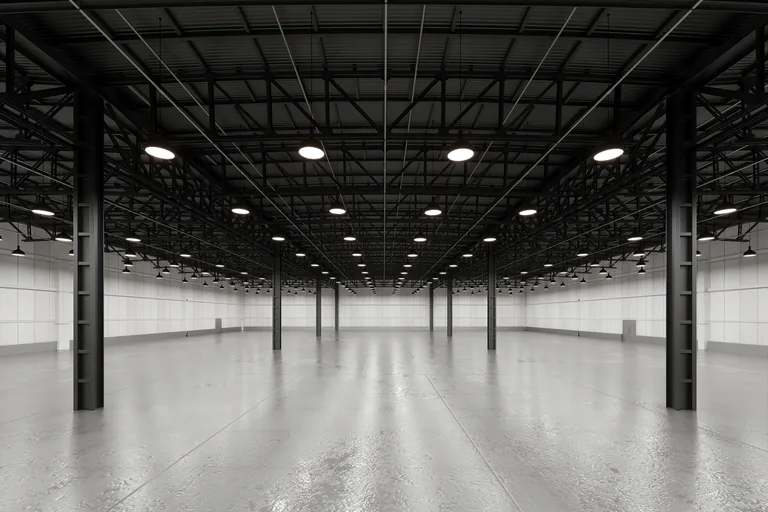

South Carolina did something unusual with its seaport: it moved it inland. SC Ports pushed the Port of Charleston up the state with two rail-served inland ports — Inland Port Greer on the I-85 Upstate corridor, with overnight Norfolk Southern service back to the water, and Inland Port Dillon on the I-95 corridor, served by CSX. A container can now sit on a rack a long way from the ocean and still, functionally, be at the port.
That is a marvel of logistics and a genuinely awkward question for an owner of inventory, because it makes the answer to where are my goods right now? considerably less obvious than it used to be. On a ship. At a terminal. On a train. On a rack in Greer, duty unpaid. On a truck to a plant in Spartanburg. Every one of those is your inventory, bought and paid for and sitting on your balance sheet — and only the last stretch of it is somewhere a commercial property policy has anything to say about.
An arc that starts at a supplier’s dock overseas
The South Carolina distributor is frequently an importer with real ocean exposure. The goods were bought overseas, at your risk from the supplier’s dock, riding the water into Charleston, then trucked or railed inland to a building in the Midlands or the Upstate. That whole arc is a single continuous ownership, and it is a stock throughput problem from end to end.
Stock throughput is one marine-family policy covering owned product across the entire journey — supplier, ocean cargo, terminal, rail or road move, warehouse, customer. The alternative is a patchwork: commercial property insuring stock while it stays put inside a scheduled building, cargo coverage responding while it moves, and a seam between them where a loss falls. In a state that has deliberately spread the port across three hundred miles of rail, the seams are not a technicality. They are where the goods spend most of their lives.
SC Ports is itself the foreign-trade zone grantee for two zones — the coastal zone around Charleston and the Upstate zone in the Greenville and Spartanburg belt — and it works with the Columbia airport district, grantee for the Midlands zone. So duty-deferred storage is available at the water, in the middle of the state, and up in the manufacturing Upstate, which is unusual coverage for a state this size. That duty-unpaid inventory is valuable and encumbered at once: a loss on it carries a customs consequence on top of the loss of the goods.
And the question every importer should be able to answer without hesitating: when does risk of loss actually pass to you? If your purchase terms hand you the goods at a foreign dock and your coverage starts when the truck reaches your gate, there is an ocean and a railroad on which your own inventory is traveling uninsured by you.
The water that arrives without a storm
The Lowcountry exposure is coastal and hydrological, and it is worth being precise about the second word, because it is the one that catches owners out.
Hurricane wind takes the roof plane on a Charleston-area warehouse, and that is real. But the flooding story here runs on two tracks. One is surge and rainfall — the storm arriving, doing what storms do. The other is routine tidal inundation of low-lying ground: water that turns up on an ordinary high tide, with no storm anywhere near it, on a perfectly clear day. And a great many South Carolina distribution buildings sit on filled marshland, which means the building is a flood risk before it is ever a wind risk.
Flood is its own placement. It is not a property peril you may assume, and in this state that single sentence does more work than any other on the schedule. If your owned stock is stacked on a slab in North Charleston, the peril most likely to reach it is precisely the one your commercial property policy will not answer for — and it does not need to be named, or forecast, or even particularly windy to show up. Inland toward the Midlands and the Upstate the profile turns convective instead: severe-thunderstorm wind, hail on a wide roof plane, and the occasional tornado.
Two credentials, and two agencies
South Carolina licenses the beverage trade rather than owning any part of it. Alcohol Beverage Licensing, inside the Department of Revenue, issues the liquor wholesaler license and the separate beer and wine wholesaler permit — two distinct credentials rather than one — and the State Law Enforcement Division plays a role in the application process, so the enforcement arm and the licensing arm are different agencies here. That is a quirk worth knowing before you start the paperwork.
The tier separation itself is strict: no person may hold ownership or a financial interest across the manufacturer, distributor, and retailer lines in liquor. Which lands where every section of this page lands — the distributor tier is private, and the distributor owns what it sells.
The permit that exists because you take ownership
The clearest statement of this state’s logic is not in the liquor code at all. It is in the pharmacy rules.
The Board of Pharmacy, under the Department of Labor, Licensing and Regulation, issues both a wholesale distributor permit and a separate third-party logistics provider permit — and the line between them is ownership. The third-party logistics provider coordinates warehousing without taking ownership of the drugs. If you buy the product and resell it, you are the wholesale distributor, and you hold that permit in your own name. South Carolina has written the whose-goods axis into a licensing statute, which is a tidy confirmation of the thing that decides your entire insurance program.
Food runs on a parallel track. Wholesale food businesses register with the Department of Agriculture and must hold a Registration Verification Certificate before selling food wholesale — and the agency inspects warehouses and food storage facilities, not only processors.
The box on the rack is often a component
South Carolina’s warehouse demand is unusually manufacturing-fed. The Upstate’s automotive, tire, and machinery plants need inbound parts staged and outbound finished goods consolidated, and the inland ports were built precisely to shorten that container move. Layer on distribution for the Southeast consumer market, the Charleston gateway itself, and the growth of the Charlotte-adjacent counties along I-77 and I-85, and you have a state where the box on the rack is frequently a component rather than a consumer good.
Which sharpens the liability. Products liability follows the chain of distribution to a seller, not only to the manufacturer — a wholesaler who bought a product and resold it is a seller. When that product is a component, the size of the eventual claim has very little to do with the price of the part and a great deal to do with the machine it failed inside. And the importer stands at the head of the chain as the first seller in U.S. commerce, which is the realistic target when the foreign maker is beyond the practical reach of a claim. General liability answers through the products-completed-operations hazard, and a wholesaler of components needs a limit sized against the system, not the stock-keeping unit.
Tight aisles, heavy units, and a load that shifts
The private market writes workers compensation in South Carolina; the South Carolina Workers’ Compensation Commission adjudicates it. The claims that come out of a distribution building here are forklift and powered-pallet-jack injuries in tight aisles, dock falls, crush injuries from load shift when a trailer is unloaded, and stored material coming down out of racking. Upstate distribution centers serving automotive and tire plants add heavier unit loads to the mix, which changes the severity of a dropped-load injury rather than merely its frequency.
The route fleet is the second and separate exposure, answered by commercial auto. A necessary note on the vocabulary this trade cannot escape: your insurance carrier is the company that writes your policy, and a motor carrier or freight carrier is a company that hauls goods for hire — both words live in the same sentence here constantly. Above the primary lines, umbrella liability is what a plant customer or a landlord requires of a route-based distribution operation once the contract limits climb past the primary.
What drives the pricing conversation for a South Carolina distributor
We do not print premiums, and any site that does is guessing. What genuinely moves it for an owner of inventory here:
- Whether flood has been placed, and whether the building is on filled or low-lying ground.
- The transit span you own — where risk of loss passes, and how much ocean and rail sits between there and the rack.
- Duty-deferred inventory at the coastal, Midlands, or Upstate zone, and what a loss on it triggers beyond the stock.
- What the product is — a component headed for an assembly line and a case of wine are not one products-liability conversation.
- Concentration — how much owned value stands in one building on the worst day.
- Unit weight at the dock, fleet size, and the split between warehouse and driver payroll.
Where South Carolina distributors and wholesalers concentrate
Charleston
Deep-draft container terminals and the coastal foreign-trade zone, with SC Ports itself as the grantee. An importing wholesaler taking title here has owned the goods since a foreign supplier’s dock — across the ocean leg, which is the span no commercial property policy has ever reached and the reason stock throughput exists.
North Charleston
Where the import distribution buildings actually sit, and much of that ground is filled marshland. A distribution building on fill is a flood risk before it is a wind risk, and flood is its own placement — which decides, more than anything else on the schedule, whether your stacked owned stock is genuinely covered.
Inland Port Greer
A rail-served inland port on the I-85 Upstate corridor with overnight Norfolk Southern service to Charleston. Owned inventory sitting on a rack up here is, functionally, still at the port — which raises a question every importer should be able to answer: which policy is watching the goods at this precise moment?
Inland Port Dillon
The second inland port, on the I-95 corridor with CSX service. Goods routed through here spend a long stretch of their owned life on rail and road rather than on a rack, and the transit legs between the water and the building are where a property form quietly stops applying.
Greenville and Spartanburg
The Upstate manufacturing belt and its own duty-deferred zone, serving automotive, tire, and machinery plants. A parts wholesaler here owns components destined to go inside somebody else’s finished machine, which sizes the products-liability claim to the machine rather than to the part.
Columbia and the Midlands
A third duty-deferred zone through the airport district, giving a distributor in the middle of the state an option that is neither coastal nor Upstate. Duty-unpaid inventory is valuable and encumbered at once, and a loss on it carries a customs consequence layered on the loss of the stock.
Rock Hill and the I-77 corridor
Distribution serving the Charlotte-adjacent growth counties. Owned goods routed from here reach two states in a short haul, which means a large share of the inventory’s life is spent on a trailer rather than under a roof — a transit exposure, not a building one.
If the goods are not yours, you are on the wrong page
An honest signpost. This page is for the business that owns what it stores. If your operation holds other companies’ freight for a fee — a third-party warehouse staging import containers off the Charleston terminal, or holding production material and finished units for an Upstate manufacturer that would rather not own the building — then the goods on your racks are not owned stock, they are a bailment. South Carolina says so itself, in the pharmacy rules: the third-party logistics provider is the one that warehouses without taking ownership. That program begins with warehouse legal liability and turns on your storage contract rather than your purchase terms, and it has its own page: warehouse insurance in South Carolina.
A good many South Carolina businesses do both — they import and resell their own product and warehouse a manufacturer’s alongside it. If that is you, we place both, and we draw the line between them before anything binds.
South Carolina distributor and wholesaler insurance FAQs
What does it mean that South Carolina moved its port inland?
It means a container can sit on a rack a long way from the water and still, functionally, be at the Port of Charleston. SC Ports pushed the port inland with two rail-served inland ports: Inland Port Greer on the I-85 Upstate corridor, with overnight Norfolk Southern service to Charleston, and Inland Port Dillon on the I-95 corridor, with CSX service. For an owner of inventory that raises a question worth being able to answer instantly: where are my goods right now, and which policy is watching them there? Commercial property insures owned stock while it sits in a scheduled building and stops at its walls. It does not follow a box down a rail line, and it was never written to. Stock throughput is the form that does.
Why does an importer in South Carolina need stock throughput?
Because the arc is long and it is all yours. A South Carolina distributor is frequently an importer with real ocean exposure — goods bought overseas, at the distributor’s risk from the supplier’s dock, riding the water into Charleston, then trucked or railed inland to a building in the Midlands or the Upstate. Every mile of that is owned inventory on your balance sheet, and a property policy is standing guard over exactly one segment of it. Stock throughput is a single marine-family form written across the whole span: supplier, ocean cargo, terminal, rail or road move, warehouse, customer. It replaces the patchwork of property and cargo, and it closes the seams between them where a loss can otherwise fall.
Do I need flood coverage if my warehouse is not on the beach?
Very possibly, and the reason is more mundane than a hurricane. The Lowcountry exposure is coastal and hydrological, and the flooding story in and around Charleston runs on two tracks. One is surge and rainfall from a storm. The other is routine tidal inundation of low-lying ground — water that arrives on an ordinary high tide, with no storm anywhere near it. And a great many distribution buildings here sit on filled marshland, which makes them a flood risk before they are a wind risk. Flood is its own placement, always separate from the property policy. If your owned stock is stacked on a slab in North Charleston, the peril most likely to reach it is the one your property form does not answer for.
Which agency licenses a South Carolina beverage wholesaler?
Alcohol Beverage Licensing, inside the Department of Revenue — and there is a wrinkle worth knowing. South Carolina licenses the trade rather than owning any part of it, and it issues two distinct credentials: a liquor wholesaler license and a separate beer and wine wholesaler permit. The State Law Enforcement Division plays a role in the application process, so the enforcement arm and the licensing arm are different agencies here. Tier separation is strict: no person may hold ownership or a financial interest across the manufacturer, distributor, and retailer lines in liquor. The consequence for the insurance program is the one this whole page turns on — the distributor tier is private, and the distributor owns what it sells.
Why is there a separate pharmacy permit for a company that does not own the drugs?
Because South Carolina draws the whose-goods line in statute, exactly where this trade draws it. The Board of Pharmacy under the Department of Labor, Licensing and Regulation issues both a wholesale distributor permit and a separate third-party logistics provider permit — and the distinction is ownership: the third-party logistics provider coordinates warehousing without taking ownership of the drugs. If you buy the product and resell it, you are the wholesale distributor, and you hold that permit in your own name. Food follows a parallel logic: wholesale food businesses register with the Department of Agriculture and must hold a Registration Verification Certificate before selling food wholesale, and the agency inspects warehouses and food storage facilities, not only processors.
Am I in the products-liability chain if I only distribute imported components?
Yes, and in South Carolina that is closer to the norm than the exception. Products liability follows the chain of distribution to a seller, not only to the manufacturer, and a wholesaler who bought a product and resold it is a seller. The exposure is sharpest for the importer: a company bringing a foreign-made component or finished good in through Charleston is often the first seller in the U.S. chain, which makes it the realistic target when the maker sits beyond the practical reach of a U.S. claim. And the state’s demand base sharpens it further — the box on a South Carolina rack is often a component rather than a consumer good, headed for an automotive, tire, or machinery plant, so the claim is sized to the machine it fails inside of rather than to the part itself.
Get a South Carolina distributor insurance quote
Quotes in 1–2 hours during business hours.