
States we serve · South Carolina
Warehouse business insurance in South Carolina
For the third-party, contract, bonded, and food-grade operators from the Charleston terminals to the Upstate inland port at Greer — holding containers and components that belong to importers and manufacturers, not to you.
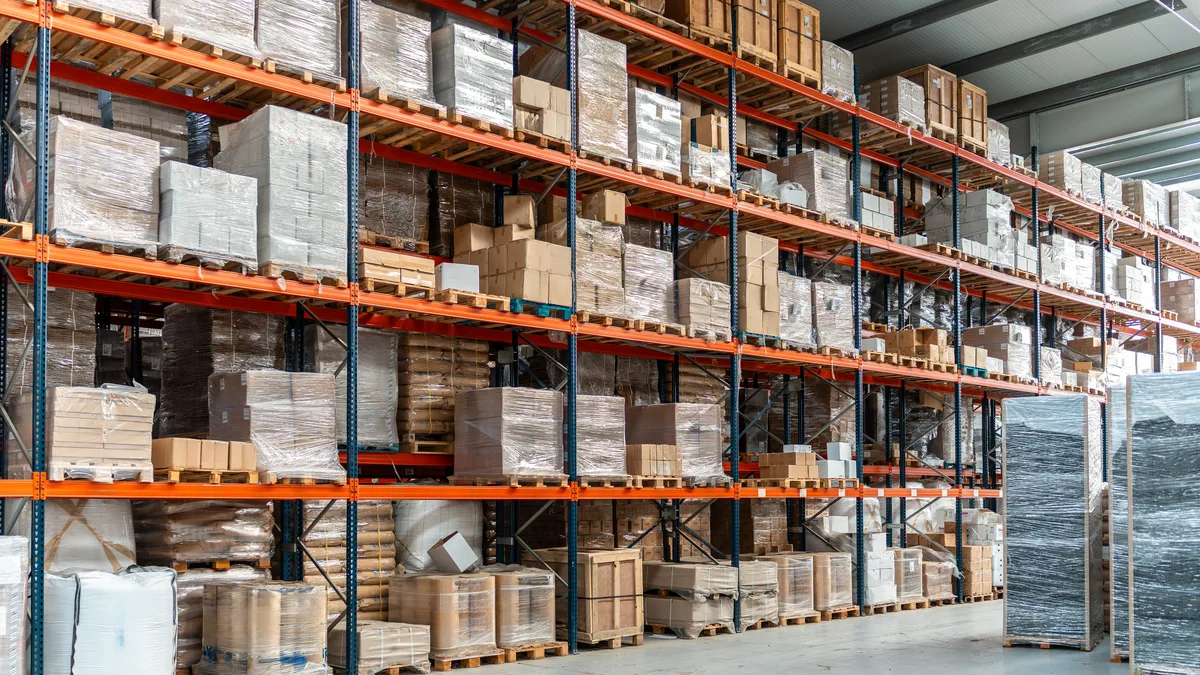

South Carolina did something no other state quite managed: it moved its seaport inland. SC Ports built two rail-served inland ports — Greer on the I-85 Upstate corridor, with overnight rail service to Charleston, and Dillon on I-95 — so a container can sit on a rack a long way from the water while still, functionally, being at the Port of Charleston.
For a warehouse operator that is not a logistics curiosity. It is the definition of your exposure. Because the container moved and the ownership did not move at all. The freight in your Upstate building still belongs to an importer, or to a manufacturer who would rather not own a warehouse — and you are holding it, answering for it, with your name on the receipt.
That is a bailee’s life, and it is the whole of this page.
Custody of a container that never really left the port
Third-party warehousing in this state lives in two places for two reasons. Around Charleston it holds import cargo staged off the terminal — other people’s containers, other people’s goods, in a bailee’s building. In the Upstate near Greer it holds inbound production material and outbound finished units for manufacturers, which makes the operator the custodian of very high-value unit loads it did not build and does not own.
Either way you hold property in your care, custody, and control, and you answer for it. And your general liability policy will not answer with you: a standard general liability form excludes damage to personal property in your care, custody, or control. Staged import freight is precisely that property. The largest exposure in a South Carolina warehouse is carved out of the foundation policy by that policy’s own terms — which is not a defect but the reason the bailee line exists.
Warehouse legal liability answers exactly what the exclusion removes, and it leads a program here. Because the state’s licensed warehouse system covers cotton and grain rather than your building, the shape of your liability is whatever your paperwork says it is — the warehouse receipt, the storage agreement, and the limitation-of-liability language inside it. We read those against the limit before binding, which is how the warehouse insurance program is built.
The State Warehouse System is real — and it is not about you
South Carolina genuinely operates a licensed warehouse system, which puts it in a small minority of states. The State Warehouse System, run by the Department of Agriculture under Title 39, Chapter 22 of the state code, licenses and bonds warehouse facilities, and the department goes further than most — it even helps licensed warehousemen obtain their bonds. It is a serious, supervised bailment regime with the state standing behind the receipts.
Its scope is cotton, grain, and other nonperishable agricultural products. It is agricultural, not general. The contract building holding containers of components off I-85 is not part of it and cannot be, and the honest consequence is worth saying out loud: the state licenses the warehouse holding cotton and does not license the warehouse holding a manufacturer’s entire inbound supply. One of those has a bond behind it. The other has a storage agreement and whatever limit its broker put on it.
The one place South Carolina law says the words
There is a single statute in this state that names the thing this trade actually does, and it is worth knowing about even if it does not apply to your building. Wholesale food businesses register with the Department of Agriculture and must hold a Registration Verification Certificate before selling food wholesale — and the agency inspects warehouses and food storage facilities, not just processors, so a food-grade bailee here is an inspected premises.
On the drug side, the Board of Pharmacy under the Department of Labor, Licensing and Regulation issues a wholesale distributor permit and a separate third-party logistics provider permit — and the state draws the line between them exactly where this trade draws it: the 3PL coordinates warehousing without taking ownership of the drugs. That is the whose-goods axis written into law. It reaches prescription drugs rather than warehousing generally, but the principle it recognises is the principle your entire insurance program should be built around: holding goods and owning goods are different legal positions, and they are answered by different policies.
Duty deferred at the water, in the middle, and up the hill
SC Ports is itself the foreign-trade zone grantee for two zones — the coastal zone around Charleston and the Upstate zone in the Greenville and Spartanburg belt — and it works with the Columbia airport district, which is grantee for the Midlands zone. That is unusual coverage for a state this size, and it reflects how much imported component and finished product moves inland from Charleston.
For a bailee, duty-deferred storage means a second master over the same pallet: the customer who owns the freight, and a customs regime that has not been paid. Value concentration under one roof rises, and the formality of a shortage rises with it. A missing carton in an ordinary building is a phone call; a missing carton in zone space is a filing.
Marsh and wind at the coast, hail and convection inland
The Lowcountry exposure is coastal and hydrological, and the order of concern is not the one owners expect. Hurricane wind takes the roof plane on Charleston-area warehouses — but the flooding story runs on two separate tracks, surge and rainfall on one and routine tidal inundation of low-lying ground on the other. Flood is its own placement here, and a distribution building on filled marshland is a flood risk before it is a wind risk. That sentence is worth reading twice if your building sits behind the port.
Inland toward the Midlands and the Upstate the profile turns convective: severe-thunderstorm wind, hail across a wide roof plane, and the occasional tornado. Different mechanism, same bailee consequence — the envelope opens and the water finds a customer’s components on the racking below. Commercial property answers your roof, your racking, and the income you lose while you cannot ship. It answers nothing at all about the goods, and a South Carolina operator carrying a strong property limit against a thin bailee limit has insured the half of the loss that is easier to replace.
Heavier unit loads change what a dropped load does
The private market writes workers’ compensation in South Carolina, and the state’s Workers’ Compensation Commission adjudicates it. The claims that come out of a distribution building here are the recognisable ones: forklift and powered-pallet-jack injuries in tight aisles, dock falls, crush injuries from load shift when a trailer is unloaded, and stored material coming down out of racking.
The Upstate variation matters. Distribution centers serving automotive and tire plants handle heavier unit loads, and weight changes severity rather than frequency — the same dropped load that bruises a worker in a carton operation breaks something in a component one. Underwriters read unit weight and handling method on a South Carolina submission for exactly that reason.
What an underwriter weighs here
- The value of the goods in your care — not your own assets. It sizes the bailee limit, and in an Upstate building full of production components it is routinely understated.
- Whose freight, and under what status — plain domestic cargo, duty-deferred zone goods, or import containers staged off a terminal.
- Siting — filled marshland and tidal ground behind the port, and whether flood was placed rather than assumed.
- The roof — wind at the coast, hail inland, and the rooftop equipment on either.
- Unit weight and handling method on the material-handling floor, which drives comp severity in the Upstate.
- Your storage agreement — limitation of liability, standard of care, and whether a large manufacturer negotiated the cap away.
- Claims history, which moves pricing further than most of the rest of this list.
Major South Carolina warehouse markets
Charleston and the container terminals
Deep-draft container capacity, with SC Ports itself holding the foreign-trade zone grant for the coastal zone. Third-party warehousing here stages import cargo off the terminal — other people’s containers, other people’s goods — and a bailee holding duty-deferred freight answers to a customs regime as well as to the owner of it.
North Charleston
The industrial ground behind the port, much of it low-lying and some of it filled marshland. That siting reverses the usual order of concern: a distribution building here is a flood risk before it is a wind risk, and flood is a separate placement rather than an endorsement on the property policy.
Inland Port Greer
A rail-served inland port on the I-85 Upstate corridor with overnight Norfolk Southern service to Charleston — which means a container can sit on a rack up here while still, functionally, being at the Port of Charleston. The operator holding it is a bailee of import cargo a hundred miles from the water.
Greenville and Spartanburg
The Upstate manufacturing belt, and the Upstate foreign-trade zone that SC Ports also grants. Third-party operators here hold inbound production material and outbound finished units for manufacturers who would rather not own a warehouse — which makes the 3PL the custodian of very high-value unit loads it did not build and does not own.
Inland Port Dillon
The I-95 corridor inland port, rail-served by CSX. A bailee on this corridor is holding freight moving up and down the eastern seaboard, mid-journey rather than at either end, which puts the storage agreement — not any state license — at the center of a claim for damaged customer goods.
Columbia and the Midlands
The Columbia airport district is grantee of the Midlands zone, giving the middle of the state duty-deferred capability of its own. Inland siting moves the peril conversation from surge to convection: severe-thunderstorm wind and hail on a wide roof plane, over goods that belong to somebody else.
Rock Hill and the I-77 corridor
The Charlotte-adjacent growth counties, drawing regional distribution space onto cheaper ground on this side of the line. Cross-border customer relationships make choice of law and the limitation-of-liability language in the storage contract worth reading before a loss rather than during one.
The State Warehouse System facilities
The Department of Agriculture licenses and bonds warehouses storing cotton, grain, and other nonperishable agricultural products under the state code, and even helps licensed warehousemen obtain their bonds. It is a real, supervised bailment regime — and it is agricultural in scope, which means the contract warehouse holding containers off I-85 is not part of it and never will be.
If you own what is in the container, you are on the wrong page
An honest signpost before the questions. This page speaks to the operator holding other people’s goods. If your South Carolina business buys, holds, and resells its own product — an importer buying overseas at its own risk from the supplier’s dock and riding the water into Charleston, a beverage wholesaler holding a licensed private tier under the Department of Revenue, or an industrial, automotive-parts, or building-products distributor — then your inventory is not a bailment. Your exposure runs with the goods from the foreign dock to the customer, which is the stock throughput picture and a products-liability picture rather than a warehouse legal liability one, and it has its own page: distributor and wholesaler insurance in South Carolina.
The two models sit very close together in this state, because the same building behind the port may stage an importer’s containers and hold the operator’s own line. If yours does, we place both — the distribution operation and the wholesale operation — and we map the seam between them first, because the seam decides which policy answers when the water comes over the marsh.
South Carolina warehouse insurance FAQs
South Carolina has a State Warehouse System. Does my 3PL belong to it?
Almost certainly not, and the distinction matters. South Carolina is one of the few states that actually operates a licensed warehouse system, and it is a genuinely distinctive one — the State Warehouse System, run by the Department of Agriculture under Title 39, Chapter 22 of the state code, licenses and bonds warehouse facilities that store cotton, grain, and other nonperishable agricultural products, and the department even helps licensed warehousemen obtain their bonds. But it is agricultural in scope, not general. A third-party logistics building holding consumer goods or production components off I-85 is not part of it, and answers to its contract and its warehouse receipt instead.
Is there any South Carolina law that recognises storing goods without owning them?
Yes — one, and it is worth knowing about. The Board of Pharmacy, under the Department of Labor, Licensing and Regulation, issues both a wholesale distributor permit and a separate third-party logistics provider permit, and the state draws the line between them exactly where this trade draws it: the 3PL coordinates warehousing without taking ownership of the drugs. That is the whose-goods distinction written into a statute. It applies to prescription drugs rather than to warehousing generally, but it is a useful reminder that the difference between holding goods and owning them is a legal difference, not a semantic one — and your insurance program should reflect it.
What actually covers the import containers sitting in my building?
Warehouse legal liability — the bailee line. When you take custody of an importer’s or a manufacturer’s freight you hold property that is not yours, in your care, custody, and control, and you answer for it while it is there. Your general liability policy will not: a standard general liability form excludes damage to personal property in your care, custody, or control, and staged import cargo is exactly that. The loss you most fear is carved out of your foundation policy by the policy’s own terms, and warehouse legal liability is written to answer precisely what the exclusion removes. In South Carolina it leads the program, because the state’s licensed warehouse system covers cotton and grain rather than your building.
What does the inland-port model change for a warehouse operator?
It moves the custody without moving the ownership. SC Ports pushed the seaport inland with two rail-served inland ports — Inland Port Greer on the I-85 Upstate corridor with overnight Norfolk Southern service to Charleston, and Inland Port Dillon on the I-95 corridor with CSX service — which means a container can sit on a rack in the Upstate while still, functionally, being at the Port of Charleston. For the operator, the practical consequence is that a bailee a long way from the water can be holding duty-deferred, customs-controlled cargo belonging to an importer, with all the value concentration and all the customs obligation that carries.
How do the coastal and inland catastrophe exposures differ?
They are two different underwriting conversations. The Lowcountry exposure is coastal and hydrological: hurricane wind takes the roof plane on Charleston-area warehouses, and the flooding runs on two tracks — surge and rainfall on one, and routine tidal inundation of low-lying ground on the other. Flood is its own placement here, and a distribution building on filled marshland is a flood risk before it is a wind risk. Inland toward the Midlands and Upstate the profile turns convective: severe-thunderstorm wind, hail on a wide roof, and the occasional tornado. Read all of it as a bailee — every one of those perils reaches your customers’ goods before it reaches anything of yours worth arguing about.
Does an Upstate warehouse have a different workers’ compensation profile?
It does, and the difference is weight. The private market writes workers’ compensation in South Carolina and the state’s Workers’ Compensation Commission adjudicates it. The claims coming out of a distribution building here are forklift and powered-pallet-jack injuries in tight aisles, dock falls, crush injuries from load shift when a trailer is unloaded, and stored material coming down out of racking. But Upstate distribution centers serving automotive and tire plants add heavier unit loads to the mix — and heavier unit loads change the severity of a dropped-load injury, not merely its likelihood. A submission that presents component handling as though it were carton picking is not describing the risk being underwritten.
Get a South Carolina warehouse insurance quote
Quotes in 1–2 hours during business hours.