
States we serve · Tennessee
Distributor and wholesaler business insurance in Tennessee
For the automotive-parts, healthcare, appliance, and building-products wholesalers, the beer distributors permitted by local boards, and the importers whose owned stock lands at Memphis by air.
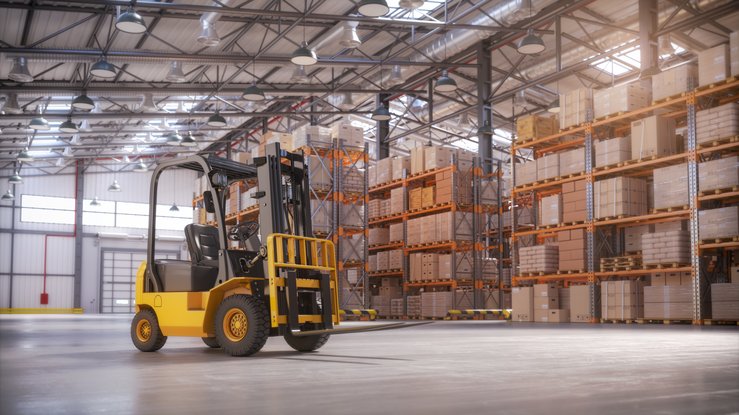

Tennessee is a logistics state with no coastline, and that shapes what its distributors actually own. There is an air hub at Memphis, five Class I railroads meeting in one city, and a working river port on the Mississippi — all in the same place. Nashville sits where I-40, I-65, and I-24 cross. There is no seaport, and there does not need to be.
So the owned-inventory economy here is inland, not maritime. A Tennessee distributor’s goods usually arrive by rail intermodal, by truck from a coastal port in another state, or by air freight into Memphis — which means the stock-throughput arc runs from a foreign factory, through somebody else’s seaport, and across most of a continent, before it ever reaches the owner’s dock.
Read that sentence again from an underwriting point of view. The expensive part of the journey happened somewhere an insurance schedule has never heard of. The risk sits on the inland legs and the transloads — and the distributor owned the goods for every mile of it.
The journey that ends where the policy starts
Stock throughput is one marine-family policy that follows your owned product across the whole span — the foreign factory, the transit, the gateway, the warehouse, the customer. The marine is a historical name and nothing else; the form works identically for a pallet that came off a freighter aircraft and never saw salt water.
What it replaces is a patchwork with holes in exactly the wrong places. Commercial property covers owned inventory while it sits in a scheduled building. A cargo policy covers it while it moves. Between them are the terminal, the ramp, the transload, the third-party facility where a shipment waited — and a Tennessee distributor’s inventory spends most of its vulnerable life in those places, because Tennessee is where the journey ends rather than where it starts.
The question that decides where the coverage has to begin is not in the policy. It is in your purchase terms: did the risk of loss pass at the foreign supplier, at the port of loading, or on arrival? If it passed early and the coverage begins at a Memphis dock door, the goods were yours and uninsured for the interesting part. And because stock throughput is largely a manuscript, non-standard market rather than an off-the-shelf form, the span is negotiated — which is only useful if somebody reads it.
Two regulators, one truck
Tennessee is a license state with a split personality, and a beverage distributor here needs both halves of it straight.
The Alcoholic Beverage Commission licenses manufacturers, wholesalers, and retailers of wine and spirits, and the tiers stay separate — a licensed wholesaler sells only to licensed retailers. But the commission does not license ordinary beer. Beer below the statutory strength threshold is permitted by local beer boards, city by city and county by county, with the Department of Revenue handling the tax side.
So a beer distributor in Tennessee answers to a patchwork of local permitting authorities, while a wine and spirits wholesaler answers to a state commission. Two regulators, potentially two products on the same truck — and in both cases the product is the distributor’s own. That is what makes it a wholesale exposure: owned stock, a products position, and a route fleet, rather than custody of anything belonging to anyone else.
The license that proves the goods are yours
Tennessee draws the whose-goods line in a statute, and it is worth using as a mirror. The Board of Pharmacy licenses third-party logistics providers separately from wholesale distributors. It defines a 3PL as an operation that warehouses drugs without taking ownership of them, requires a separate license for each location, and requires the warehouse to be inspected before it may provide services. A company doing both must hold both licenses.
That definition is the architecture of this entire trade in one sentence. The 3PL holds; it does not own. Its exposure is care, custody, and control. You — the distributor reading this page — bought the product, carry it on your balance sheet, and will sell it. That is why your lead line is stock throughput rather than warehouse legal liability, and it is why products liability reaches you at all. Food warehouses, meanwhile, are regulated by the Tennessee Department of Agriculture’s food safety program — again on the goods, not on the act of storage.
Racking on the New Madrid zone
Memphis sits inside the New Madrid seismic zone, the most active seismic region east of the Rockies, and USGS work on Memphis specifically flags liquefaction risk on the ground along the Mississippi and the Wolf. Most distributors moving into this state do not expect that sentence, and it changes a program.
For a warehouse the seismic story is racking. Tall, heavily loaded selective racking is what fails, and earthquake is a separate placement from the property policy — the standard form does not carry it. For an owner of inventory that distinction is the loss: the building can be perfectly repairable while the entire stock lies in the aisle, unsellable. Rack anchorage, load height, and whether earthquake was actually placed rather than quietly assumed are the three questions worth asking before anything binds.
On top of that, Tennessee is a genuine tornado and severe-convective state through the middle, hail takes wide roof planes — bruising the membrane rather than breaking it, with the water arriving days later on the racking below — and Mississippi River and flash flooding is a real and separate flood exposure at Memphis.
A seller can be sued for what a factory built
Products liability follows the chain of distribution to a seller, not only to the manufacturer. Automotive parts, healthcare products, appliances, and building-products wholesalers hold most of Tennessee’s owned inventory, and every one of them is in that chain for goods somebody else made.
A distributor importing a finished good through Memphis air freight is often the first U.S. seller of it — and when the actual maker is overseas and beyond the practical reach of a U.S. claim, the importer is the realistic target. General liability answers this through what the standard form calls the products-completed-operations hazard, and the limits belong sized against what the part actually does. A component that fails on a vehicle is not a case of consumer goods. Umbrella liability is where the customer contracts push the requirement, and where a severe products or highway loss ultimately lands.
Conveyors, night shifts, and the second crew
The workers’ compensation loss set here skews toward the sortation and parcel end of the trade, which is genuinely different from a conventional pallet warehouse: conveyor and sorter entanglement and pinch injuries, repetitive lifting and reaching on high-speed lines, and night-shift fatigue on hubs that run when everyone else is asleep — alongside the usual powered-industrial-truck strikes, dock falls, and stock coming down out of racking. It is a private-market line, administered by the Bureau of Workers’ Compensation inside the Department of Labor and Workforce Development.
The route drivers are a second injury population entirely, and they need commercial auto behind them. One clarification this trade always needs: your insurance carrier is the company that writes your policy; a motor carrier or freight carrier is a company that hauls goods for hire. Two meanings, one word, and a costly confusion in any contract discussion.
What underwriters ask a Tennessee distributor
We do not print premiums, and any site that does is guessing. The genuine drivers:
- How your goods enter the country, and how much of the journey happened before they reached a building you control.
- Where the risk of loss passes under your purchase terms — the item that decides where the throughput span starts.
- Rack height and anchorage, and whether earthquake was placed as its own line.
- What the product does when it fails — the only honest basis for a products limit.
- Automation on the floor, and the shift pattern behind the comp history.
- Route profile, and the payroll split between the warehouse crew and the drivers.
Where Tennessee’s owned inventory concentrates
Memphis
An air hub, five Class I railroads, and a working river port in one city — the reason Tennessee is a logistics state without a coastline. A distributor importing a finished good by freighter aircraft is very often the first U.S. seller of it, and the duty-deferral logic of the zone here attaches to inventory held inland rather than to a container yard at the ocean.
Nashville
Where I-40, I-65, and I-24 cross, which makes it the highway crossroads of the eastern half of the country. Consumer, healthcare-supply, and automotive distribution concentrates here, and owned inventory placed for national reach spends a very large share of its life on an interstate rather than on a rack.
Chattanooga
The I-75 corridor into Georgia, with automotive and industrial wholesaling feeding the plants across the middle of the state. Inbound parts warehousing means a distributor’s owned stock is timed to a production schedule it does not control — and a delay that spoils nothing can still cost more than a fire, which is a business-income question rather than a property one.
Knoxville
East Tennessee distribution on I-40 and I-81, serving the Appalachian corridor. Building-products and appliance wholesalers here hold bulky owned stock whose value density is low and whose cube is high — a fire or water loss reaches a large share of the inventory at once even when the schedule looked modest.
Murfreesboro
Middle Tennessee distribution space feeding the Nashville market and the automotive plants. This is convective-storm country: tornado and hail take wide roof planes, and hail is the recurring loss — it bruises a membrane rather than breaking it, and the water arrives days later on the racking below.
Jackson
West Tennessee, between Memphis and Nashville on I-40, where regional food and consumer wholesalers run long routes. Owned product spends hours in a trailer here, and a refrigerated load that loses temperature on a summer run is a total loss with nothing to photograph — a transit exposure the property policy was never built to follow.
Clarksville
The northern corridor toward Kentucky, with regional and industrial distribution. A beer distributor working this territory answers to local beer boards city by city and county by county — a patchwork of permitting authorities that shapes the route network and, with it, the amount of owned product sitting in a truck at any moment.
The Mississippi riverfront at Memphis
Ground where USGS work flags liquefaction risk along the river and the Wolf. For a warehouse the seismic story is the racking — tall, heavily loaded selective racking is what fails — and earthquake is a separate placement from the property policy. The building can stand while a distributor’s entire inventory is lying in the aisle.
If the goods are not yours, you are on the wrong page
An honest signpost, and it is a large industry here. The Memphis model is built on holding other people’s goods — parcel and air-freight inventory, medical devices and pharmaceuticals staged for overnight national delivery, retail and e-commerce stock owned by companies headquartered somewhere else entirely. If that is your operation, the inventory on your racks is not owned stock. It is a bailment, your lead line is warehouse legal liability, and your exposure turns on the storage contract and the warehouse receipt rather than on your purchase terms. It has its own page: warehouse insurance in Tennessee.
Plenty of Tennessee businesses do both — they distribute their own product and warehouse someone else’s alongside it. If that is you, we place both, and we draw the line between them before anything binds.
Tennessee distributor and wholesaler insurance FAQs
Who actually permits my beer distribution business in Tennessee?
Not the state commission — and that surprises distributors who have operated elsewhere. Tennessee is a license state with a split personality. The Alcoholic Beverage Commission licenses manufacturers, wholesalers, and retailers of wine and spirits, and the tiers stay separate: a licensed wholesaler sells only to licensed retailers. But the commission does not license ordinary beer. Beer below the statutory strength threshold is permitted by local beer boards, city by city and county by county, with the Department of Revenue handling the tax side. So a beer distributor in Tennessee answers to a patchwork of local permitting authorities while a wine and spirits wholesaler answers to the state commission. Two different regulators for two products that may travel on the same truck — and in both cases the inventory is the distributor’s own.
My goods arrive by air, not by ship. What does stock throughput cover?
The whole arc, which in Tennessee is an inland one. Stock throughput is one marine-family policy that follows your owned product across its entire life — the foreign factory, the transit, the gateway, the warehouse, the customer — and the marine name is a historical artifact rather than a limit on the mode. A Tennessee distributor’s goods usually arrive by rail intermodal, by truck from a coastal port in another state, or by air into Memphis, so the arc runs from a foreign factory through somebody else’s seaport and across the country before it ever reaches the owner’s dock. The risk sits on the inland legs and the transloads. A commercial property policy covers owned inventory only while it sits in a scheduled building, and none of those legs is a scheduled building.
Tennessee licenses a 3PL separately. Does that affect me?
Only as a contrast, and that is exactly why it is worth knowing. The Board of Pharmacy licenses third-party logistics providers separately from wholesale distributors: it defines a 3PL as an operation that warehouses drugs WITHOUT taking ownership of them, requires a separate license for each location, and requires the warehouse to be inspected before it may provide services. A company doing both must hold both licenses. That is the whose-goods line written into state law. If you buy the product and sell it, you are the owner: your exposure is your inventory rather than your custody of somebody else’s, your lead coverage is stock throughput rather than warehouse legal liability, and products liability reaches you because you are a seller in the chain. The state licenses the two roles apart because they are two different businesses.
Is earthquake really a Tennessee problem?
It is, and most people do not expect it. Memphis sits inside the New Madrid seismic zone, the most active seismic region east of the Rockies, and USGS work on Memphis specifically flags liquefaction risk on the ground along the Mississippi and the Wolf. For a warehouse the seismic story is racking: tall, heavily loaded selective racking is what fails and what does the damage, and earthquake is a separate placement from the property policy — the standard form does not carry it. For an owner of inventory that distinction is the whole loss. The structure can be perfectly repairable while a distributor’s entire stock is lying in the aisle, unsellable. Rack anchorage, load height, and whether earthquake was actually placed rather than assumed are the three questions worth asking at placement.
I distribute automotive parts. Am I in the products-liability chain?
Yes. Products liability follows the chain of distribution to a seller, not only to the manufacturer who made the part — so a wholesaler that bought it and resold it is inside the chain. The exposure is sharpest for the importer: a distributor importing a finished good through Memphis air freight is often the first U.S. seller of it, and when the actual maker is overseas and beyond the practical reach of a U.S. claim, the importer becomes the realistic target. General liability answers this through the products-completed-operations hazard, and the limits belong sized against what the part actually does — a component that fails on a vehicle is not a case of consumer goods, and a revenue band cannot tell the difference.
What does the workers compensation exposure look like in a Tennessee building?
It skews toward the sortation and parcel end of the trade, which is a genuinely different loss set from a conventional pallet warehouse. Tennessee has a private workers’ compensation market administered by the Bureau of Workers’ Compensation inside the Department of Labor and Workforce Development. The claims come from conveyor and sorter entanglement and pinch injuries, repetitive lifting and reaching on high-speed lines, and night-shift fatigue on hubs that run when everyone else is asleep — alongside the usual powered-industrial-truck strikes, dock falls, and stock coming down out of racking. Add the route drivers, who are a second injury population entirely, and a distribution business is carrying two distinct exposures rather than one.
Get a Tennessee distributor insurance quote
Quotes in 1–2 hours during business hours.