
States we serve · Texas
Distributor and wholesaler business insurance in Texas
For the merchant wholesalers, beverage and food distributors, and importers who own what they sell — the businesses whose stock crosses at Laredo, lands at Houston, and concentrates in a single building along I-35 before it ever reaches a customer.
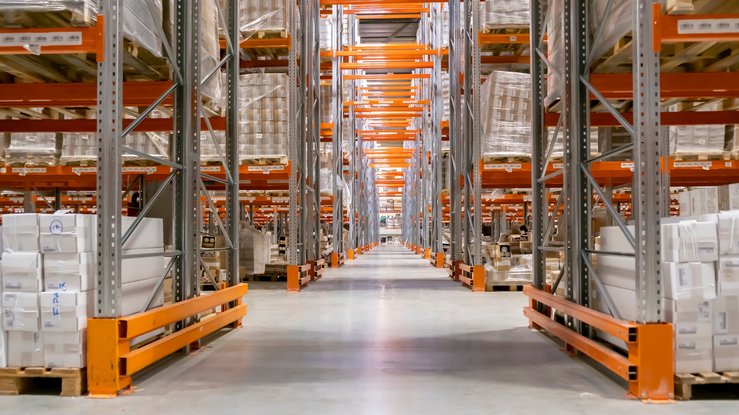

Everything a Texas distributor sells, it owns first. That is the whole difference, and it changes the insurance program from top to bottom. You bought the pallet. You are carrying it on your balance sheet while it crosses a border, while it sits on a dock, while it rides a truck up I-35, and while it waits in your building for an order. Nobody is holding it for you — you are holding it for yourself, and every mile of that journey is your exposure.
Texas gives that ordinary fact two sharp edges. The first is Laredo, the land port where truck and rail freight from Mexico enters the country. A wholesaler whose owned stock clears there is very often the first U.S. seller of goods that were made somewhere else — which quietly places the business at the head of the domestic products-liability chain for a product it never designed, never assembled, and never touched until it was already in a container. The second is the three-tier system: Texas is a license state, so the middle tier of the beverage trade is held by private companies under Texas Alcoholic Beverage Commission credentials, and a beverage distributor here is a licensed, structurally separate business that buys from producers and sells to retailers and never to the public.
Import gateway at one end, licensed middle tier at the other, and an enormous concentration of owned inventory in between. That is the Texas distributor’s risk, and it is not a warehouse’s risk at all.
Stock throughput: one form that follows the product
The instinct is to insure the building and assume the inventory came along with it. For a distributor that instinct is expensive, because the goods are the business and the goods are almost never standing still.
Stock throughput is the answer: a single marine-family policy that covers your owned product across the entire journey — at the supplier, in ocean cargo on the water, across the crossing at Laredo, on the transload dock, in the warehouse, and out to the customer. It exists because the alternative is a patchwork. A commercial property policy insures inventory while it sits in a scheduled building. A cargo policy insures it while it moves. Between those two instruments are seams, and a Texas distributor’s stock spends a remarkable amount of its life in exactly those seams — mid-import, mid-transload, in a third party’s facility, in a yard.
Two honest notes about this line. It is largely a manuscript, non-standard market rather than an off-the-shelf form, which means the wording is negotiated rather than assumed — an advantage if someone reads it, a liability if nobody does. And it is written in the marine family of coverage, which is why the vocabulary around it borrows from ocean and inland marine language even when your product crosses a land border on a truck and never sees salt water. The name is a historical artifact. The coverage is the point.
The question it forces is the one importers most often answer by accident: when does the risk of loss actually pass to you? Your purchase terms may hand you ownership at the foreign supplier’s dock, at the port of loading, or on arrival. Whichever it is, that is when your exposure starts — and if your coverage starts later, there is a stretch of ocean or highway where your own inventory is traveling uninsured by you. We read the purchase terms alongside the policy, because that seam is invisible right up until it is a claim.
The chain of distribution, and the importer at the head of it
A distributor who never made anything can still be sued over what it sold. Products liability follows the chain of distribution, and a claim over a product that injures someone or damages property can reach a seller in that chain — not only the manufacturer.
For the Texas importer this is not an abstraction. When the goods came across at Laredo or El Paso and the manufacturer that made them sits beyond the practical reach of a U.S. claim, the importer — as the first U.S. seller, the party who brought the product into the country — becomes the realistic target. You inherit a products exposure for a design you had no part in. General liability answers this through what the standard form calls the products-completed-operations hazard, and sizing those limits against the products you actually handle, rather than against a generic revenue band, is most of the work.
This is the single clearest way the two halves of this trade diverge. A warehouse operator who merely stores a defective product for its owner is largely outside the chain of distribution — the goods were never theirs to sell. A distributor who bought that same product and resold it is squarely inside it. Same pallet, same building, entirely different liability. It is why the wholesale operating model — buying, holding, and reselling your own inventory — carries a products exposure that a pure storage business simply does not.
Concentration: when the whole season is under one roof
Owned inventory in Texas concentrates into very large single-site holdings, particularly along I-35 and around Houston — and concentration is a catastrophe question, not a logistics one.
Look at what the state does to a building full of your own goods. The hail belt through Dallas–Fort Worth and the I-35 corridor is the quiet, expensive peril: hail does not level a warehouse, it bruises an entire membrane roof plane, and the water that follows finds the racking and your inventory beneath it. The Gulf coast carries named-storm wind and surge. Hard statewide freezes stress sprinkler piping and cold-chain rooms at the same time — which for a food or produce wholesaler is a cargo loss and a property loss in a single event. And flood belongs in its own placement rather than the property policy, which matters enormously when the goods on the floor are on your balance sheet.
Commercial property is the right instrument for the building, the racking, and the owned stock that stays put — together with the business income you lose while the site is down. What it does not do is follow the goods when they leave. That is the division of labor between property and stock throughput, and a distributor who understands it is already ahead of most.
The fleet, the crew, and the non-subscriber question
A distribution business moves its own product, which puts trucks on the road and people on a dock. Commercial auto answers the route-delivery and final-mile fleet — and here a note on language this trade cannot avoid: your insurance carrier is the company that writes your policy, which is an entirely different thing from a motor carrier or freight carrier that hauls goods for hire. This niche uses both words constantly, and confusing them in a contract discussion is genuinely costly.
On workers compensation, Texas is the national exception: comp is elective for most private employers, and a business that declines it becomes a non-subscriber. That is legal, and it is a heavier decision than it sounds. A non-subscriber forfeits the common-law defenses that would otherwise blunt an injury suit — contributory negligence, assumption of risk, and the fellow-employee defense. A distributor carries two separate injury exposures, not one: the warehouse crew lifting and picking, and the route drivers loading, unloading, and working a lift gate all day. Outside the comp system, both become negligence lawsuits rather than no-fault claims. Most customers and landlords require comp regardless.
Above all of it, umbrella liability is what a national customer or a landlord usually demands when the contract limits climb past the primary lines. A route-based distribution operation carries a fleet severity that a warehouse-only business never sees, and the umbrella is usually where that shows up first.
What underwriters actually look at for a Texas distributor
We do not print premiums, and any site that does is guessing. What we can tell you is what genuinely drives the pricing conversation for an owner of inventory:
- The value and concentration of owned inventory — not just the annual total, but how much of it sits in one building on the worst possible day.
- What the product is. A products-liability exposure for industrial fasteners and one for a consumable, a child’s product, or anything with an ingestion or contact risk are not the same conversation.
- Whether you import, and where the risk of loss passes — the first-U.S.-seller posture changes both the products exposure and the stock throughput span.
- How much of the journey you own — ocean and land transit, transload, third-party storage, and the miles your own fleet runs.
- Fleet size and route profile, and the split between warehouse and driver payroll.
- The comp decision — subscriber or non-subscriber — and your claims history over the last several years.
Where Texas distributors and wholesalers concentrate
Laredo
The land port where owned stock crosses from Mexico by truck and rail. A distributor whose inventory clears here is very often the first U.S. seller of it, which places the business at the head of the domestic products-liability chain for goods it did not manufacture. The inventory is also exposed continuously — at the supplier plant, at the crossing, on the transload dock — which is the span a property policy simply does not follow.
Houston and the ship channel
The deep-water seaport where imported inventory arrives by ocean and sits in duty-deferred storage before entry. For an importing wholesaler the exposure begins at the foreign supplier, not at the U.S. dock: ocean cargo is on the water for weeks under someone’s policy, and if that policy is the seller’s rather than yours, the handoff point is where a loss becomes an argument.
Dallas–Fort Worth
The replenishment core, where I-35 splits and Class I intermodal yards feed regional and national distribution. This is where owned inventory concentrates into very large single-site holdings — which is a catastrophe-accumulation question as much as a logistics one, because a hailstorm through the corridor puts water into a roof with a distributor’s entire season underneath it.
San Antonio and the I-35 corridor
The inland consolidation belt where cross-border manufacturing staging becomes national replenishment stock. Beverage and food distributors serving Central Texas run their routes from here, which means owned product is spending a meaningful share of its life on a truck rather than on a rack — a transit exposure, not a building one.
The Rio Grande Valley
Produce and food crossing north into the cold chain and into wholesalers’ hands. For an owner of perishable stock the failure mode is temperature rather than fire: the load is never burned, it is simply no longer sellable, and whether a policy responds to spoilage in transit is a question worth settling before the season, not during it.
El Paso
The far-west crossing on I-10, a second border gateway feeding wholesale inventory into the Southwest. A distributor importing here carries the same first-U.S.-seller posture as at Laredo, with a supply line that runs west rather than north — and with foreign-trade-zone activity that defers duty on goods the distributor already owns.
Austin
A fast-growing consumer market pulling B2B and specialty wholesalers into regional replenishment. Owned inventory turns quickly here, which sounds like a lower exposure and is not: high turnover means the on-hand value at any given moment understates the annual product volume passing through the chain of distribution and the products liability that trails it.
Corpus Christi and the coastal bend
Energy and industrial supply wholesaling on the Gulf, where a distributor’s owned stock sits in a named-storm wind and surge zone. Flood belongs in its own placement rather than the property policy — a distinction that decides whether an owner’s inventory is actually covered when the water arrives.
If the goods are not yours, you are on the wrong page
An honest signpost. This page is for the business that owns what it stores. If your operation holds other companies’ freight for a fee — a public, 3PL, contract, bonded, or cold-storage warehouse — then your inventory is not owned stock at all, it is a bailment, and none of the above is your lead exposure. Your program starts from warehouse legal liability, the bailee line for goods in your care, custody, and control, and it turns on your storage contract rather than on your purchase terms. That is a different risk with a different policy stack, and it has its own page: warehouse insurance in Texas.
A good many Texas businesses do both — they distribute their own product and warehouse someone else’s alongside it. If that is you, we place both, and we draw the line between the two before anything binds.
Texas distributor and wholesaler insurance FAQs
What is stock throughput, and why does a Texas distributor need it?
Stock throughput is one marine-family policy that follows your owned product everywhere it goes — from the supplier, through ocean or land transit, across the border or the dock, into your warehouse, and out to your customer. A Texas distributor needs it because the alternative is a patchwork: a property policy that covers inventory only while it sits in a scheduled building, plus a cargo policy that covers it only while it moves, with seams between them where a loss can fall. For a business whose stock crosses at Laredo or lands at Houston, that inventory spends a great deal of its life in exactly those seams. Stock throughput closes them by insuring the goods on one form for the whole journey, and it is largely a manuscript, non-standard market rather than an off-the-shelf one — the wording is negotiated, which is the point of having someone read it.
Am I really exposed to products liability if I did not manufacture the product?
Yes, and Texas makes it sharper than most states. A distributor, wholesaler, or importer sits in the chain of distribution, and a products-liability claim over a product that causes injury or damage can follow that chain to a seller — not only to the manufacturer who made it. The exposure is sharpest for the importer. A wholesaler whose owned stock crosses at Laredo is frequently the first U.S. seller of goods made abroad, and when the actual manufacturer sits beyond the practical reach of a U.S. claim, the importer becomes the realistic target for it. Standard general liability answers this through the products-completed-operations hazard, and how those limits are sized against the products you actually handle is what we read before binding.
How does the Texas three-tier system affect a beverage distributor?
Texas is a license state, which means private companies hold the middle tier rather than the state itself. The Texas Alcoholic Beverage Commission issues the credentials that define it: a malt-beverage distributor works under a general distributor’s license and adds a branch distributor’s license to serve additional locations, while spirits and wine move under a wholesaler’s permit, with a general class B wholesaler’s permit covering wine. The tiers are kept structurally apart — a company generally may not hold permits in more than one tier — so a Texas beverage distributor buys from manufacturers and importers, warehouses the product, and sells it onward to retailers, never to the public. Your inventory is genuinely yours at every step, which is exactly why it is a stock-throughput exposure rather than a bailment.
Doesn’t my commercial property policy already cover my inventory?
Only while it stays put, and that is the gap. Commercial property answers for your building, your racking, and the owned inventory sitting inside a scheduled location — plus the business income you lose when that location goes down. What it does not do is follow the goods. The moment your product is on the water from a foreign supplier, on a truck coming north from the crossing, on a transload dock, or in a third party’s facility, an ordinary property policy is no longer the right instrument. That traveling exposure is what stock throughput is built for. Most Texas distributors need both, and the honest work is drawing the line between them rather than assuming one covers the other.
Is workers compensation required for a Texas distribution business?
No — Texas is the one state where comp is elective for most private employers. A business that declines it becomes a non-subscriber, must notify its employees, and must report injuries to the Division of Workers’ Compensation. The catch is that a non-subscriber forfeits the common-law defenses that would otherwise blunt an injury suit: contributory negligence, assumption of risk, and the fellow-employee defense. A distribution business carries two distinct injury exposures — the warehouse crew doing the lifting, picking, and dock work, and the route drivers loading and unloading all day — and both become negligence lawsuits rather than no-fault claims if you sit outside the system. Many customers and landlords require comp regardless of what the state permits.
Does my product need coverage while it is still on the ocean or south of the border?
That depends on your terms of sale, and it is the question importers most often answer by accident. Ownership and risk of loss can pass to you at the foreign supplier’s dock, at the port of loading, or on arrival — and whichever it is, that is the moment your exposure begins, not the moment the goods reach your Texas warehouse. If risk passes early and your coverage begins late, there is a stretch of ocean or highway where your owned inventory is traveling uninsured by you. A stock throughput placement is written to start where your risk actually starts, which is why we read the purchase terms alongside the policy rather than after a loss.
Get a Texas distributor insurance quote
Quotes in 1–2 hours during business hours.