
States we serve · Utah
Distributor and wholesaler business insurance in Utah
For the wholesalers, importers, and beer distributors who own what they sell in a state that sits on a fault — where your inventory arrives by rail from a coast you never see, and spends its whole life racked directly above the Wasatch.
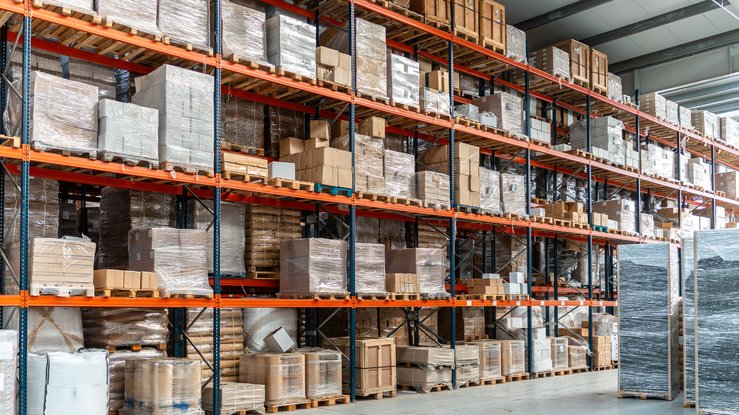

Look at the rack, not the roof. Almost everything a Utah distributor owns spends its working life stacked on steel beams, four or five levels up, in a building on the Wasatch Front — which is to say, directly above an active fault zone. And in a strong shake, the rack goes before the shell does. Anchorage pulls. Beams deflect. Product that was not restrained walks off the shelf and lands in the aisle. The building may still be standing, the roof may be entirely intact, and every pallet you paid for is on the floor.
That is the Utah owner’s problem in one image, and it is a different problem from the one the warehouse across the street has. When somebody else’s goods fall off a rack, it is a question about custody. When yours do, it is a question about your balance sheet — the inventory was an asset you bought, and now it is not.
The rack is the exposure, and earthquake is a separate purchase
The Wasatch fault zone runs beneath the corridor where essentially all of the state’s distribution real estate sits, and the Utah Geological Survey treats a strong Wasatch Front earthquake as a realistic planning scenario rather than a curiosity. For a warehouse, the seismic story is not really the building code — it is the rack: anchorage, capacity, configuration, bracing, and whether stored product is restrained or free to move. Collapsed racking destroys the goods, blocks the egress, and injures the people, long before anyone starts inspecting the shell.
Here is the part that quietly decides everything: earthquake does not ride the standard property form. It is its own placement, and a Utah owner who assumes otherwise has bet an entire inventory on an assumption. Commercial property is still the right instrument for the building, the racking, and owned stock that stays put inside a scheduled location — plus the business income you lose while the site is down. But the peril most likely to empty the building in this particular state has to be bought deliberately, and the terms deserve reading: the deductible basis, the sublimits, and how the racked contents are actually treated. The same shake shows up in the workers compensation file too, and for the same reason — in a serious event, the danger to the people on the floor is the racking and what is on it.
Around all of that sit the rest of Utah’s perils and they are not trivial: wildfire and wildland-urban interface exposure in the canyons and foothills, high desert wind, hail on a wide roof plane, and hard winter freeze on sprinkler systems.
The country’s widest control regime — and what it leaves you to own
Utah reaches further into the beverage trade than any other state, and if you are planning a distribution business here that fact is the first one to absorb. The Department of Alcoholic Beverage Services — renamed from Alcoholic Beverage Control, though the control posture did not change with the name — occupies both the wholesale and the retail tier, and it does so for spirits, wine, and higher-alcohol beer, selling through state stores and state-licensed package agencies.
Read that again in terms of inventory. There is no private spirits or wine wholesaler tier to enter. Product goes to the state, and the state sells it. The private distribution tier that exists in Utah is the lower-alcohol beer channel, where licensed beer wholesalers move product into grocery and convenience retail. A Utah beverage distributor is therefore almost always a beer distributor, and a warehouse holding beverage inventory in this state is, in practice, holding beer. Everywhere else in the country a wholesaler’s beverage book is a question of appetite and contracts; here it is a question of statute.
Licensed on the goods — and, for drugs, licensed per building
The regulatory logic that runs through the alcohol regime runs through the rest of Utah’s owned-goods economy as well: you are credentialed because of what you own, not because of the building you own it in.
The Utah Department of Agriculture and Food registers food establishments, and its definition explicitly includes cold and dry warehouse storage — so a food-grade or refrigerated warehouse is inside the state food regime whether or not anything is processed there. Pharmaceutical distribution runs on a more distinctive track: the Utah Division of Professional Licensing licenses a pharmaceutical wholesaler or distributor as a class of pharmacy, per location, with a designated representative who has real prior experience in prescription-drug distribution and recordkeeping. A drug distributor with two Utah buildings needs two licenses. That is a planning fact as much as a compliance one, and it is worth knowing before the second lease is signed.
An inland port, and stock that has already come a long way
Utah has no coastline, and it is nevertheless an import state. Salt Lake City Corporation is the state’s foreign-trade zone grantee, and the zone sits inside a genuine inland-port story: the Utah Inland Port Authority is a state entity chartered to build logistics infrastructure, with project areas fanning out from the Northwest Quadrant to Tooele Valley, West Weber, the Golden Spike area, and points south. Bonded and duty-deferred storage here is an inland-port function — goods arriving by rail from a West Coast seaport and warehoused before clearing — rather than a dockside one.
Which is why stock throughput is the lead line for a Utah owner rather than an accessory to the property policy. Your goods were yours at a supplier on the other side of an ocean. Yours on the water. Yours at a coastal terminal you have never visited. Yours on a train across two states. Yours on the rack, and yours on the truck out to a customer four states further on. A property policy covers the middle of that story and stops at the walls; a cargo policy covers pieces of the movement. Stock throughput is one marine-family form that follows the product across the whole of it — and the word marine is a historical artifact of where the coverage came from, not a claim about salt water. It works exactly as well on I-80.
The question the form forces is worth asking out loud: when does risk of loss actually pass to you? Your purchase terms may hand you ownership at the supplier’s dock, at the port of loading, or on arrival. Whichever it is, that is where your exposure starts — and if your coverage starts later, there is a long stretch of ocean and railroad on which your inventory is traveling uninsured by you.
The first seller in the U.S. chain
A distributor who never made anything can still be sued over what it sold. Products liability follows the chain of distribution to a seller, not only to the manufacturer, and the importer sits at the head of it: whoever first put the product into U.S. commerce becomes the realistic target when the actual maker is beyond the practical reach of a claim.
That position is held by a great many Utah businesses without much fanfare — the outdoor and recreation-goods wholesalers, the medical-device and supplement distributors, the electronics and component houses selling into the tech corridor. General liability answers this through the products-completed-operations hazard. The limits belong sized against what the product actually is and what it goes into, which for a component distributor is a bigger number than the pallet suggests.
Crew, route, and the lines above them
Utah workers compensation is a private-market line — the state has a competitive fund operating alongside private insurers, which is emphatically not the same thing as a monopolistic state fund, and a Utah employer buys comp on the open market. The exposures in a Salt Lake distribution building are forklift and powered-industrial-truck contact, falls from dock edges and order-picker platforms, being struck by stored material, and the lifting-and-twisting strain a high-throughput pick operation produces.
The route fleet is the second exposure, and commercial auto is where it lands. A necessary note on vocabulary: your insurance carrier is the company that writes your policy, and a motor carrier or freight carrier is a company that hauls goods for hire. This trade uses both words in the same breath, and confusing them in a contract discussion is costly. Above the primary lines, umbrella liability is what a national customer or a landlord usually requires once the contract limits climb past them, and a route-based distribution operation is where that severity tends to appear first.
What drives the pricing conversation for a Utah distributor
We do not print premiums, and any site that does is guessing. What actually moves the conversation for an owner of inventory here:
- Rack anchorage, capacity, and product restraint — the seismic detail that decides whether a shake is an inconvenience or a total inventory loss.
- Whether earthquake has been placed at all, and on what deductible basis.
- The value and concentration of owned stock — how much of it stands in one building on the worst day.
- The transit span you own — where risk of loss passes, and how much ocean and rail sits between there and your dock.
- What the product is — a supplement, a medical device, an electronic component, and a case of beer are four different products-liability appetites.
- Fleet size and route profile, and the split between warehouse and driver payroll.
Where Utah distributors and wholesalers concentrate
Salt Lake City and the Northwest Quadrant
Where I-15 meets I-80 and the Utah Inland Port Authority is building out its core project area. A distributor here takes delivery of owned stock that arrived by rail from a coastal seaport, which means the goods have been at its risk for a very long way before they ever reach a rack — and the whole of that span sits outside a commercial property form.
Ogden
Northern Wasatch Front distribution, absorbing the big-box development the Salt Lake valley floor could not hold. It is also squarely on the fault zone, which makes rack anchorage and capacity a live underwriting question rather than a code footnote — and for an owner, a rack failure is the destruction of inventory you paid for.
Tooele Valley
An inland-port project area west of the lake with room to build the buildings Salt Lake cannot. A distributor consolidating here is concentrating deep owned inventory in a single new facility, and concentration is the number an underwriter cares about most: not the annual value moved, but the value standing in one place on the worst day.
Provo and Orem
The technology and electronics corridor, where component and device distributors hold high-value, low-cube owned stock. The products-liability exposure is disproportionate to the pallet count — a small part inside a larger system generates a claim sized to the system, not to the part.
West Valley City
Food, grocery, and consumer-goods wholesaling serving a fast-growing population. Utah registers cold and dry warehouse storage as a food establishment, so a food distributor here is regulated on the goods it owns — and a refrigeration failure is a total stock loss on inventory that was already on its own balance sheet.
Logan and Cache Valley
Food processing, dairy, and supplement distribution in the north. Owned inventory in this class is perishable or shelf-life-dated, which changes the loss conversation entirely: goods can become unsellable without ever being damaged in a way a loss adjuster can photograph.
St. George
The southern gateway on I-15, serving the Southwest from the low desert end of the state. Owned stock routed through here has a long transit leg in both directions, and high desert heat and wind reach both the building and the trailers standing at its doors.
If the goods are not yours, you are on the wrong page
An honest signpost. This page is for the business that owns what it stores. If your operation holds other companies’ freight for a fee — a public, contract, third-party, bonded, or cold-storage warehouse — then the pallets on your racks are not owned stock, they are a bailment, and a rack collapse on the Wasatch Front is a care, custody, and control loss of somebody else’s inventory rather than a hit to your own balance sheet. That program starts from warehouse legal liability and turns on your storage contract rather than your purchase terms, and it has its own page: warehouse insurance in Utah.
Plenty of Utah businesses do both — they sell their own product and store somebody else’s under the same roof. If that is you, we place both, and we draw the line between them before anything binds.
Utah distributor and wholesaler insurance FAQs
Can I be a spirits or wine wholesaler in Utah?
No, and Utah goes further on this than any other state. The Department of Alcoholic Beverage Services — renamed from Alcoholic Beverage Control, though the control posture did not change with the name — occupies both the wholesale and the retail tier for spirits, wine, and higher-alcohol beer, selling through state stores and state-licensed package agencies. There is no private spirits or wine wholesaler tier to enter: product goes to the state, and the state sells it. The private distribution tier that does exist is the lower-alcohol beer channel, where licensed beer wholesalers move product into grocery and convenience retail. A Utah beverage distributor is therefore almost always a beer distributor, and a warehouse holding beverage inventory in this state is holding beer.
What does the Wasatch fault actually do to my inventory?
It attacks the rack, not the building — and that is the distinction most owners get wrong. The Wasatch fault zone runs directly beneath the Wasatch Front, which is where essentially all of Utah’s distribution real estate sits, and the Utah Geological Survey treats a strong Wasatch Front earthquake as a realistic planning scenario. In a warehouse, that means rack anchorage, rack capacity and configuration, seismic bracing, and whether stored product is restrained or free to walk off a beam. Collapsed racking destroys the goods, blocks the egress, and injures the people long before the roof shell is in question. For a distributor, every one of those pallets is inventory you bought and own, so a rack failure is a direct hit to your balance sheet rather than a claim against somebody else’s.
Does my commercial property policy cover earthquake?
Not by default, and in Utah that is the single most consequential coverage decision an owner of inventory makes. Earthquake is its own placement — it does not ride the standard property form — and a Wasatch Front distributor who assumes otherwise has bet the inventory on an assumption. Commercial property is still the right instrument for the building, the racking, and the owned stock that stays put inside a scheduled location, together with the business income you lose while the site is down. But the peril that would most plausibly empty your building is the one that has to be bought deliberately, and the terms — deductible basis, sublimits, how the racked contents are treated — deserve to be read rather than assumed.
Why would a Utah distributor need stock throughput as well as property?
Because owned stock in Utah is almost always stock that has traveled. The state has no seaport: goods are imported through a coastal port, railed inland, held here, and then sold back out across the interior. Property insures inventory while it sits in a scheduled building and stops at the walls. Stock throughput is one marine-family form that follows the goods across the entire span instead — the foreign supplier, the ocean leg, the coastal terminal, the rail move inland, the warehouse, and the customer. The bonded and duty-deferred storage that the foreign-trade zone and the Utah Inland Port Authority structure make possible is precisely a story about goods that are yours, that are here, and that have not finished their journey. That is a throughput exposure, not a property one.
Do I need a separate pharmaceutical license for each Utah building?
Yes, and it is an unusual rule worth planning around. The Utah Division of Professional Licensing licenses a pharmaceutical wholesaler or distributor as a class of pharmacy, per location, with a designated representative who has real prior experience in prescription-drug distribution and recordkeeping. A drug distributor with two Utah buildings needs two licenses. Food is regulated on a different track but with the same logic — the Utah Department of Agriculture and Food registers food establishments, and its definition explicitly includes cold and dry warehouse storage, so a food-grade or refrigerated warehouse is inside the state food regime whether or not anything is processed in it. In both cases you are credentialed because of what you own, not because of the building it is in.
If I import goods and resell them, am I liable for a defect I had nothing to do with?
You can be. Products liability follows the chain of distribution to a seller, and a distributor or wholesaler who bought a product and resold it is a seller — the manufacturer is not the only party in the chain. The exposure is at its sharpest for the importer, because as the first party to put the product into U.S. commerce you become the realistic target when the foreign maker sits beyond the practical reach of a U.S. claim. Utah does not soften that, and the state’s outdoor and recreation, medical-device, supplement, and electronics distributors are all carrying it. General liability answers through the products-completed-operations hazard, and how those limits are sized against what you actually handle is the work worth doing before you bind.
Get a Utah distributor insurance quote
Quotes in 1–2 hours during business hours.