
States we serve · Virginia
Warehouse business insurance in Virginia
Virginia is one of the few states with a word for what you do. Its pharmacy regulations permit a “warehouser” as a category of its own — an operator who holds goods without owning them — and the whole of your insurance program follows from that single distinction.
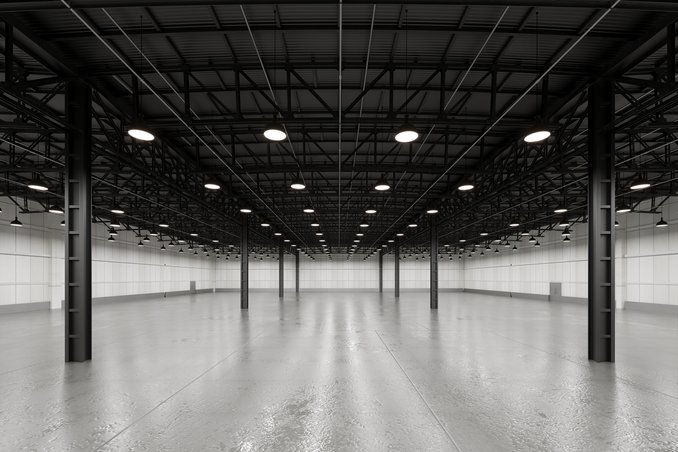

Most states have no vocabulary for this business. They know the wholesale distributor, who buys goods and resells them. They know the manufacturer. They do not have a word for the company whose entire function is holding property that belongs to someone else.
Virginia does. The Board of Pharmacy issues permits not only to wholesale distributors and to third-party logistics providers, but to a distinct category the regulations call a warehouser — with nonresident registrations mirroring each. No permit issues until the facility itself has been inspected and meets storage requirements, and the responsible party must have verifiable experience running drug storage and shipment. The Commonwealth writes the bailee role into its statutes more clearly than almost any other state.
That is not a trivia item; it is the frame for the entire program. A state that has a permit category for the operator who does not own the goods is a state that has understood exactly what your risk is — and your insurance has to follow the same logic.
What the general liability form does with goods you do not own
It excludes them. A standard general liability policy excludes damage to personal property in your care, custody, or control — the imported containers staged in Suffolk, the retail inventory in a Richmond building, the permitted food in a cold room, the drug product in a permitted warehouser’s facility. All of it is precisely what the exclusion removes.
So the loss a Virginia bailee fears most sits outside the foundation policy by the form’s own terms, and no amount of general liability limit reaches it. Warehouse legal liability is the line written to answer exactly what is carved out. It leads the warehouse program here, ahead of the building — and in the one state that has a word for you, that ordering should not be a surprise.
Permitted contents, unlicensed building
Here is the Virginia pattern, and it is worth understanding precisely. The Commonwealth has no general public-warehouse licensing statute. A warehouse storing goods for hire is not licensed as a warehouse. Its duties come from the bailment, the contract, and the warehouse receipt.
What Virginia permits instead is the contents. Under the Virginia Food and Drink Law it is unlawful to operate a food storage warehouse without being inspected and permitted by the agriculture department — the Virginia Department of Agriculture and Consumer Services permits and inspects them — and the department separately licenses grain dealers and handlers. On the drug side, the Board of Pharmacy permits the warehouser, the third-party logistics provider, and the wholesale distributor as separate things, each conditioned on a facility inspection.
So the pharmaceutical rack and the food rack put you under a permit, and the consumer electronics on the next aisle put you under nothing at all. Across all of it, the same document governs what you owe the owner: the warehouse receipt and the storage agreement, including the limitation-of-liability language inside them. There is no general license to hide behind, and no statutory standard of care to fall back on, which is why we read those terms against the coverage before binding.
Clearing customs in the Shenandoah
The Port of Virginia is itself the foreign-trade zone grantee for the zone at the water — a tighter link between a port and duty-deferred storage than most states manage. But the more interesting fact is inland. The Virginia Inland Port at Front Royal is a U.S. Customs-designated port of entry in its own right, sitting where I-81 and I-66 meet.
Which means an importer can clear customs and hold cargo in a duty-deferred posture in the Shenandoah Valley, a hundred road miles from any water. Bonded and FTZ warehousing here is a mainstream tool rather than an exotic one — and for the bailee holding that cargo, it stacks a customs obligation on top of the ordinary duty of care. Over the same pallet you answer to the owner of the freight and to a customs regime that has not yet been paid, and a shortage becomes a formal event rather than a phone call.
A flood problem that does not stay still
Hampton Roads is the exposure that defines Virginia, and it deserves an honest description rather than a reassuring one. It is a water exposure more than a wind one. Norfolk and Portsmouth sit on low ground that floods from tide, storm, and rainfall — and relative sea level there is rising faster than on most of the East Coast, because the land is also sinking.
Read that carefully. A port-adjacent Virginia warehouse has a flood problem that gets worse over time, rather than staying where it was on the day the building was underwritten. Flood belongs in its own placement, written on purpose, and reviewed rather than assumed. Hurricanes and nor’easters bring the wind and the surge. Inland, in the Shenandoah and the Piedmont, the perils are ordinary convective wind and hail on wide roofs, plus winter ice on the I-81 corridor. And in every one of those events the pallets on the floor belong to your customers — which is what makes a Virginia flood a bailee loss before it is a property loss.
The building, the crew, and a threshold that surprises people
Commercial property answers for the shorter list of what is genuinely yours — the shell, the racking and material-handling systems, and the income that stops when the building does. It covers what is yours and stays put; the bailee line covers what is theirs and sits in your care. They are not substitutes.
Workers compensation is a private-market line administered by the Virginia Workers’ Compensation Commission — and the coverage mandate is tied to an employee-count threshold, which catches small distribution operations by surprise more often than it should. A growing 3PL that crosses it mid-year has a compliance problem it did not have in January. The injuries are the usual catalog: forklift and reach-truck strikes, falls off dock edges and out of trailers, hand and foot crush injuries during unloading, and the shoulders and backs of a pick line — with port-adjacent buildings in Hampton Roads adding container and heavy-unit handling to the mix. An umbrella sits over the liability stack, and commercial auto attaches when your own equipment carries a customer’s freight beyond the gate.
What drives cost for a Virginia bailee
- The value of the goods in your care, which sizes the bailee limit and never appears on your balance sheet.
- Flood, and its trajectory. At Hampton Roads the question is not only where the water reached, but where it is going to reach.
- Which permits you already hold — a permitted food storage warehouse or a permitted warehouser arrives with an inspected facility, and that is worth presenting.
- Bonded and FTZ posture, at the water or inland at Front Royal, and how inventory is reconciled against it.
- Headcount, because the comp mandate turns on a threshold and growth crosses it quietly.
- Claims history, which moves pricing more than almost anything else on this list.
Major Virginia warehouse markets
Norfolk and Portsmouth
Deep-water container terminals and one of the East Coast’s serious import gateways, with strong on-dock rail moving boxes west. Port-adjacent contract and public warehouses hold retailers’ and importers’ containers — often in a bonded or FTZ posture, where customs control adds a layer of duty on top of ordinary care, custody, and control.
Suffolk and Chesapeake
Import distribution centers built to receive containers straight off the terminal. The custody here is high-volume and staged, and the buildings sit on low ground — which means the flood conversation comes before the fire conversation, and the pallets on the floor when the water arrives belong to your customers.
The Port of Virginia foreign-trade zone
The port is itself the zone grantee at the water, a tighter link between the terminal and duty-deferred storage than most states have. A bailee admitting goods that have not been entered answers to two masters over the same pallet: the customer whose freight it is, and a customs regime that has not been paid.
Front Royal and the Virginia Inland Port
A U.S. Customs-designated port of entry in its own right, sitting where I-81 and I-66 meet — so an importer can clear customs and hold cargo in a duty-deferred posture in the Shenandoah Valley rather than at the terminal. For the warehouse operator there, bonded custody is an inland business, a hundred road miles from any water.
The I-81 corridor at Winchester
One of the busiest freight corridors in the East, catching distribution that wants to serve the whole Northeast without paying Northeast land prices. Third-party space here holds inventory for owners whose end market is several states away — and winter ice on I-81 is a business-interruption exposure for your customer as much as a property one for you.
Richmond
Where I-95 and I-64 tie the consumer belt to the port. Fulfillment, grocery, and consumer-goods distribution concentrate here, frequently in mixed-customer buildings — so one fire or one roof failure reaches many bailors at once, and a warehouse legal liability limit sized against the biggest single account is sized wrong.
Northern Virginia
The Washington-adjacent market, where the federal and defense economy pulls its own supply and equipment warehousing. A bailee holding government-adjacent inventory is holding goods with unusually rigid delivery obligations attached — an interruption in your building becomes an interruption in a customer’s contract.
The permitted food-storage warehouse
Under the Virginia Food and Drink Law it is unlawful to operate a food storage warehouse without being inspected and permitted by the agriculture department — a permit that reaches a great deal of cold and dry third-party space. A 3PL that adds a food account acquires an inspection and a permit along with the pallets.
If the goods are yours, you are on the wrong page
A final signpost. Everything above is for the operator holding other people’s goods. If your Virginia business owns what it stores — an importer taking title to cargo arriving through Norfolk, a beer or wine wholesaler (spirits inventory belonging to the Commonwealth, since Virginia occupies that tier itself), or a government-supply, building-products, food, or industrial distributor — then nothing on your floor is a bailment. Your inventory is at risk across the entire arc: foreign supplier, ocean leg, terminal, drayage or rail to Front Royal, warehouse, customer. That is the classic stock throughput picture, and as the first U.S. seller you sit squarely in the products-liability chain. It has its own page: distributor and wholesaler insurance in Virginia.
Many Virginia companies run both models under one roof. We place both sides — the distribution operation and the wholesale operation — and the seam between them is the first thing we map.
Virginia warehouse insurance FAQs
Is it true Virginia has a permit category called “warehouser”?
It does, and it is genuinely unusual. Virginia writes the warehouse role into its licensing scheme more explicitly than almost anywhere: the Board of Pharmacy issues permits not only to wholesale distributors and third-party logistics providers but to a distinct category the regulations call a warehouser — with nonresident registrations mirroring each. No permit issues until the facility itself has been inspected and meets storage requirements, and the responsible party must have verifiable experience running drug storage and shipment. What matters for your insurance is what the state is acknowledging by drawing that line: there is a business whose entire function is holding goods it does not own. That business is a bailee, and warehouse legal liability is the coverage written for it.
Does Virginia license a general public warehouse?
No. Virginia has no general public-warehouse licensing statute — a warehouse storing goods for hire is not licensed as such, and its duties come from the bailment, the contract, and the warehouse receipt. What the Commonwealth permits instead is the contents: under the Virginia Food and Drink Law it is unlawful to operate a food storage warehouse without being inspected and permitted by the agriculture department, and the agriculture department separately licenses grain dealers and handlers. So the food you hold can put you under a permit while the consumer electronics on the next rack put you under nothing at all — which means the storage agreement and its limitation-of-liability language remain the whole of your legal perimeter.
What actually answers when a customer’s cargo is destroyed?
Warehouse legal liability, and not general liability. A standard general liability policy excludes damage to personal property in your care, custody, or control — and the containers, the retail inventory, and the food and pharmaceutical product you hold are exactly that. The single loss a Virginia bailee fears most is therefore carved out of the foundation policy by the form’s own terms. Warehouse legal liability answers precisely what that exclusion removes. Commercial property answers only for what is yours and stays put: the building, the racking, and the income that stops when the facility does.
How can I clear customs a hundred miles from the water?
Through the Virginia Inland Port. The Port of Virginia is itself the foreign-trade zone grantee for the zone at the water — a tighter link between the port and duty-deferred storage than most states have — and inland, the Virginia Inland Port at Front Royal is a U.S. Customs-designated port of entry in its own right, sitting where I-81 and I-66 meet. So an importer can clear customs and hold cargo in a duty-deferred posture in the Shenandoah Valley rather than at the terminal. Bonded and FTZ warehousing is a mainstream tool here, not an exotic one — and for the operator holding those goods, it stacks a customs obligation on top of the duty of care owed to their owner.
Why is the Hampton Roads flood exposure described as getting worse?
Because it is, and honesty about it is more useful than reassurance. Hampton Roads is the exposure that defines Virginia, and it is a water exposure more than a wind one. Norfolk and Portsmouth sit on low ground that floods from tide, storm, and rainfall — and relative sea level there is rising faster than on most of the East Coast, because the land is also sinking. A port-adjacent warehouse therefore has a flood problem that gets worse over time rather than staying where it was when the building was underwritten. Flood is a separate placement from the property policy, hurricanes and nor’easters bring the wind and the surge, and inland, in the Shenandoah and the Piedmont, the perils are ordinary convective wind and hail on wide roofs plus winter ice on the I-81 corridor.
Does workers compensation really depend on how many people I employ?
In part, yes, and it catches small distribution operations by surprise more often than it should. Virginia’s workers compensation market is private, administered by the Virginia Workers’ Compensation Commission, and the coverage mandate itself is tied to an employee-count threshold. A growing 3PL that crosses that threshold mid-year without noticing has a compliance problem it did not have in January. The injuries themselves are the usual ones — forklift and reach-truck strikes, falls off dock edges and out of trailers, hand and foot crush injuries during unloading, and the shoulders and backs of a pick line — with port-adjacent buildings in Hampton Roads adding container and heavy-unit handling to the mix.
Get a Virginia warehouse insurance quote
Quotes in 1–2 hours during business hours.