
States we serve · Wyoming
Distributor and wholesaler business insurance in Wyoming
For the supply houses, wholesalers, and beer distributors who own what they sell — heavy owned stock in a Casper or Gillette yard, long routes measured in hours, and a workers’ compensation line you cannot buy from the private market.
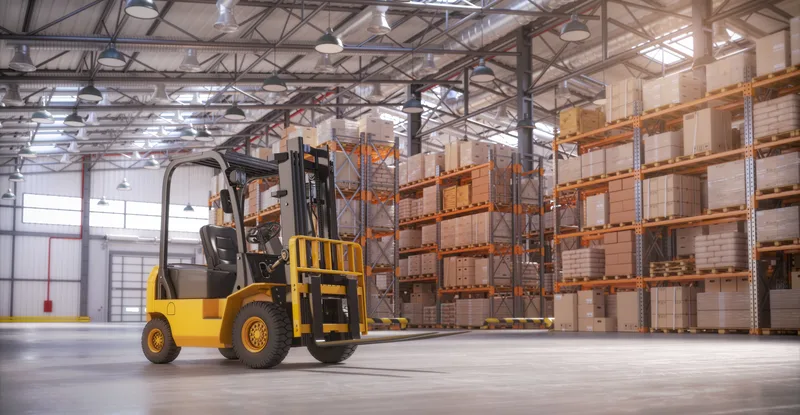

Most of the owned inventory in Wyoming is not sitting on a rack in a conditioned building. It is pipe, valves, fittings, bits, and drilling chemicals in a yard in Casper or Gillette, waiting for an energy operator to need it. It is food, beverage, and building materials in a Sheridan or Laramie warehouse, waiting on a truck that will drive for hours to reach a town nobody else will serve. It is heavy, expensive per pallet, slow to turn, and it belongs to the distributor at every moment of that wait.
That is the shape of the risk here, and it is not the shape most insurance programs are built for. A commercial property policy is a building-centric instrument: it answers for owned stock while the stock stays put at a scheduled location. Wyoming stock does not stay put, and a great deal of it is not even inside. It sits outdoors in the wind, or it spends its working life on I-80 and I-25, crossing a state that is enormous and thinly settled, to reach a customer who is a long way from anywhere.
Wyoming is also a state that removes two options from the table before you start. The Wyoming Liquor Division, inside the Department of Revenue, is the exclusive wholesaler of spirits and of the wines it lists — so a private beverage distributor here is a beer distributor, and nothing else. And workers’ compensation cannot be bought from a private insurer at all. Neither fact is a detail; both change the program.
Owned stock that lives outdoors
Start with what the weather can actually reach. Wind is the Wyoming signature — sustained, relentless, worst along the I-80 corridor — and it is a load on a large roof plane, on the rooftop refrigeration and HVAC units a food wholesaler depends on, and on any envelope detail that was not built for it. It also drifts snow into loads a flat warehouse roof was never designed to carry. Hail hits the eastern plains. Freeze is hard and long enough to break sprinkler lines and to destroy stored goods that cannot take the cold. Wildfire is a rangeland and foothill exposure. Flood belongs in its own placement.
None of that is unusual by itself. What is unusual is where the goods are standing when it arrives. An oilfield supply distributor with a yard full of tubulars and chemicals is holding a very large share of its balance sheet outside, and property forms treat property in the open on entirely different terms from property inside four walls — different sublimits, different conditions, different arguments. Commercial property is still the right instrument for the building, the racking, and the stock that stays inside it, together with the business income lost while a site is down. But it is worth being blunt: for a lot of Wyoming distributors, the property policy is covering the smaller half of the problem.
Stock throughput when there is no ocean
Stock throughput is one policy that follows your owned product across the entire span — from the supplier, through transit, into the warehouse or the yard, and out to the customer. It is written in the marine family of coverage, which is a historical artifact of the name rather than a limit on where it works. There is no seaport in Wyoming and there is no land border, and pretending otherwise would be a fabrication. What there is is a very long land leg: freight entering at Evanston off the Utah line, railing into Cheyenne, running north on I-25 to Casper and beyond, and then going back out again on a route measured in hours.
That is the span the goods actually travel, and it is the span the policy is built for. The alternative is the patchwork: a property form that starts at the warehouse walls, a cargo form that ends at the tailgate, and seams in between where a loss goes looking for a home. Wyoming has more of those seams than a compact state does, simply because the distances are longer and the inventory is on the road more.
The question worth settling before you buy anything: when does the risk of loss pass to you? If your purchase terms hand you ownership at the supplier’s dock in another state, then your exposure began there, not when the truck reached your yard — and if your coverage begins at the yard, there is a long stretch of highway where your own inventory was traveling uninsured by you.
Beer is the private tier
The three-tier system in Wyoming has a wall down the middle of it. The state, through the Liquor Division, is the exclusive wholesaler of spirits and of listed wines. It sells to private retailers; it does not operate the stores. There is no way for a private company to occupy that wholesale tier — the door is not narrow, it is closed.
Malt beverages are the exception, and they are the opening. Beer moves through private distributors in the ordinary way, which means a Wyoming beer distributor buys from breweries, warehouses the product, and delivers it to licensed retailers — and the beer on those pallets is the distributor’s own inventory at every step. That is what makes it a wholesale risk rather than a storage one: nobody is holding that product on somebody else’s behalf, and every mile it travels and every day it sits, it belongs to the business that will sell it.
The comp line you cannot shop
Wyoming is one of the four monopolistic workers’ compensation states. Coverage for the statutory line comes from the state fund administered by the Workers’ Compensation Division of the Department of Workforce Services, and private insurers are not permitted to write it. That is settled, and it is not negotiable.
What is negotiable — and what gets missed — is the gap that comes with it. The state fund’s coverage does not carry employer’s liability. A Wyoming warehouse or distribution employer who wants that protection has to add stop-gap employer’s liability to a general liability policy bought from the private market. Nothing about the injuries themselves is exotic: forklift and powered-industrial-truck contact, falls from docks and racking, material coming down from height, lifting strain on a pick line. A distribution business carries them twice over, in fact — once in the warehouse crew and once in the route drivers who load, unload, and work a lift gate all day. Only the place you buy the coverage changes. Get the stop-gap wrong and the rest of it does not matter.
The drivers themselves need commercial auto, and a note on language this trade cannot escape: your insurance carrier is the company that writes your policy, which has nothing to do with a motor carrier or freight carrier hauling goods for hire. In a state where your own trucks run four-hour legs in wind and snow, the auto file is not a footnote — and umbrella liability is usually where a serious highway loss actually lands.
You are in the products chain even here
A distributor that never manufactured anything can still be sued over what it sold. Products liability follows the chain of distribution to a seller, and a Wyoming business that private-labels a product, or that is the first U.S. seller of an imported one, is squarely in it.
The state adds a specific edge. A supply distributor selling a component into an energy operation is selling into an environment where a failure is consequential — the same fitting carries a different exposure on a wellhead than it does on a shelf. General liability answers this through what the standard form calls the products-completed-operations hazard, and the honest work is sizing those limits against the product and the environment it is going into, not against a revenue band.
What actually drives a Wyoming distributor’s pricing
We do not print premiums, and any site that does is guessing. What we can tell you is what an underwriter is really asking about:
- How much of your inventory is outdoors, and what it is — yard-stored tubulars and chemicals are a different conversation from cartons on a rack.
- Peak concentration: not the average value on hand, but the value on hand on the worst possible day.
- Route miles and fleet profile — how far your own trucks run, in what weather, and on which corridors.
- The product, and where it ends up — a component sold into an energy operation carries a different products exposure than a case of beer.
- The stop-gap decision — whether employer’s liability has actually been placed alongside the state fund, or merely assumed.
- Where the risk of loss passes on your inbound freight, and whether the stock throughput span starts there.
Where Wyoming’s owned inventory sits
Casper
The supply capital of the oil patch. A distributor here owns pipe, valves, fittings, bits, and drilling chemicals, and a great deal of it is stored in a yard rather than in a climate-controlled building — which means the owned inventory takes weather directly, and the underwriting question is not the building at all but what the wind, hail, and freeze can reach.
Gillette
Powder River Basin mining and energy supply. The stock is heavy, expensive per pallet, and it turns slowly — an inventory that sits for long stretches accumulates value at a single point rather than flowing through it, and the total at risk on any given day is a lot closer to the annual purchase figure than a fast-moving retail wholesaler’s would be.
Cheyenne
The one genuine distribution cluster in the state, sitting where I-80 crosses I-25 within easy reach of the Front Range. Owned inventory staged here is serving a market on the other side of a state line, which puts a meaningful share of a Wyoming distributor’s product on the highway rather than on a rack.
Rock Springs and the southwest
Trona, gas, and industrial supply distribution on the I-80 corridor, in the part of the state where sustained wind is worst. For an owner of stock this is where the roof and the rooftop equipment are the weak link — wind does not have to take a building down to open it up, and what follows the opening is water onto product.
Laramie
A university and I-80 town where regional food and beverage wholesalers hold owned stock for a territory that reaches into the mountains. The exposure here is route exposure: product spends hours in a truck between the warehouse and the customer, on a road that closes for wind and snow more often than anyone outside Wyoming would believe.
Sheridan
Northern-tier regional wholesaling on I-90 — building materials, food, and beverage for towns without a distribution center of their own. When a customer is a long drive away and the next delivery is not tomorrow, a distributor carries more owned inventory than a metro wholesaler would, because the alternative to inventory here is a stockout nobody can fix quickly.
Evanston
The western gate on I-80, where inbound freight enters from Utah and Idaho. Stock that crosses into Wyoming here has already been on the road for a long time under somebody’s coverage, and whether it was under yours from the moment the risk of loss passed is a question worth settling with a purchase order rather than a claim file.
If the goods are not yours, you are on the wrong page
An honest signpost. This page is written for the business that owns what it stores. If your operation holds other companies’ freight for a fee — the contract warehouses at the Cheyenne crossing, or the state-licensed and bonded grain warehouses holding a producer’s crop — then the goods on your racks are not owned stock at all. They are a bailment, and your lead line is warehouse legal liability, which turns on your storage contract rather than on your purchase terms. That is a different risk with a different policy stack, and it has its own page: warehouse insurance in Wyoming.
Some Wyoming businesses do both — they distribute their own product and warehouse someone else’s alongside it. If that is you, we place both, and we draw the line between them before anything binds.
Wyoming distributor and wholesaler insurance FAQs
Wyoming has no seaport. Does stock throughput still make sense here?
It does, and the reason is that stock throughput was never really about the ocean — it is about the goods. It is a marine-family policy, which is a historical name, and what it actually does is follow your owned product across its whole life: from the supplier, through transit of any kind, into your yard or warehouse, and out to the customer. In Wyoming that transit is land transit — a truck on I-80, a rail car into Cheyenne, a long haul north to Gillette — and the seams are exactly as real as they are on a dock. A property policy insures your stock while it sits at a scheduled location. Your stock does not sit; it crosses a very large state to reach a customer who is hours away. Stock throughput is the form written for goods in that condition, and forcing an ocean story onto a Wyoming distributor would be dishonest while ignoring the coverage would be worse.
Can a private Wyoming company distribute spirits?
No. Wyoming is a control state at the wholesale tier, and the boundary is precise. The Wyoming Liquor Division, inside the Department of Revenue, is the exclusive wholesaler of spirits and of the wines it lists, and it distributes to state-licensed retailers who are private businesses — the state does not run the retail stores. A private wholesaler cannot enter the spirits tier at all. Malt beverages are the exception, and they are the whole of the private opportunity: beer moves through private distributors in the ordinary three-tier way. So a private beverage distributor in Wyoming is a beer distributor, and the inventory on that distributor’s racks and trucks is genuinely its own — which is precisely why it is a stock-throughput and products exposure rather than a storage one.
Why can I not buy workers compensation from my regular insurance carrier in Wyoming?
Because Wyoming is one of the four monopolistic workers’ compensation states. Coverage for the statutory line comes from the state fund administered by the Workers’ Compensation Division of the Department of Workforce Services, and private insurers are not permitted to write it — the state’s own insurance department says so plainly. That has a consequence most distribution owners here discover late: the state fund’s coverage does not carry employer’s liability. If you want that protection, it has to be added as stop-gap employer’s liability on a general liability policy bought from the private market. The injuries do not change — powered-industrial-truck contact, falls from docks and racking, material falling from height, lifting strain. Only where you buy the coverage does.
My inventory sits outside in a yard. Is that a problem?
It is the Wyoming problem. Oilfield, mining, and drilling-supply distributors hold pipe, valves, fittings, and chemicals in yards where the stock is exposed to sustained wind, to hail on the eastern plains, and to a freeze that lasts. Property forms treat property in the open very differently from property inside a building, and the sublimits that apply to it are the kind of detail that decides a claim. This is a conversation to have at placement — what is actually stored outside, what it is worth, and whether the policy answering for it is the property form, the stock throughput placement, or neither. That last outcome is more common than it should be.
If I did not make the product, am I still in the products-liability chain?
Yes. Products liability follows the chain of distribution to a seller, not only to the manufacturer who built the thing. Any Wyoming distributor that private-labels a product, or that is the first U.S. seller of an imported one, carries that position directly. And there is a Wyoming-specific edge to it: a supply distributor selling a component into an energy operation is selling into an environment where a failure is consequential — the same valve on a shelf in a hardware store and on a wellhead are not the same risk, and the products-completed-operations limits under a general liability policy should be sized against what the product actually does, not against a revenue band.
What does wind actually do to a distributor here?
It does two things, and the second is the expensive one. First, it is a relentless load — sustained high wind across the open country, especially along the I-80 corridor, works on a large roof plane, on rooftop refrigeration and HVAC units, and on any envelope detail that was not built for it. Second, it makes winter worse by drifting snow into loads a flat roof was never designed to carry. What follows a breach is not a wind claim so much as a water-and-cold claim: the goods underneath get wet, or they get cold enough to be unsellable. For an owner of inventory, that is the whole loss, because the building can be repaired and the season cannot.
Get a Wyoming distributor insurance quote
Quotes in 1–2 hours during business hours.