

There is no published price for distributor or wholesaler insurance, and any number posted before an underwriter has seen your operation is a guess. An insurance carrier builds the cost from your specific business — and for a company that owns what it sells, the build starts somewhere most owners do not expect.
Not with how much stock you carry. With how much you carry on your worst day.
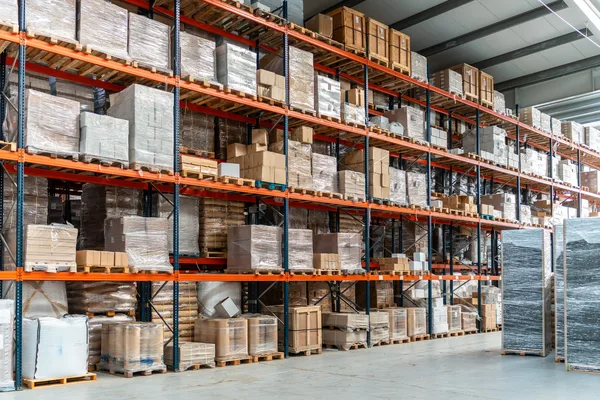
Owners answer the inventory question with a comfortable annual average, because that is the number they run the business on. Underwriters are asking for something else, because a loss does not wait for a convenient month. It arrives in the season you built up for — when the building is fullest, the racking is deepest, and the value on the floor is at its high-water mark. A limit set to the quiet season is a limit that fails you in the busy one.
Everything a distributor sells, it owned first. That is the whole difference from the warehouse down the road that stores other people’s goods, and it changes every driver below.
The peak, and its concentration
This is the number that sizes a stock throughput limit, and getting it wrong is the most expensive routine mistake in this trade.
The question is not “what do you usually hold?” It is: what is the maximum value of owned product concentrated in one place on one day? Two words are doing work there. Maximum, because the average protects you on the days you did not need protecting. And concentrated, because the same total inventory spread across four buildings is a materially different risk than the same inventory stacked under one roof — and consolidation, a genuinely good business decision, is also an accumulation decision whether anyone framed it that way or not. Seasonality, in other words, is close to the center of a distributor’s submission rather than a footnote on it.
What the product actually is
Here is the driver distributors are most surprised by, because it has nothing to do with their building or their trucks. It is the goods themselves.
You sit in the chain of distribution, and a products-liability claim over something that causes injury or damage can follow that chain to a seller — not only to the manufacturer who made it. You did not design it. You did not assemble it. You bought it and you sold it, and that is enough to be named.
So an insurer prices what you handle, and the spread is wide. Industrial fasteners and building products are one conversation. A consumable — food, beverage, a supplement, anything with an ingestion or contact profile — is a very different one, and anything reaching children is different again. A component installed inside somebody else’s finished machine carries its own severity picture, because when it fails it fails downstream, in a context you never controlled. General liability answers all of this through what the standard form calls the products-completed-operations hazard, and sizing those limits against what you actually move is most of the real work on a distributor’s submission.
Whether you import — and when the risk of loss actually passes
Importing does two distinct things to a program, and owners tend to see only the first.
The obvious one is liability: a wholesaler bringing goods in is frequently the first U.S. seller of merchandise made somewhere else, and when the actual manufacturer sits beyond the practical reach of a U.S. claim, the importer becomes the realistic target for a products claim on goods it never made.
The less obvious one is duration. Importing lengthens the span your inventory is exposed for. Your product is on the water, or on a truck coming north from a crossing, or in an air-cargo hub — owned by you — long before it ever reaches your rack. Which raises the question importers most often answer by accident:
When does the risk of loss actually pass to you?
Your purchase terms may hand you title at the foreign supplier’s dock, at the port of loading, or on arrival. Whichever it is, that is when your exposure begins — not when the pallet lands in your building. If your risk passes early and your coverage starts late, there is a stretch of ocean or highway where your own inventory is traveling uninsured by you. That gap is invisible right up until it is a claim.
This is precisely the span stock throughput is written for: one marine-family form following the goods from the supplier, through ocean cargo and inland transit, into the warehouse, and back out to the customer — instead of a property-plus-cargo patchwork with seams in it. For a landlocked distributor the form works exactly the same way; the marine family follows goods across land transit and rail as readily as across water, and no honest guide invents a port for a state that does not have one.
<text x="350" y="32" text-anchor="middle" font-family="Inter, sans-serif" font-size="15" font-weight="600" fill="#0F4C5C">The journey, and the two moments that matter on it</text>

<path d="M50 130 L650 130" stroke="#3F5B64" stroke-width="2" fill="none"/>

<circle cx="90" cy="130" r="6" fill="#0F4C5C"/>
<text x="90" y="160" text-anchor="middle" font-family="Inter, sans-serif" font-size="11" fill="#3F5B64">supplier dock</text>

<circle cx="240" cy="130" r="6" fill="#0F4C5C"/>
<text x="240" y="160" text-anchor="middle" font-family="Inter, sans-serif" font-size="11" fill="#3F5B64">ocean or land leg</text>

<circle cx="390" cy="130" r="6" fill="#0F4C5C"/>
<text x="390" y="160" text-anchor="middle" font-family="Inter, sans-serif" font-size="11" fill="#3F5B64">the gateway</text>

<circle cx="530" cy="130" r="6" fill="#0F4C5C"/>
<text x="530" y="160" text-anchor="middle" font-family="Inter, sans-serif" font-size="11" fill="#3F5B64">your warehouse</text>

<circle cx="650" cy="130" r="6" fill="#0F4C5C"/>
<text x="640" y="160" text-anchor="middle" font-family="Inter, sans-serif" font-size="11" fill="#3F5B64">the customer</text>

<path d="M90 104 L90 74" stroke="#0F4C5C" stroke-width="2" fill="none"/>
<text x="120" y="66" text-anchor="middle" font-family="Inter, sans-serif" font-size="12" font-weight="600" fill="#0F4C5C">risk passes to you</text>

<path d="M530 104 L530 74" stroke="#0F4C5C" stroke-width="2" fill="none"/>
<text x="530" y="66" text-anchor="middle" font-family="Inter, sans-serif" font-size="12" font-weight="600" fill="#0F4C5C">a four-walls policy wakes up</text>

<rect x="90" y="186" width="440" height="30" rx="6" fill="#E2F4F3" stroke="#C3DEDE"/>
<text x="310" y="206" text-anchor="middle" font-family="Inter, sans-serif" font-size="12" font-weight="600" fill="#0F4C5C">yours, and traveling uninsured by you</text>

<rect x="90" y="228" width="560" height="30" rx="6" fill="#ffffff" stroke="#0F4C5C"/>
<text x="370" y="248" text-anchor="middle" font-family="Inter, sans-serif" font-size="12" font-weight="600" fill="#0F4C5C">what a stock throughput form is written to cover instead</text>

<rect x="40" y="278" width="620" height="56" rx="9" fill="#C8935A" stroke="#0F4C5C"/>
<text x="350" y="304" text-anchor="middle" font-family="Inter, sans-serif" font-size="14" font-weight="600" fill="#1A1A1A">If risk passes early and coverage starts late, the gap is yours.</text>
<text x="350" y="324" text-anchor="middle" font-family="Inter, sans-serif" font-size="12" font-weight="600" fill="#1A1A1A">Read your purchase terms before you read your policy.</text>
The fleet, and the two injury exposures
A distribution business moves its own product, which puts trucks on the road. Commercial auto prices the fleet on unit count, radius, what is hauled, and — above all — who drives. Hiring standards, motor vehicle record review, telematics, and how you respond to what the telematics tell you are the difference between a defensible fleet and an expensive one. A note on language this trade cannot avoid: your insurance carrier is the company that writes your policy, an entirely different thing from a motor carrier or a freight carrier that hauls goods for hire.
On payroll, a distributor carries two separate injury exposures, not one, and programs are routinely built as though there were only the first. The warehouse crew works around powered industrial trucks, dock edges, order-picker platforms, and racking, and absorbs the lifting and repetitive-motion strain of a pick line. The route drivers load, unload, work a lift gate, and handle product at a customer’s curb all day — a different injury profile in a different environment. Payroll across both, and the honesty of the split, is what workers compensation is actually rated on.
The system itself is not the same everywhere, and two facts are worth stating plainly. Four states — North Dakota, Ohio, Washington, and Wyoming — run the statutory line through a monopolistic state fund, meaning the coverage is not bought from an insurer at all; what a private program still has to answer for there is employers’ liability, which the fund does not provide, and it is the gap owners in those states most often discover they never closed. And Texas is the one non-subscriber state: comp is elective for most private employers, and a business that declines it forfeits the common-law defenses that would otherwise blunt an injury suit. A competitive state fund, which several states operate alongside private insurers, is a different animal from a monopolistic one and should never be described as the same thing.
Claims, read for shape — and the limits you choose
Claims history moves pricing more than almost anything else on this list, and an underwriter reads it for shape, not just for count. Cargo losses in transit, shrinkage inside the building, and at-fault fleet accidents are three different stories about three different parts of your operation. One large cargo claim reads very differently from a steady drip of driver incidents: the second suggests something structural about hiring or routing, while the first may just be a bad day at sea.
Limits and retention are the lever that is entirely yours. You are choosing how much of the routine to fund yourself in exchange for a better price on the part that could actually end the business. A distributor that absorbs ordinary shrinkage and small handling damage, then buys a serious stock throughput limit sized to the peak and a products limit sized to what it really sells, is buying its insurance in the right order. The reverse — a low retention and a thin catastrophe limit — is paying for convenience and calling it protection. An umbrella belongs over the tail, not over the noise.
Property — but only for what stays put
Commercial property still matters, and it does a specific, bounded job: your building, your racking, and your owned inventory while it sits in a scheduled location, plus the business income you lose when that location goes down.
It stops at the walls. For a distributor whose goods spend most of their exposed life in motion, that is not a criticism of the form — it is a description of it, and the reason stock throughput exists. And flood is its own placement, earthquake is its own placement, and where those matter they matter enormously, because the loss they produce is a loss of stock in a building that may still be standing.
How the states actually differ
This is where a national framework earns its keep, and two axes carry almost all of the variation.
The three-tier spectrum, and why “control state” means nothing generic
Seventeen states control some part of the alcohol trade; thirty-one license it. That is where most explanations stop, and where the useful information starts, because the control states are not interchangeable with each other at all.
Some control both tiers. Pennsylvania holds wholesale and retail for wine and spirits, which means a private Pennsylvania beverage-distribution business is a beer business — full stop. Utah is the widest of all: the state occupies wholesale and retail for spirits, wine, and higher-alcohol beer, leaving a private tier that exists only for lower-alcohol beer. New Hampshire, Virginia, Alabama, and Idaho each occupy both tiers in their own way — Alabama runs state retail package stores alongside its spirits wholesale operation, while beer and wine stay private.
Others control wholesale only, and even then no two do it alike. Michigan certifies private authorized distribution agents to warehouse and deliver the state’s spirits — a business holding goods it does not own, inside a control regime. Maine contracts its state warehousing out to a private operator. Wyoming holds spirits and listed wines while malt moves through private distributors. Ohio retains title to the spirits inventory until sale. North Carolina is the spirits wholesaler while retail runs through independent local ABC boards. Iowa, Montana, West Virginia, Mississippi, Oregon, and Vermont each occupy the wholesale tier on their own terms — Oregon’s commission buys, warehouses, and distributes spirits from a central warehouse while contracted agents who are not state employees run the stores.
Three corrections are worth making explicitly, because they are the ones that get written wrong:
- ⚠ Washington is a license state today. It privatized both spirits tiers. Describing it as a control state is simply inaccurate.
- ⚠ Maryland is a license state whose Montgomery County is a genuine control jurisdiction and the exclusive wholesaler there. Your obligations change at a county line.
- ⚠ Nevada has no ABC agency at all — the tax department licenses importer/wholesalers, and the license is conditioned on already having an in-state warehouse.
The insurance consequence of all this is one sentence: in a licensed middle tier the inventory is genuinely yours at every step, which is exactly why it is a stock-throughput exposure and not a bailment — and in a control state, the product class the state occupies is a class you cannot own at all. Beyond alcohol, the same logic runs through food, dairy, and produce registrations and pharmaceutical wholesale-distributor licensing: a distributor of food, groceries, or drugs is regulated on the goods it owns, building by building in several states.
The gateway, and the span it creates
The second axis is where your imported stock enters the country, and it matters because the gateway type changes the span your owned inventory is exposed for.
A seaport — California’s San Pedro Bay complex, New Jersey, Savannah, Charleston, Virginia — means a long ocean leg during which the goods are already yours, followed by a terminal, a drayage move, and only then a rack. A land port — Laredo and El Paso in Texas, Nogales in Arizona, Santa Teresa in New Mexico, the Detroit–Windsor crossing in Michigan — compresses the transit but adds a border, a queue, and a customs status to inventory sitting in a truck. An air-cargo gateway — Louisville and northern Kentucky, Memphis in Tennessee — shortens the span dramatically and raises the value density of what moves through it.
Three very different shapes. One constant: the first U.S. seller inherits a products exposure for goods it never made, whichever door they came through.
Where it all lands
A distributor is priced on what it owns, where it is, how long it has been yours, and what happens if the thing you sold hurts somebody. Peak inventory first. The product second. The import leg and the moment title passed. The fleet, the crew, the claims, the limits. The building matters — but only for the part of the journey that stands still, which for most distributors is the smaller part.
If you want the coverage mechanics rather than the drivers, stock throughput is the line this framework orbits, and the distribution businesses pillar covers how one of these programs is assembled. Every state has its own guide, and they differ because the states do. When you are ready, ask us for a quote — we will rate the operation you actually run.