

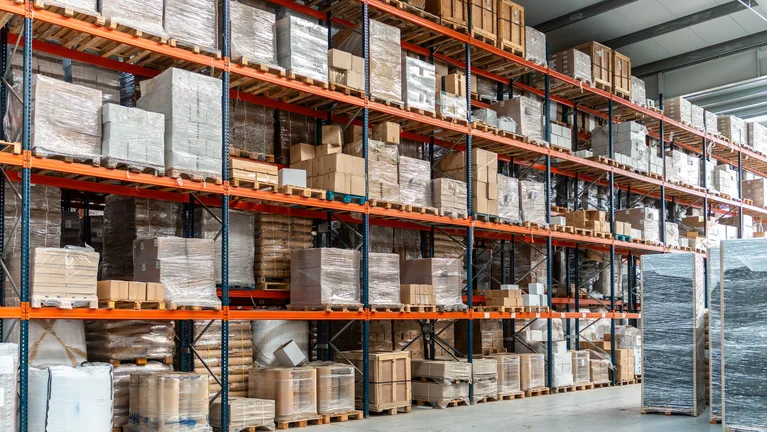
There is no published price for distributor or wholesaler insurance in North Dakota, and any figure quoted before an underwriter has looked at your operation is a guess. What an insurer actually does is build the cost from what you own, where it sits, and what happens to it in the worst week of the year. In this state, that last phrase is unusually literal — because for a great many North Dakota wholesalers, the year does not have twelve months in it. It has about six weeks.
The spring window is the inventory question
An agricultural-input distributor here does not hold a level inventory. The chemical, the seed, the seed treatment, and the fertilizer come in, they concentrate in the building and on the lot, and they move out into the fields inside a compressed planting window. For most of the calendar the value on hand is modest. For a short stretch in spring, it is the largest number the company will see all year.
That spike is the number that sizes a stock throughput limit. Underwriters are not asking what you typically hold — they are asking what the maximum value of owned product concentrated in one place on one day is, because a loss does not politely arrive in a quiet month. It arrives in the one week you cannot replace the stock, cannot re-order it in time, and cannot tell a farmer to plant later.
Owners answer this question with an annual average almost every time, and it is the most expensive routine mistake in the trade. A limit built for December is a limit that fails you in April.
Hazard-classed goods, and the chain you sit in
The second driver has nothing to do with your building. It is the goods themselves.
You did not formulate the chemical. You did not blend the fertilizer. You bought it and you sold it — and that is enough, because you sit in the chain of distribution, and a products-liability claim over something that injures a person or damages a crop can follow that chain to a seller, not only to the manufacturer. General liability answers this through the products-completed-operations hazard, and sizing those limits against what you actually move, rather than against a generic revenue band, is most of the work on a North Dakota input wholesaler’s submission.
And what you move here is not neutral. Hazard-classed agricultural chemistry carries a severity picture that packaged consumer goods do not, and an insurance carrier prices the difference honestly. The same logic reaches the energy-supply distributor: a component sold into a wellsite assembly is a component you are answerable for if it fails, whatever you did or did not do to it.
The stock that never comes indoors
Out west, a large share of an energy-supply distributor’s owned inventory does not live in a warehouse at all. Heavy, expensive, slow-turning equipment and drilling and completion stock sits on yards — high in value, low in turnover, and exposed to a climate that does not negotiate.
Yard inventory is where the coverage gaps in this state actually live. A commercial property policy does a specific and bounded job: your building, your racking, and your owned stock while it sits in a scheduled location, plus the income you lose when that location goes down. It was not designed around an acre of open ground. Stock outdoors has to be scheduled deliberately and valued honestly, because inventory nobody wrote down is inventory nobody insured — and slow-turning stock is exactly the kind an owner forgets to re-declare when the value creeps up.
Where the state fund stops
North Dakota is one of the small number of states where you do not buy the statutory injury line from an insurer at all. It runs exclusively through the state fund, which is the sole provider and administrator; there is no private market for it and no self-insurance route out. Every employee has to be covered before work begins, and even the high-hazard operations are guaranteed coverage.
For a distributor, that means the comp line simply is not part of a competitive placement conversation here — and it also means owners stop thinking about injury cost entirely, which is where the trouble starts. Two separate injury exposures still exist: the warehouse crew lifting, picking, and working around powered industrial trucks, and the route drivers loading, unloading, and working a lift gate on a January morning. And there is a real gap on the other side of the fund: employers’ liability, which the monopolistic fund does not provide, is a coverage a private program still has to supply. It is the single most common uncovered line I find on a North Dakota distributor’s existing program, and it is a genuine cost point, not a technicality. See workers compensation for how the statutory line and the liability line differ.
<text x="350" y="34" text-anchor="middle" font-family="Inter, sans-serif" font-size="15" font-weight="600" fill="#0F4C5C">Two halves of the injury question — one is not for sale</text>

<rect x="52" y="64" width="250" height="120" rx="8" fill="#E2F4F3" stroke="#C3DEDE"/>
<text x="177" y="100" text-anchor="middle" font-family="Inter, sans-serif" font-size="14" font-weight="600" fill="#0F4C5C">Statutory benefits</text>
<text x="177" y="126" text-anchor="middle" font-family="Inter, sans-serif" font-size="12" fill="#3F5B64">The state fund only</text>
<text x="177" y="146" text-anchor="middle" font-family="Inter, sans-serif" font-size="12" fill="#3F5B64">No insurer writes it</text>
<text x="177" y="166" text-anchor="middle" font-family="Inter, sans-serif" font-size="12" fill="#3F5B64">Not a placement decision</text>

<rect x="398" y="64" width="250" height="120" rx="8" fill="#ffffff" stroke="#0F4C5C"/>
<text x="523" y="100" text-anchor="middle" font-family="Inter, sans-serif" font-size="14" font-weight="600" fill="#0F4C5C">Employers’ liability</text>
<text x="523" y="126" text-anchor="middle" font-family="Inter, sans-serif" font-size="12" fill="#3F5B64">The fund does not provide it</text>
<text x="523" y="146" text-anchor="middle" font-family="Inter, sans-serif" font-size="12" fill="#3F5B64">A private policy must</text>
<text x="523" y="166" text-anchor="middle" font-family="Inter, sans-serif" font-size="12" fill="#3F5B64">This one IS yours to place</text>

<path d="M312 124 L388 124" stroke="#0F4C5C" stroke-width="2" fill="none" stroke-dasharray="5 4"/>
<text x="350" y="208" text-anchor="middle" font-family="Inter, sans-serif" font-size="12" font-weight="600" fill="#0F4C5C">the gap owners here</text>
<text x="350" y="226" text-anchor="middle" font-family="Inter, sans-serif" font-size="12" font-weight="600" fill="#0F4C5C">stop looking for</text>

<rect x="40" y="252" width="620" height="54" rx="9" fill="#C8935A" stroke="#0F4C5C"/>
<text x="350" y="277" text-anchor="middle" font-family="Inter, sans-serif" font-size="14" font-weight="600" fill="#1A1A1A">A monopolistic fund is not a whole program.</text>
<text x="350" y="296" text-anchor="middle" font-family="Inter, sans-serif" font-size="12" font-weight="600" fill="#1A1A1A">The half you cannot buy makes owners forget the half you must.</text>A middle tier licensed by the tax collector
If beverages are your book, North Dakota puts the regulator somewhere unusual. There is no standalone liquor commission: the Office of State Tax Commissioner administers the licensing, regulation, and taxation of alcohol manufacturers and wholesalers, licenses the beverage wholesalers themselves, and licenses every supplier shipping to one. The middle tier is private and small, and it reports monthly — a beer wholesaler files a monthly report of gallonage purchased. Retail licensing is largely a municipal matter.
The insurance consequence is direct. Because the tier is licensed rather than state-occupied, the inventory in your building is genuinely yours at every step — which is exactly why it is a stock-throughput exposure and not somebody else’s goods in your care. Food wholesaling sits under a comparable logic: Health and Human Services licenses food processing where product is stored for wholesale with no direct consumer sale, and drug wholesaling runs through the Board of Pharmacy. In each case, the state is regulating you on the goods you own.
Snow, freeze, and a roof with your season under it
The peril conversation here is a cold-country conversation, and it should not be dressed up as anything else. Snow load on a wide, low-slope roof plane is a first-order structural exposure: a distribution building is an enormous horizontal accumulation surface, and drifting against parapets and roof steps concentrates the load where the structure is least happy about it. Sustained extreme freeze threatens wet-pipe sprinkler systems and partially heated bays, and a heat-loss event in a building holding temperature-sensitive product becomes a stock loss in hours — not a property loss, a stock loss, and the distinction matters when the goods are on your balance sheet. Hail and convective wind occur; they are not the signature. The Red River of the North is the flood question, and flood belongs in its own placement.
The fleet, the claims, and the limits
A distributor moves its own product, and here it moves it across long, cold, empty distances. Commercial auto prices unit count, radius, what is hauled, and above all who drives — and a winter route profile with a thin hiring record is expensive in any market. One note on language this trade cannot avoid: your insurance carrier writes your policy, which is an entirely different thing from a motor carrier or freight carrier hauling goods for hire.
Claims history is read for shape rather than count. A single large cargo loss in transit tells a different story than a steady drip of at-fault fleet incidents on I-94 and I-29 — the second suggests something structural about hiring or routing, the first may just be a bad day. Limits and retention are the lever that is entirely yours: fund the ordinary shrinkage and small handling damage yourself, and spend the money on a stock throughput limit sized to the spring spike and a products limit sized to what you really sell.
The list, and nothing more
North Dakota is a small distribution economy, and the guide to it should be a short one. Your owned stock, its spring concentration, what the product is, how much of it lives outdoors, the roof over the rest, the drivers, and the injury coverage the state fund does not supply. That is the list.
If you want the coverage mechanics rather than the cost drivers, stock throughput is the line this whole guide orbits, the distribution businesses pillar covers how these programs are assembled, and the North Dakota distributor and wholesaler insurance page goes deeper. If the goods in your building belong to your customers rather than to you, this is the wrong guide — read the warehouse cost guide instead. Or ask for a quote and we will price the real operation.