

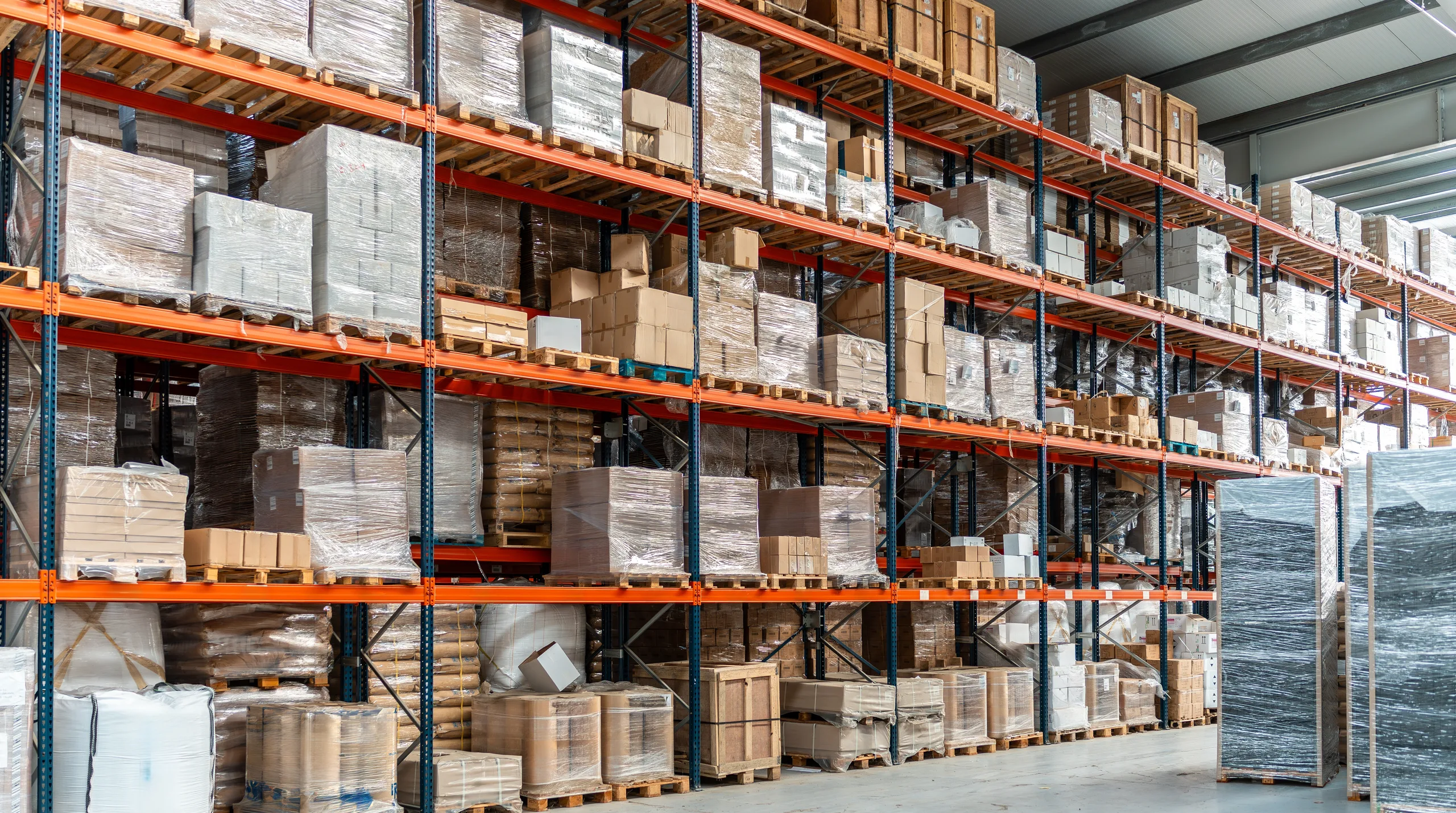
Ask what an Arizona warehouse pays and the honest first answer is a question back: which Arizona?
Because there are two, and they barely resemble each other. In metro Phoenix, third-party and contract warehousing is big-box and fast — cross-docking and fulfillment for owners whose goods are moving through the building rather than resting in it. Down at the border, at Nogales, the third-party warehouse is a cold-chain custodian: holding, inspecting, repacking, and consolidating imported produce that belongs to a grower or an importer somewhere else, in temperature-controlled space, against a clock.
Both are bailees. Both hold other people’s goods. They fail in completely different ways, and an insurance carrier prices them from those different failures.
Phoenix: the goods are only passing through
The Phoenix distribution build-out exists because companies want to serve Southern California without paying to warehouse in it, and the buildings that resulted are built for velocity. Freight lands off I-10, gets broken, gets picked, and leaves.
For a bailee, velocity means the loss is rarely one catastrophic event. It is an accumulation — shrink, mis-ships, handling damage, a pallet dropped in a congested aisle, an inventory count that will not reconcile. That is a frequency story, and it is underwritten as one: an insurer looks at process discipline, at inventory controls, at how the building actually runs, more than at any single worst-case number.
An increasing share of that space is bonded or foreign-trade-zone designated, and Arizona has an unusually deep zone bench for a non-coastal state — Phoenix, Mesa, Tucson, the border zones, the Yuma area. Take in duty-deferred freight and you have stacked customs obligations on top of your ordinary duty of care to the owner. One pallet, two masters, and an underwriter prices the accumulation of both.
Nogales: a custodian with a clock
Now go south. The Mariposa land port is one of the country’s major inbound produce gateways, and the customs infrastructure there includes temperature-controlled inspection space. Cold-chain and bonded storage in Arizona are frequently the same conversation.
The bailee exposure here is care, custody, and control at its sharpest. The goods can spoil into total loss without the building being touched. A refrigeration failure, a power interruption, a delayed release — any of them can destroy a customer’s inventory in hours, and when it is over the racking is undamaged, the roof is intact, and there is nothing to photograph.
That is a severity story, and the controls that price it are specific: redundancy, monitoring, alarm response, maintenance records, and how quickly a human being can actually get to the building. Those questions are not a formality. They are the underwriting, because they describe the only route by which the largest loss in the building actually happens.
This is what warehouse legal liability is written to answer — the customer’s goods, destroyed, in your care, with your own property intact.
What both buildings have in common
Underneath the split, the same driver decides both: the value and the nature of the customers’ goods in your care.
Value is the maximum amount of customer-owned freight in your custody on the busiest day — the peak of the produce season, the peak of the shipping season — not a quiet Tuesday. A limit set to an average holding is a limit that fails you in the month you actually needed it.
Nature is what gets skipped. Electronics and semiconductor-supply freight, consumer goods, imported produce: they can occupy identical footprints and price nothing alike, because the amount at risk per pallet position differs enormously and because the way each goes to zero is different. Produce spoils. Electronics get stolen. Housewares burn. The limit and the controls follow the commodity.
The unglamorous driver: inventory control
In a high-velocity Phoenix building, the drivers that move the number are not dramatic. They are clerical, and they are the ones owners are least likely to bring to a meeting.
Thousands of small customer-owned items moving daily means the bailee loss is very often an accumulation rather than an event: a pick error that ships a customer’s goods to the wrong buyer, a receiving count that never reconciled, shrink that shows up at a cycle count and cannot be attributed to anything, damage that happens between the trailer and the rack and is discovered by somebody else. None of those makes a photograph. All of them are the customer’s property, and all of them land on the same duty of care.
So an underwriter looking at a fulfillment or cross-dock operation asks about process: cycle-count discipline and how discrepancies are investigated; scanning and chain-of-custody at receipt and at release; who is authorized to hand freight to a driver, and what happens when a dispatcher arrives without the paperwork; how damage found on arrival is documented before it becomes your problem.
An operation that can show that record reads as a frequency risk that is controlled. One that cannot reads as a frequency risk that is unbounded, and unbounded is the expensive word.
Heat is an underwriting fact, not a weather remark
Most states let you treat climate as color. Arizona does not.
Extreme, sustained heat is the baseline peril here, and it reaches the file in three separate places:
- The roof. Heat stresses roofing membranes across a very large horizontal surface, and that surface is the thing standing between the sun and a customer’s freight.
- The refrigeration. Equipment runs hard for months, and in a cold-storage or produce building a failure in that heat destroys the contents fast. The margin between an alarm and a total loss is measured in hours.
- The people. A metal-roofed warehouse in a Phoenix summer, and especially an open dock, is a genuine heat-illness risk for the crew working it. Workers compensation is a private-market line here — the state has a competitive fund in the market alongside private insurers, which is not a monopolistic arrangement — and the ordinary warehouse claims are all present: forklift strikes in a crowded cross-dock, dock-plate and trailer-edge falls, product coming off high racks, lifting strain on a pick line. Heat sits on top of all of them.
The rest of the peril set is monsoon-shaped. Violent seasonal thunderstorms, damaging outflow winds and dust storms scouring a large roof plane, and flash flooding in washes and low ground — flood being its own placement, kept off the commercial property form. Hail is real if less frequent on the big flat roofs of the Phoenix corridor. Wildfire matters in the higher, brushier country. Earthquake is not the Arizona story and should not be dressed up as one.
No license — the receipt draws the line
Arizona has no state public-warehouse licensing statute for general merchandise. What the state does is subtler and worth knowing: it recognizes the warehouse operator by reference to whether the operator issues a warehouse receipt or other document of title. That is the legal line separating a real warehouse from an ordinary storage rental — and it means the document you issue is not paperwork, it is the thing that defines what you are.
Absent a license, the warehouse receipt and the storage contract are the whole of what you owe the owner of the goods. So they are the whole of what an underwriter reads. Whether your limitation-of-liability clause survived a customer’s legal review, whether the released-value terms are the ones you believe they are, whether a produce importer extracted a full-value commitment during a tight season — all of it changes the exposure the policy is being asked to carry.
Food is the one place the state does reach the building: food safety on the production, processing, and warehousing side sits with the agriculture department rather than the retail-food regulator, which has real weight at Nogales where the produce-import trade lives.
One duty of care, two ways to fail it
<text x="350" y="30" text-anchor="middle" font-family="Inter, sans-serif" font-size="15" font-weight="600" fill="#0F4C5C">The same goods-in-care question, answered two ways</text>

<rect x="130" y="48" width="440" height="64" rx="9" fill="#C8935A" stroke="#0F4C5C"/>
<text x="350" y="74" text-anchor="middle" font-family="Inter, sans-serif" font-size="14" font-weight="600" fill="#1A1A1A">The value AND the nature of the goods in your care</text>
<text x="350" y="96" text-anchor="middle" font-family="Inter, sans-serif" font-size="12" font-weight="600" fill="#1A1A1A">It sizes the warehouse legal liability limit — in both Arizonas</text>

<line x1="350" y1="112" x2="350" y2="136" stroke="#0F4C5C" stroke-width="2"/>
<line x1="180" y1="136" x2="520" y2="136" stroke="#0F4C5C" stroke-width="2"/>
<line x1="180" y1="136" x2="180" y2="160" stroke="#0F4C5C" stroke-width="2"/>
<line x1="520" y1="136" x2="520" y2="160" stroke="#0F4C5C" stroke-width="2"/>

<rect x="40" y="160" width="280" height="150" rx="9" fill="#ffffff" stroke="#0F4C5C"/>
<text x="180" y="186" text-anchor="middle" font-family="Inter, sans-serif" font-size="13" font-weight="600" fill="#0F4C5C">The Phoenix cross-dock</text>
<text x="180" y="210" text-anchor="middle" font-family="Inter, sans-serif" font-size="12" fill="#3F5B64">Goods are moving through,</text>
<text x="180" y="228" text-anchor="middle" font-family="Inter, sans-serif" font-size="12" fill="#3F5B64">not resting</text>
<text x="180" y="256" text-anchor="middle" font-family="Inter, sans-serif" font-size="12" font-weight="600" fill="#0F4C5C">A FREQUENCY story</text>
<text x="180" y="276" text-anchor="middle" font-family="Inter, sans-serif" font-size="12" fill="#3F5B64">Shrink, mis-ships, handling damage</text>
<text x="180" y="296" text-anchor="middle" font-family="Inter, sans-serif" font-size="12" font-style="italic" fill="#3F5B64">Priced on process discipline</text>

<rect x="380" y="160" width="280" height="150" rx="9" fill="#ffffff" stroke="#0F4C5C"/>
<text x="520" y="186" text-anchor="middle" font-family="Inter, sans-serif" font-size="13" font-weight="600" fill="#0F4C5C">The Nogales cold house</text>
<text x="520" y="210" text-anchor="middle" font-family="Inter, sans-serif" font-size="12" fill="#3F5B64">Goods are resting, and</text>
<text x="520" y="228" text-anchor="middle" font-family="Inter, sans-serif" font-size="12" fill="#3F5B64">the clock is running</text>
<text x="520" y="256" text-anchor="middle" font-family="Inter, sans-serif" font-size="12" font-weight="600" fill="#0F4C5C">A SEVERITY story</text>
<text x="520" y="276" text-anchor="middle" font-family="Inter, sans-serif" font-size="12" fill="#3F5B64">The building is fine. Their load is gone.</text>
<text x="520" y="296" text-anchor="middle" font-family="Inter, sans-serif" font-size="12" font-style="italic" fill="#3F5B64">Priced on redundancy and response</text>

<text x="350" y="340" text-anchor="middle" font-family="Inter, sans-serif" font-size="12" font-style="italic" fill="#3F5B64">Neither branch is a price. Each is how a different one gets built.</text>The honest summary
Arizona’s freight geometry is legible — I-10 through Phoenix, I-19 dropping from Tucson to the line at Nogales — but geography is not what prices your building. Custody is. What is on your racks, whose it is, how much of it is there in the worst week, and what it takes for it to be worth nothing by morning: those are the questions, and they have different answers at the two ends of this state.
If you would rather understand the coverage than the price, start with warehouse legal liability, see how a full program is assembled on our warehouse business insurance page, or read the Arizona warehouse insurance page. And if the produce in the cold room is yours — if you took title at the line and own it all the way to the customer — you are not a bailee at all, and the distributor cost guide is the one written for you.