

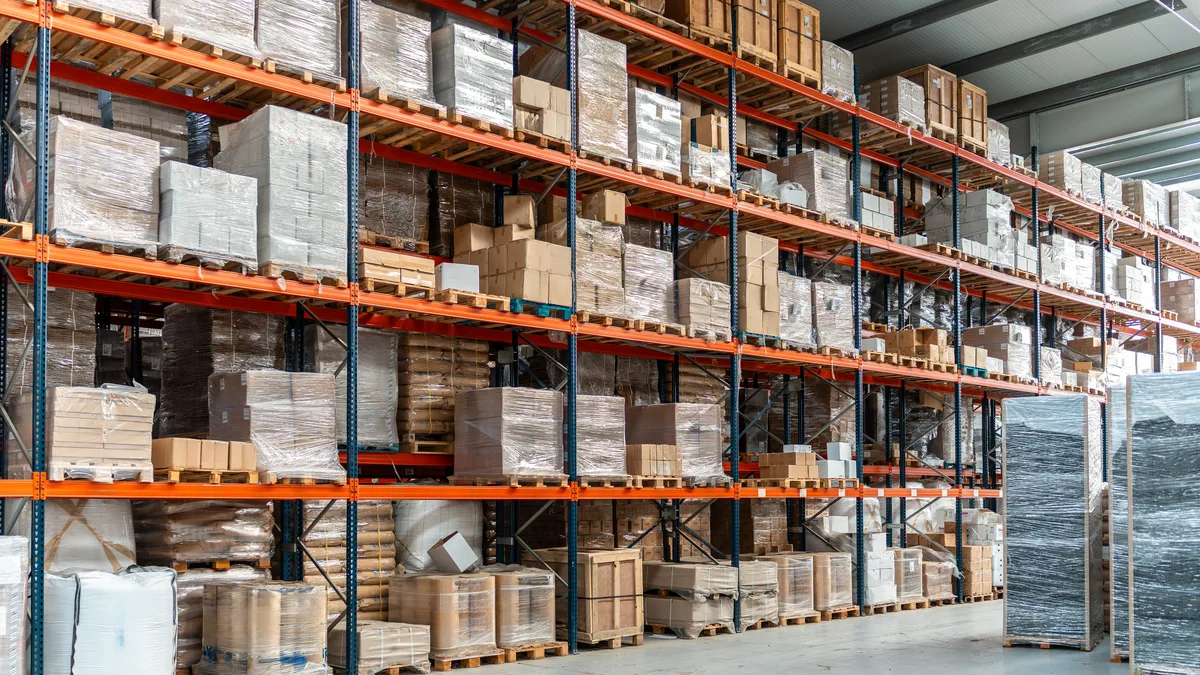
A Connecticut warehouse is rarely where the goods are going. It is where they are on the way through.
That is not a small observation about geography — it is the single most useful thing to know about what a Connecticut bailee actually pays for. The state is a crossroads rather than a destination: the freight on your floor is usually headed for New York or Boston, and it will not be here next week. High turns, mixed customers, short dwell times.
And every turn is a set of hands.
More touches, and therefore more claims
Long-dwell storage and pass-through storage are different businesses that happen to look alike from the parking lot. Freight that arrives, sits for months, and leaves is handled a handful of times. Freight that arrives, gets re-slotted, gets picked, gets consolidated and goes out again in days is handled continually — and every handling touch is a chance to damage somebody else’s property.
That produces a loss picture built from frequency rather than severity. Not one catastrophic fire, but an accumulation of crushed cartons, dropped pallets, forklift punctures, mis-slots, and short shipments — each of them small, each of them a claim against goods you do not own, and collectively a very legible pattern in a loss run. An underwriter reads that pattern directly, and it is one of the few drivers on this list that an operator can genuinely move with discipline rather than with capital: dock procedure, slotting, scanning accuracy, damage capture, lift-truck training.
The value question, on freight that leaves on Thursday
None of that reduces the other number. The value and the nature of the customers’ goods in your care is still what sizes your warehouse legal liability limit, and a fast-turning building does not get a discount for the fact that the inventory rotates.
Value is the maximum amount of customer-owned freight under your roof on the worst possible day — not the average across a quarter. In a pass-through building the peak arrives when an inbound wave lands before an outbound one has cleared, and that is the day the fire happens.
Nature is what gets skipped. A Connecticut house carrying health-and-beauty and pharmaceutical lines and one carrying bulky consumer goods can be identical in footprint and price nothing alike, because the amount at risk per pallet position — and what a thief will trouble to take — differs by an order of magnitude.
<text x="350" y="30" text-anchor="middle" font-family="Inter, sans-serif" font-size="15" font-weight="600" fill="#0F4C5C">Same building. Same racking. Different loss.</text>

<rect x="30" y="52" width="640" height="92" rx="9" fill="#ffffff" stroke="#C3DEDE"/>
<text x="350" y="76" text-anchor="middle" font-family="Inter, sans-serif" font-size="12" font-weight="600" fill="#0F4C5C">The long-dwell warehouse</text>
<path d="M70 106 L630 106" stroke="#3F5B64" fill="none"/>
<circle cx="90" cy="106" r="6" fill="#ffffff" stroke="#0F4C5C"/>
<circle cx="360" cy="106" r="6" fill="#ffffff" stroke="#0F4C5C"/>
<circle cx="610" cy="106" r="6" fill="#ffffff" stroke="#0F4C5C"/>
<text x="350" y="132" text-anchor="middle" font-family="Inter, sans-serif" font-size="11" fill="#3F5B64">It arrives. It rests. It leaves. Few hands touch it, and the loss is rare and large.</text>

<rect x="30" y="160" width="640" height="106" rx="9" fill="#C8935A" stroke="#0F4C5C"/>
<text x="350" y="184" text-anchor="middle" font-family="Inter, sans-serif" font-size="12" font-weight="600" fill="#1A1A1A">The Connecticut pass-through warehouse</text>
<path d="M70 214 L630 214" stroke="#1A1A1A" fill="none"/>
<circle cx="90" cy="214" r="5" fill="#ffffff" stroke="#1A1A1A"/>
<circle cx="158" cy="214" r="5" fill="#ffffff" stroke="#1A1A1A"/>
<circle cx="226" cy="214" r="5" fill="#ffffff" stroke="#1A1A1A"/>
<circle cx="294" cy="214" r="5" fill="#ffffff" stroke="#1A1A1A"/>
<circle cx="362" cy="214" r="5" fill="#ffffff" stroke="#1A1A1A"/>
<circle cx="430" cy="214" r="5" fill="#ffffff" stroke="#1A1A1A"/>
<circle cx="498" cy="214" r="5" fill="#ffffff" stroke="#1A1A1A"/>
<circle cx="566" cy="214" r="5" fill="#ffffff" stroke="#1A1A1A"/>
<circle cx="614" cy="214" r="5" fill="#ffffff" stroke="#1A1A1A"/>
<text x="350" y="242" text-anchor="middle" font-family="Inter, sans-serif" font-size="11" font-weight="600" fill="#1A1A1A">Re-slotted, picked, consolidated, shipped. Every dot is a hand on somebody else’s goods.</text>
<text x="350" y="258" text-anchor="middle" font-family="Inter, sans-serif" font-size="11" font-weight="600" fill="#1A1A1A">The loss is small, frequent, and entirely legible in a loss run.</text>

<text x="350" y="298" text-anchor="middle" font-family="Inter, sans-serif" font-size="12" font-weight="600" fill="#0F4C5C">Both buildings need a limit sized to their worst day.</text>
<text x="350" y="332" text-anchor="middle" font-family="Inter, sans-serif" font-size="12" font-style="italic" fill="#3F5B64">Only one of them has a handling problem — and handling is the driver you can actually move.</text>Connecticut licenses a Food Warehouse. By name.
This is worth pausing on, because very few states do it. The Department of Consumer Protection issues a Food Warehouse license as a named license category, sitting alongside bakery, food manufacturing establishment, and frozen dessert wholesaler.
So a Connecticut house that stores food for hire is a licensed premises — while the dry-goods house across the street is licensed by nobody. If you take on a grocery or perishable account, an inspection regime and a permit arrive with it, and that is a genuine compliance-cost layer as well as a signal to an underwriter about the custody you are accepting.
Refrigerated storage-for-hire has a natural home here: the Connecticut Regional Market in Hartford, Connecticut is a state-created wholesale perishable-food market with refrigerated warehouse space and a rail spur. And cold bailment fails in a way dry space never does — nothing burns, the temperature drifts or the power goes, and a customer’s perishable load is a total loss with your racking untouched. Which is why an insurance carrier asks about redundancy, alarms and monitoring before it asks about square footage. Drug, device and cosmetics wholesalers register separately with the Drug Control Division, so a building carrying both grocery and health-and-beauty lines can be answering to two divisions of one department.
Outside food, no license — so the receipt is the deal
For everyone else, Connecticut does not license public warehouses at all. A merchandise warehouse answers to the bailment it accepted and to the terms of the receipt it issued, and to nothing the state wrote.
That absence is a cost driver rather than a footnote. Your storage agreement is the entire perimeter around a claim, and an underwriter reads it accordingly: whether your customers accepted a limitation-of-liability or released-value clause, negotiated it out, or handed you their own contract that quietly assumed you carry a far broader form than a bare legal-liability policy provides. Where the state writes no standard of care, the contract is the regulation.
Bulk, breakbulk, and air freight: the bonded posture
Connecticut carries a surprising amount of zone coverage for a small state, because it runs three working deepwater ports rather than one. But the shape matters: the Sound ports handle bulk and breakbulk rather than containers, so bonded storage here tends to attach to raw material, project cargo, and air-cargo imports through Bradley International up at Windsor Locks.
When you admit duty-deferred goods, they are under customs control while they sit on your floor — you answer to the customs obligation and to the owner of the goods over the same pallet. Two duties, and an underwriter prices the accumulation.
The state’s two ends pull a warehouse in opposite directions, and it is worth knowing which end you are actually on. The southwestern corner is effectively the outer edge of the New York metropolitan consumption market, which pulls last-mile and same-day fulfillment space toward Fairfield County even though land there is scarce and expensive — small buildings, extreme velocity, high value per unit, and handling on top of handling. The corridor running north from Hartford, Connecticut toward the Massachusetts line is the state’s real distribution belt, with room to build and highway geometry that reaches Boston, New York and northern New England from one door.
Those are two different risks wearing the same label. An insurance carrier pricing a Fairfield County cross-dock is pricing frequency and value density; an insurer pricing a building up the valley is pricing a wide roof, a winter, and a larger quantity of goods sitting still. Telling them plainly which one you are — rather than describing yourself generically as a Connecticut warehouse — is one of the cheapest improvements available to a submission.
Two weather problems, one small state
Commercial property answers for the structure, the racking, the material-handling systems, and the income lost while the site is down. Connecticut sits on a seam.
Down on the Sound — the industrial waterfronts at Bridgeport, New Haven and New London — it is coastal wind and storm surge, and flood there is a separate placement that a property policy will not simply absorb.
Inland, up the valley and around Greater Hartford, it is weight and cold: snow load on a wide distribution roof, drift against parapets and rooftop units, ice damming, and freeze failures in wet sprinkler systems that soak stored goods. That last one is the quiet expensive loss, because the water lands on inventory that belongs to your customers, and the pipe was installed to fight a fire that never happened.
Cold rooms, wet floors, and the pick line
Workers compensation scales with material-handling payroll. Inside a warehouse the drivers are physical: powered-industrial-truck contact and tip-over, workers struck by product falling from racking, strain on manual pick and pack lines, and dock injuries where the trailer meets the plate. The refrigerated houses around the regional market and the New Haven corridor add cold stress and wet-floor slip exposure on top, and general liability carries the premises and operations exposure alongside it.
The honest summary
Connecticut is a state where the goods are always leaving. That makes the freight on your racking somebody else’s, briefly and repeatedly, and it makes handling the driver you can genuinely control. Size the limit to the worst day rather than the average one, read the contract you signed, and count your touches.
If you want the coverage rather than the cost, start with warehouse legal liability, see how we work with warehouse businesses, or read the full Connecticut warehouse insurance page. And if you own the inventory you store rather than holding it for other companies, this is not your program: you want the Connecticut distributor cost guide.