

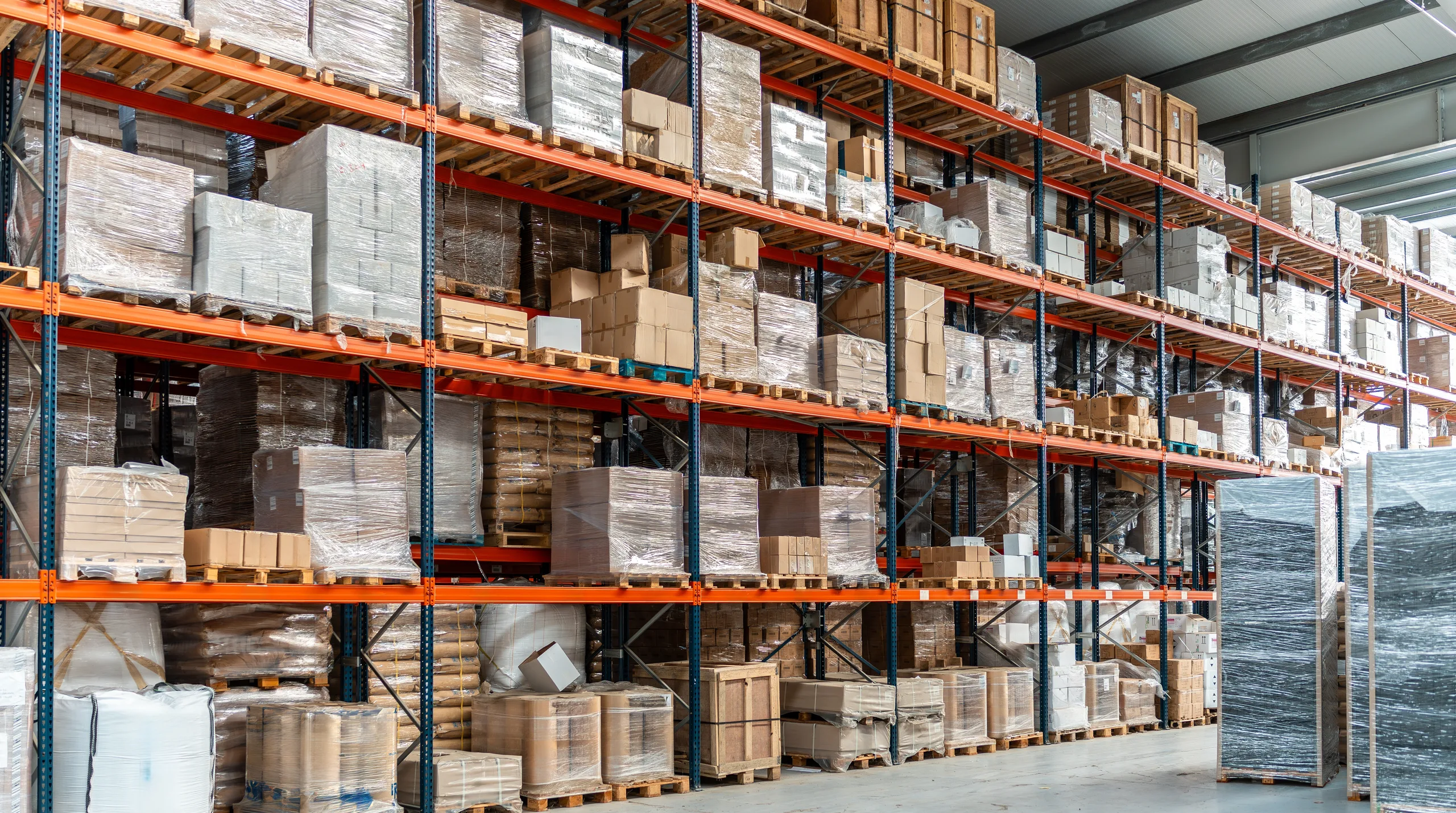
Two Kentucky warehouses, thirty minutes apart. The first has a customer’s goods on the floor for six hours and then they are gone — sorted, packed, and rolling toward an aircraft that will not wait. The second has a customer’s goods on the rick and they will still be there when the operator’s children are grown.
Both are bailments. Both are priced by warehouse legal liability. And they price nothing alike, which is why a posted average for “Kentucky warehouse insurance” would be worse than useless.
The clock is the exposure
Kentucky’s logistics identity is written in the air. The overnight air-cargo network means a warehouse here can accept an order later at night than a building almost anywhere else in the country and still make next-day delivery — and that single fact has pulled an enormous amount of e-commerce fulfillment, high-value electronics, medical-device, and pharmaceutical distribution into the state.
Fulfillment is a bailee business in its purest form: you pick, pack, and ship goods owned by a retailer or a brand, and you never take title to a single unit of it. What makes the Kentucky version distinctive is the tempo. Cut-off times are set by aircraft departures, not by a retail calendar, and a building that runs to a departing plane runs hot.
That changes the loss profile in a way square footage never explains. A high-velocity building rarely suffers one catastrophic cargo event. It accumulates — shrink, mis-ships, handling damage, units that never make it into the right carton. That is a frequency story rather than a severity story, and it is underwritten as one.
It also changes what a loss costs. When a fire or a sprinkler discharge takes a customer’s goods out of a building whose entire value proposition is the flight, you have not merely damaged inventory. You have missed the promise your customer made to their customer. What your storage agreement says about that is not a legal footnote — it is a pricing input.
The longest bailment in the trade
<text x="350" y="30" text-anchor="middle" font-family="Inter, sans-serif" font-size="15" font-weight="600" fill="#0F4C5C">How long are their goods yours to answer for?</text>

<text x="150" y="62" text-anchor="middle" font-family="Inter, sans-serif" font-size="13" font-weight="600" fill="#0F4C5C">Overnight</text>
<rect x="60" y="74" width="180" height="34" rx="6" fill="#ffffff" stroke="#C3DEDE"/>
<text x="150" y="96" text-anchor="middle" font-family="Inter, sans-serif" font-size="11" fill="#3F5B64">Hours, against a departure</text>
<text x="150" y="132" text-anchor="middle" font-family="Inter, sans-serif" font-size="12" fill="#3F5B64">Frequency, not severity</text>
<text x="150" y="154" text-anchor="middle" font-family="Inter, sans-serif" font-size="12" fill="#3F5B64">Shrink · mis-ships · handling</text>
<text x="150" y="176" text-anchor="middle" font-family="Inter, sans-serif" font-size="12" fill="#3F5B64">The missed flight is the real loss</text>

<path d="M350 70 L350 290" stroke="#C3DEDE" stroke-width="1" fill="none"/>

<text x="530" y="62" text-anchor="middle" font-family="Inter, sans-serif" font-size="13" font-weight="600" fill="#0F4C5C">Years on the rick</text>
<rect x="400" y="74" width="260" height="34" rx="6" fill="#C8935A" stroke="#0F4C5C"/>
<text x="530" y="96" text-anchor="middle" font-family="Inter, sans-serif" font-size="11" font-weight="600" fill="#1A1A1A">A federally bonded custody, held for years</text>
<text x="530" y="132" text-anchor="middle" font-family="Inter, sans-serif" font-size="12" fill="#3F5B64">Severity, and quiet accumulation</text>
<text x="530" y="154" text-anchor="middle" font-family="Inter, sans-serif" font-size="12" fill="#3F5B64">Customs duty stacked on the duty of care</text>
<text x="530" y="176" text-anchor="middle" font-family="Inter, sans-serif" font-size="12" fill="#3F5B64">The value grows while it sits still</text>

<rect x="60" y="206" width="600" height="76" rx="9" fill="#ffffff" stroke="#C3DEDE"/>
<text x="350" y="232" text-anchor="middle" font-family="Inter, sans-serif" font-size="13" font-weight="600" fill="#0F4C5C">One coverage line answers for both</text>
<text x="350" y="254" text-anchor="middle" font-family="Inter, sans-serif" font-size="12" fill="#3F5B64">Warehouse legal liability — sized to what is in the building now,</text>
<text x="350" y="272" text-anchor="middle" font-family="Inter, sans-serif" font-size="12" fill="#3F5B64">not to what was in it when the account opened</text>

<text x="350" y="318" text-anchor="middle" font-family="Inter, sans-serif" font-size="12" font-style="italic" fill="#3F5B64">This is not a price. It is the difference a price has to reflect.</text>The Commonwealth carries a very large stock of federally bonded distilled-spirits premises. Bourbon aging warehouses are bonded storage in the literal sense, and a warehouse can be holding another company’s spirits for years.
Duration does two things to a program. First, it lets exposure accumulate quietly. Inventory that will not be sold for years grows in value while it sits, and a limit set when the account opened is not the limit the building needs today. Value and nature — the two inputs that size every warehouse legal liability limit — both drift underneath a long-duration bailment, and the operator is rarely the party who notices.
Second, it stacks obligations. A federally bonded premises answers to customs and federal requirements on top of the ordinary duty of care owed to the owner of the goods. Over the same barrel you now answer to two masters. That is not a rhetorical flourish; it is an accumulation an underwriter prices.
Zone-status storage does the same thing by a different route. Goods can land at a Kentucky air hub, sit in a zone-status building, and be released to the domestic market only when they are sold — duty-deferred freight, in your custody, with a second master attached.
The state licenses grain, and grain is not what you are holding
There is no general public-warehouse licensing statute in Kentucky. Grain is the exception and the state takes it seriously: the agriculture department licenses grain warehouse operators and grain dealers facility by facility, and an operator already licensed under the federal warehouse act must still hold the Kentucky license. That is a real program, and it does not reach your fulfillment building.
Which means the state hands a merchandise warehouse no standard of care whatsoever, and that absence is a cost driver. Your warehouse receipt and storage agreement are the entire perimeter around a claim. An underwriter reads them. Whether your customers accepted a limitation-of-liability or released-value clause, negotiated it out, or signed an agreement that quietly assumes you carry far more than a bare legal-liability form provides, all of it changes the exposure the policy is being asked to size. Where no license exists, the storage contract is the regulation.
One narrower license does bite: prescription-drug wholesale distribution is licensed by the pharmacy board, and each facility distributing into the Commonwealth needs its own license regardless of common ownership. Given how much pharmaceutical and medical-device distribution grew up around the air hubs, that has real operational weight here.
The goods most worth stealing move fastest
There is a quiet exposure sitting underneath the air-hub economy, and it belongs in the pricing conversation even though it never makes the brochure.
The freight the overnight network pulls into Kentucky is disproportionately high-value electronics, medical devices, and pharmaceutical product — precisely the categories that attract theft, and precisely the categories moving through buildings designed for speed rather than for containment. A high-velocity floor with many people, many touches, many trailers, and a hard cut-off time is a harder place to run tight custody than a slow storage building where a pallet sits untouched for a season.
That is not a reason to avoid the class. It is a reason to be able to show an underwriter your access control, your camera coverage, your cage or high-value area, your driver-check procedure, and your cycle-count discipline — because shrink in a bailee’s building is not shrink from your inventory. It is a claim against you by the owner of the goods.
The building, the fire protection, and a Kentucky sky
Commercial property covers your structure, your racking, and the income you lose while the building cannot ship — and in a state whose warehouses are timed to aircraft, that business-income conversation is sharper than usual.
Fire protection deserves the top of the list. Sprinkler design has to match what you actually store and how high you stack it, and a warehouse whose commodity class has quietly changed since the system was designed is carrying a real and expensive gap. In a building holding flammable product that is not a theoretical concern.
Around it: Kentucky sits in a high-frequency severe-convective corridor, and for a distribution building the practical exposure is hail and straight-line wind across a wide low-slope roof and its rooftop equipment. Ice storms and heavy wet snow load big roofs in the north and east; freeze reaches wet sprinkler systems. Flooding along the Ohio and the eastern river valleys has repeatedly been severe and is a separate placement.
Trace each to its end and the same thing happens: the roof or the pipe gives way, and the water reaches goods that are not yours.
The crew, on two very different floors
Workers compensation is a private-market line here, and it scales with material-handling payroll and the classifications you actually run. Kentucky’s claim set has two faces.
On the high-velocity floor: conveyor and sortation equipment, repetitive lifting on a fast line, and forklift traffic on a congested dock, with people on foot in the same space as moving equipment far more often than a slow-turn storage building ever puts them.
In the barrel warehouses: heavy manual handling at height, moving weight on ricks, in a building configuration that has almost nothing in common with a modern DC.
Racking falls, dock injuries, and lifting strain are constant across both.
Claims, limits, retention
Claims history moves pricing more than almost anything else on this page — not just whether you have had losses, but what they say about how the building runs. Several small handling-damage claims read very differently from one large one.
Limits and retention are the real choice. You are deciding how much of the routine damage you fund yourself in exchange for a better price on the part you cannot afford. Given how much of the Kentucky exposure is frequency-shaped, that trade is worth thinking about carefully rather than accepting by default.
The honest summary
A Kentucky warehouse is priced on custody and on the clock. Ask how long the goods are yours to answer for, what they are worth while they sit there, and who else has a claim on them — and you will have found most of the premium before anyone measures the building.
If you want the coverage itself rather than the cost, start with warehouse legal liability, read the Kentucky warehouse insurance page, or see how we build a program for warehouse businesses. You can request a quote whenever you are ready. And if you own the goods you store rather than holding them for a customer, this is the wrong guide entirely — read the Kentucky distributor cost guide instead.