

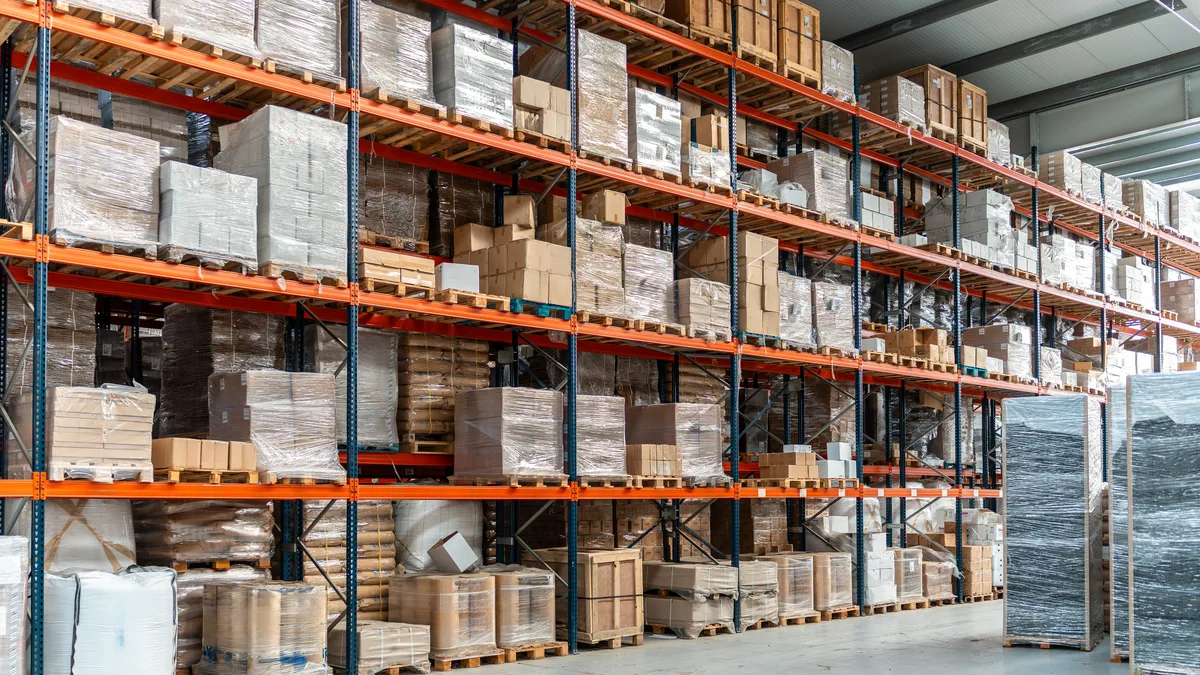
In most of the country you can open a refrigerated warehouse and start taking in customers’ product. In Massachusetts you may not maintain one at all without a license from the Department of Public Health — which inspects the plant before it issues, and can close an unsanitary house.
Temperature-controlled space is a licensed occupation here in a way dry space is not. That is a compliance-cost layer, and it is also the first thing worth understanding about how a Massachusetts warehouse gets underwritten, because it tells you that the state has already looked hard at exactly the buildings an insurance carrier will look hardest at.
The licensed room, and the loss inside it
A licensed and inspected plant with a clean record is a genuine asset in a submission. It is not, however, a substitute for sizing the exposure — because a cold building fails in a way a dry one never does.
Nothing burns. The temperature drifts, or the power goes, or a compressor fails on a weekend, and a customer’s seafood, produce, or clinical material is a total loss with your racking untouched. That is what a Massachusetts cold house is really insuring against, and it is why an underwriter asks about redundancy, alarms, monitoring, and whether the generator has been run under load long before it asks about the dimensions of the room.
The Commonwealth’s life-sciences economy makes this ordinary rather than exotic. Temperature-controlled pharmaceutical and clinical-supply distribution is a normal Massachusetts warehouse business, the Board of Registration in Pharmacy licenses wholesale druggists including non-resident distributors shipping into the state, and the material sitting in those rooms can be worth a great deal per pallet — and none of it is yours.
Scarce land, denser buildings, a bigger number under one roof
Here is the Massachusetts driver that gets missed, and it is the one that actually moves the limit.
Industrial land inside the ring is expensive and constrained. So third-party logistics operators here run tighter, taller, more heavily utilized buildings than an operator in a land-rich corridor state does — and the same square footage carries more of somebody else’s inventory. That raises the ceiling on a warehouse legal liability loss at any given building, and it does so quietly, because nothing about the building’s footprint tells you it happened.
The value and the nature of the goods in your care is what sizes your warehouse legal liability limit, and Massachusetts operators understate it for the ordinary reason — that inventory never appears in their accounts — plus a local one: the building looks the same as it did when it held half as much.
Value is the maximum amount of customer-owned freight under your roof on the worst day, not the average. Nature is the input that gets skipped: seafood, produce moving through the Chelsea terminal market, and life-sciences material each carry a different amount at risk and each fail differently. Three buildings of the same size, three different limits.
<text x="350" y="30" text-anchor="middle" font-family="Inter, sans-serif" font-size="15" font-weight="600" fill="#0F4C5C">The footprint is identical. The exposure is not.</text>

<text x="175" y="60" text-anchor="middle" font-family="Inter, sans-serif" font-size="12" font-weight="600" fill="#0F4C5C">Where land is cheap</text>
<rect x="52" y="74" width="246" height="164" rx="6" fill="#ffffff" stroke="#0F4C5C"/>
<rect x="72" y="196" width="206" height="12" fill="#ffffff" stroke="#3F5B64"/>
<rect x="72" y="172" width="206" height="12" fill="#ffffff" stroke="#3F5B64"/>
<rect x="80" y="182" width="40" height="12" fill="#ffffff" stroke="#C3DEDE"/>
<rect x="140" y="182" width="40" height="12" fill="#ffffff" stroke="#C3DEDE"/>
<rect x="200" y="182" width="40" height="12" fill="#ffffff" stroke="#C3DEDE"/>
<text x="175" y="226" text-anchor="middle" font-family="Inter, sans-serif" font-size="11" fill="#3F5B64">Ordinary height. Room to spare.</text>

<text x="525" y="60" text-anchor="middle" font-family="Inter, sans-serif" font-size="12" font-weight="600" fill="#0F4C5C">Where land is scarce</text>
<rect x="402" y="74" width="246" height="164" rx="6" fill="#C8935A" stroke="#0F4C5C"/>
<rect x="422" y="196" width="206" height="12" fill="#ffffff" stroke="#1A1A1A"/>
<rect x="422" y="172" width="206" height="12" fill="#ffffff" stroke="#1A1A1A"/>
<rect x="422" y="148" width="206" height="12" fill="#ffffff" stroke="#1A1A1A"/>
<rect x="422" y="124" width="206" height="12" fill="#ffffff" stroke="#1A1A1A"/>
<rect x="422" y="100" width="206" height="12" fill="#ffffff" stroke="#1A1A1A"/>
<text x="525" y="226" text-anchor="middle" font-family="Inter, sans-serif" font-size="11" font-weight="600" fill="#1A1A1A">Racked higher. Packed tighter.</text>

<text x="350" y="272" text-anchor="middle" font-family="Inter, sans-serif" font-size="12" font-weight="600" fill="#0F4C5C">Every one of those pallets belongs to a customer.</text>
<text x="350" y="302" text-anchor="middle" font-family="Inter, sans-serif" font-size="11" fill="#3F5B64">The footprint did not change. The ceiling on a single loss did.</text>
<text x="350" y="340" text-anchor="middle" font-family="Inter, sans-serif" font-size="12" font-style="italic" fill="#3F5B64">And nothing on the outside of the building will ever tell you that.</text>No general license, so the receipt is the perimeter
Outside the licensed cold room, Massachusetts has no general public-warehouse operating license. A merchandise warehouse takes on its duties through the bailment relationship and the warehouse receipt, not a state permit.
Which means your storage agreement is the entire perimeter around a claim, and an underwriter reads it that way: whether your customers accepted a limitation-of-liability or released-value clause, negotiated it out, or handed you their own contract that quietly assumed you carry a far broader form than a bare legal-liability policy provides. That changes the exposure the policy is being asked to size, and therefore the price. Where the state writes no standard of care, the contract is the regulation.
Bonded and duty-deferred storage clusters around the zone at the container terminal in South Boston, and when you admit that cargo it sits under customs control while it is on your floor — an obligation to the government stacked on top of your duty to the owner, over the same pallet.
The geography of where Massachusetts warehousing actually happens is itself a cost fact. The container gateway is in South Boston, but the modern big-box and fulfillment space is not: it is out on the belt, through Franklin, Milford and Marlborough and up to Devens, with Worcester carrying rail intermodal service and the valley running west toward Springfield. That distance between the water and the racking is what makes Massachusetts a serving market rather than a staging one — the demand here is consumption-led, not corridor-led, and the inventory in your building exists to feed a dense, high-income region rather than to pass through it on the way somewhere else.
For a bailee, that has a specific consequence worth naming: dwell is longer than in a pass-through market, the accounts are stickier, and the goods sitting still are the goods that accumulate. A building serving hospitals, universities, grocers and life-sciences customers is holding inventory that is both valuable and slow-moving, which is the combination that produces a large single loss rather than a stream of small ones — and it is the combination a warehouse legal liability limit is least often sized for.
Weight on the roof, and water in the pipe
Commercial property covers what is yours and stays put — the structure, the racking and material-handling systems, and the income lost while the site is down. The peril that actually threatens a Massachusetts warehouse is weight.
Wide, low-slope distribution roofs collect snow and then ice from drift and thaw-refreeze cycles, and the loss shows up as deflection, drainage failure and, at the extreme, partial collapse — with the goods below getting wet whether or not the roof gives way. Nor’easters bring wind and coastal surge, which matters most for the harborfront and South Coast industrial land near Boston, Chelsea and New Bedford, and flood there is its own placement rather than a peril you assume is included.
Freeze is the quiet one. A sprinkler or wet-pipe failure in an unheated or partially heated bay does more damage to stored goods — your customers’ stored goods — than the fire it was meant to fight. In a densely stacked building, that water finds a great deal to ruin.
The floor, and the cold on it
Workers compensation scales with material-handling payroll, and the claim picture is the ordinary and unforgiving one: powered-industrial-truck strikes and tip-overs, workers struck by stored material coming out of racking, lifting and repetitive-motion strain on pick lines, and dock injuries at the trailer interface.
Cold-storage houses add a slip-and-fall and cold-stress layer that dry houses do not carry, and it is a frequency exposure rather than a severity one. Behind the voluntary market sits an assigned-risk mechanism for accounts insurers decline — which is a reason to keep the loss run clean rather than a plan.
Claims, limits, and the retention you choose
Loss history moves pricing more than nearly anything else here, and what an underwriter reads in it is what the losses say about how the building runs. In a tall, dense building, a pattern of rack-strike and handling claims says something specific.
Limits and retention are a real decision: how much routine damage would you rather fund yourself in exchange for a better price on the loss you could never absorb? Given the ceiling that dense buildings create, an operator who buys a serious warehouse legal liability limit and puts an umbrella above it is buying insurance in the right order.
The honest summary
Massachusetts licenses the cold room, prices the winter, and then quietly hands you a bigger exposure than the building looks capable of holding — because scarce land means the same roof is covering more of your customers’ inventory than it would anywhere else.
Size the limit to what is actually stacked in there, not to the footprint.
If you want the coverage rather than the cost, start with warehouse legal liability, see how we work with warehouse businesses, or read the full Massachusetts warehouse insurance page. And if you own the inventory you store rather than holding it for other companies, this is not your program: you want the Massachusetts distributor cost guide.