

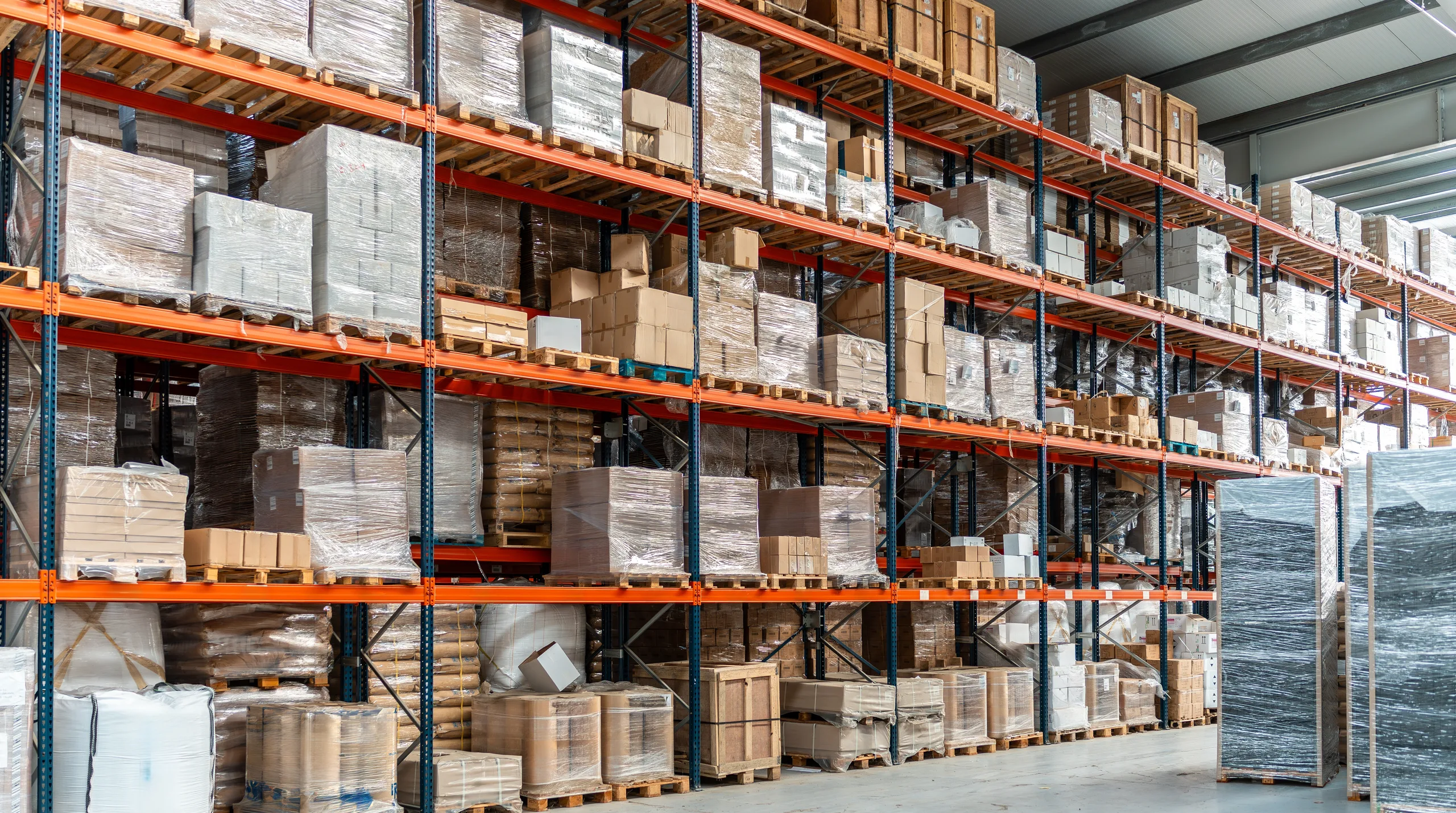
Ask a New Jersey warehouse owner how much freight is in the building and you get a number. Ask how many times a piece of it gets touched between the ship and the retailer, and you get the real answer to what this insurance costs.
That is the thing that makes this state different from anywhere else in the country. New Jersey warehouses exist because the Port of New York and New Jersey unloads there — Port Newark, the Elizabeth marine terminals, Bayonne, the Global terminal in Jersey City — and the buildings around it were not built to hold cargo still. They were built to open it, break it apart, and push it back out. That is bailment at velocity, and velocity is priced.
The custody does not sit. It moves
A container lands. It is drayed a few miles to your building. It is stripped. The cargo is sorted, staged, cross-docked, and shipped out to several different consignees who called for it at different times. Somewhere in there it may be relabeled, palletized, or held for a retailer who is not ready.
At no point in that sequence does any of it belong to you.
Each handoff is a custody event, and each custody event is a chance to damage, lose, or misdeliver goods you did not buy, cannot price, and could not replace out of margin. That is what warehouse legal liability answers for, and it is why the underwriting conversation in New Jersey is not simply how much is in the building but how much moves through it, and how often does the same pallet get handled before it leaves.
The value of the freight still matters — what is the maximum amount of customer-owned cargo under your roof on the worst day, not the average one. So does its nature: apparel, consumer electronics, pharmaceuticals, and food all import through this port and none of them prices like the others, because the amount at risk per pallet and the theft appetite for it differ by an order of magnitude. But in New Jersey the third variable, the one that other states barely have, is throughput — and a limit sized to a static snapshot is a limit that has not understood the business.
Water, and the height it arrives at
The peril that actually defines New Jersey warehousing is not fire and it is not wind. It is water.
The port lowlands, the Meadowlands, and the Turnpike-adjacent industrial flats sit low and drain slowly. Tropical remnants and coastal storms have repeatedly put water into ground-level dock doors — and that is the detail that matters, because a dock door is exactly the height at which inventory sits. Not the roof. Not the mezzanine. The floor, the pallets staged for outbound, and the bottom beam of the racking, which is where the heaviest and often the most valuable freight lives.
So the loss profile is inverted from what an owner expects. The building survives. The steel survives. And a shipper’s cargo — the part that is not yours — is standing in brackish water. That is a bailee claim, not a property claim, and the customer will not be interested in the weather.
Flood is its own placement in New Jersey. It is not a property-policy afterthought and it is not an endorsement to argue about later; it is the first question an honest submission answers. Wind and hurricane exposure on a large roof plane is real and gets priced too, and freeze reaches sprinkler piping in unheated dock areas. But hail is a lesser concern here than inland, and seismic is not a New Jersey story. Water is.
Your own building, racking, and material-handling systems — and the business income you lose while a site is down in the middle of a port’s peak — belong on the commercial property side, and an underwriter weighs construction, roof, and sprinkler design against what you actually store and how high you stack it. But that is the second conversation here, not the first.
The statute that sounds like it covers you, and does not
New Jersey has a law called the Public Movers and Warehousemen Licensing Act (N.J.S.A. 45:14D-1 et seq.), administered by the Division of Consumer Affairs. Owners find it, read the title, and reasonably conclude that the state licenses warehouses.
It does not license theirs. The Act’s reach is household-goods moving and storage. A contract, public, or fulfillment warehouse holding another company’s pallets is not licensed under it. The name invites the mistake; the scope will not support it.
Which means New Jersey — the densest commercial bailee market on the East Coast — has no general commercial public-warehouse license at all. The state writes you no standard of care.
That absence is a cost driver, not a footnote. Your warehouse receipt and your storage agreement are the entire perimeter around a claim. Whether your customers accepted a limitation-of-liability or released-value clause, negotiated it away, or signed a contract that quietly assumed you carry more than a bare legal-liability form provides — that changes the exposure the policy is being asked to size, and therefore what it costs. An underwriter reads those documents before binding, because in a state with no license the storage contract is the regulation.
There is one place the state does look inside the building, and it is worth knowing which side of the line you are on: the Department of Health licenses wholesale food and cosmetic establishments, and its application asks the operator to declare whether the facility is a public or company warehouse and whether it is refrigerated. The state is drawing the bailee/owner distinction on its own form. If you take a grocery account, you acquire a registration you did not previously need.
Bonded, and the second master over the same pallet
Foreign-Trade Zone 49 covers the New Jersey side of the harbor, with the Port Authority of New York and New Jersey as grantee, and its service area reaches across Hudson, Essex, Union, Bergen, Middlesex, Morris, Passaic, Somerset, and Monmouth counties.
That is unusual, and it matters to your pricing. FTZ status is available across the same counties where the state’s distribution buildings already stand — so duty-deferred and bonded storage is an ordinary option for a New Jersey operator rather than a specialty someone has to go looking for.
The exposure consequence is straightforward. When you admit duty-deferred goods, you take on customs-bonded obligations on top of your ordinary duty of care to the owner. Over the same pallet you now answer to two masters. An underwriter prices the accumulation, not just the value.
Refrigerated bailment for the food importers is its own layer again, and it fails differently from dry. The building never burns. The temperature simply drifts, and a customer’s perishable consignment is a total loss with the racking untouched — which is a bailee severity with its own controls, its own alarms, and its own monitoring, and it is underwritten as such.
The crew, at port pace
Workers compensation runs through the private market here, with an assigned-risk mechanism behind it, and it scales with your material-handling payroll and the classifications you actually run.
What is distinctive is the tempo. In buildings that are largely high-throughput import and fulfillment centers, the claim pattern is dominated by the dock and the aisle: powered-industrial-truck strikes and pinch injuries where lift traffic crosses pedestrian paths, falls from dock edges and trailer gaps, and repetitive lifting strain on pick lines running at volume the port sets rather than volume you set. Peak does not ask your permission.
That is a frequency exposure long before it is a rate exposure, and the controls that hold it down — traffic separation, dock-edge protection, trailer restraints, a rack-inspection routine that actually happens — are the same controls an underwriter looks for.
What a New Jersey pallet actually goes through
<text x="350" y="30" text-anchor="middle" font-family="Inter, sans-serif" font-size="15" font-weight="600" fill="#0F4C5C">The container is opened here — and then handled again, and again</text>

<rect x="40" y="48" width="620" height="62" rx="9" fill="#C8935A" stroke="#0F4C5C"/>
<text x="350" y="74" text-anchor="middle" font-family="Inter, sans-serif" font-size="15" font-weight="600" fill="#1A1A1A">At every step below, the cargo belongs to a customer</text>
<text x="350" y="96" text-anchor="middle" font-family="Inter, sans-serif" font-size="13" font-weight="600" fill="#1A1A1A">It is never yours. That is what the bailee line answers for.</text>

<rect x="24" y="150" width="120" height="66" rx="9" fill="#ffffff" stroke="#C3DEDE"/>
<text x="84" y="178" text-anchor="middle" font-family="Inter, sans-serif" font-size="12" font-weight="600" fill="#0F4C5C">Drayed from</text>
<text x="84" y="196" text-anchor="middle" font-family="Inter, sans-serif" font-size="12" font-weight="600" fill="#0F4C5C">the terminal</text>

<rect x="168" y="150" width="120" height="66" rx="9" fill="#ffffff" stroke="#C3DEDE"/>
<text x="228" y="178" text-anchor="middle" font-family="Inter, sans-serif" font-size="12" font-weight="600" fill="#0F4C5C">Received at</text>
<text x="228" y="196" text-anchor="middle" font-family="Inter, sans-serif" font-size="12" font-weight="600" fill="#0F4C5C">the dock</text>

<rect x="312" y="150" width="120" height="66" rx="9" fill="#ffffff" stroke="#C3DEDE"/>
<text x="372" y="178" text-anchor="middle" font-family="Inter, sans-serif" font-size="12" font-weight="600" fill="#0F4C5C">Stripped and</text>
<text x="372" y="196" text-anchor="middle" font-family="Inter, sans-serif" font-size="12" font-weight="600" fill="#0F4C5C">sorted</text>

<rect x="456" y="150" width="120" height="66" rx="9" fill="#ffffff" stroke="#C3DEDE"/>
<text x="516" y="178" text-anchor="middle" font-family="Inter, sans-serif" font-size="12" font-weight="600" fill="#0F4C5C">Staged for</text>
<text x="516" y="196" text-anchor="middle" font-family="Inter, sans-serif" font-size="12" font-weight="600" fill="#0F4C5C">outbound</text>

<rect x="600" y="150" width="76" height="66" rx="9" fill="#ffffff" stroke="#C3DEDE"/>
<text x="638" y="178" text-anchor="middle" font-family="Inter, sans-serif" font-size="12" font-weight="600" fill="#0F4C5C">Out to</text>
<text x="638" y="196" text-anchor="middle" font-family="Inter, sans-serif" font-size="12" font-weight="600" fill="#0F4C5C">consignees</text>

<path d="M148 183 L164 183" stroke="#0F4C5C" stroke-width="2"/>
<path d="M292 183 L308 183" stroke="#0F4C5C" stroke-width="2"/>
<path d="M436 183 L452 183" stroke="#0F4C5C" stroke-width="2"/>
<path d="M580 183 L596 183" stroke="#0F4C5C" stroke-width="2"/>

<text x="350" y="256" text-anchor="middle" font-family="Inter, sans-serif" font-size="13" fill="#3F5B64">Every arrow is a custody event — a chance to damage, lose,</text>
<text x="350" y="276" text-anchor="middle" font-family="Inter, sans-serif" font-size="13" fill="#3F5B64">or misship cargo you did not buy and cannot replace.</text>

<rect x="120" y="296" width="460" height="42" rx="9" fill="#ffffff" stroke="#0F4C5C"/>
<text x="350" y="322" text-anchor="middle" font-family="Inter, sans-serif" font-size="13" font-weight="600" fill="#0F4C5C">Velocity, not just volume, is what sizes the limit</text>The honest summary
Everything about a New Jersey warehouse program follows from one fact: the box is opened here. The buildings crowd the port and the Turnpike and the Exit 8A corridor because the freight has to go somewhere within a drayage turn, and the freight belongs to somebody else the whole time it is with you.
So the price is built on custody, on how fast that custody turns over, on how far up the racking the water can reach, and on what your contract says happens when either one goes wrong.
To understand how the coverage works rather than what it costs, start with warehouse legal liability — the bailee line this entire conversation is about — or read the full New Jersey warehouse insurance page. Our warehouse businesses practice explains how we approach the class. And if you own the goods in the building — an importer clearing containers in Elizabeth, a wholesaler holding your own stock — none of the above is your program: read the distributor cost guide instead.