

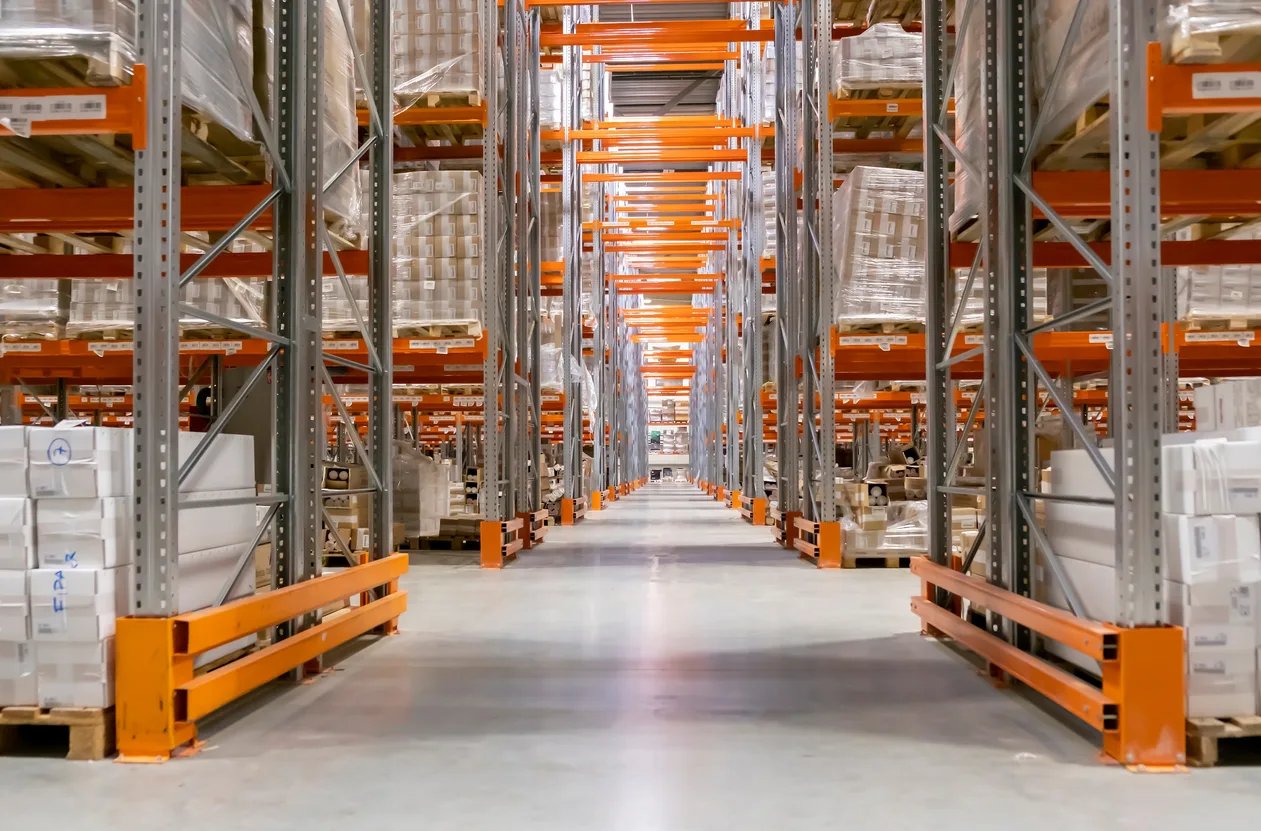
If there is a capital of the American bailee, it is the I-78 and I-81 corridor. The Lehigh Valley and central Pennsylvania hold one of the densest concentrations of public, contract, and third-party warehouses anywhere in the country — and the defining fact about almost all of them is that the goods on the racks belong to somebody else. A retailer. A manufacturer. An e-commerce brand that has never seen the building and never will.
Now put a second fact next to the first, because together they explain most of what a Pennsylvania warehouse pays.
The Commonwealth does not license public warehouses. There is no general warehouseman licensing program in Pennsylvania. A contract, public, or fulfillment warehouse holding another company’s goods needs no state warehouse license to do it, and the state writes it no standard of care whatsoever.
The country’s biggest third-party warehousing market has no warehouse rulebook. The bailment is the perimeter, and your storage agreement is the only thing drawing it.
The absence is the cost driver
That is not a technicality to file away. It is the pricing conversation.
Because no license writes a standard of care, your warehouse receipt and storage agreement are the entire boundary around a claim. Whether your customers accepted a limitation-of-liability or released-value clause, negotiated it away in a competitive bid, or signed an agreement that quietly assumed you carry more than a bare legal-liability form provides — all of that changes the exposure the policy is being asked to size. Not the language of the coverage. The exposure. And exposure is what gets priced.
An underwriter looking at two identical buildings in Carlisle, running identical volumes, with identical sprinkler systems, is looking at two different risks if one of them signed away its limitation of liability and the other did not. In a state with no license, the storage contract is the regulation — which is why we read the agreements before going to market rather than after a loss.
The nearest thing to a state touchpoint is a food-safety instrument, and it is worth knowing which side of it you are on: the Department of Agriculture’s Bureau of Food Safety and Laboratory Services registers food establishments, a category that expressly includes facilities holding and distributing food and cold-storage warehouses among them. A Pennsylvania 3PL that takes on a grocery account acquires a registration it did not previously need. Pharmaceutical wholesaling sits with the Department of Health, whose Drug, Devices and Cosmetics program licenses wholesale prescription drug distributors — so a warehouse that stores or distributes drugs or devices registers there. Neither is a warehouse license. Both are about what is in the building, not about the fact of warehousing it.
The value and the nature of what is on the racking
This is what sizes your warehouse legal liability limit, and it is the number operators most reliably get wrong — precisely because that inventory never appears in their own accounts.
Value is the straightforward half: what is the maximum amount of customer-owned freight under your roof on the worst possible day, not on an average Tuesday. In a market built for peak-season retail replenishment, the answer in November is a different animal from the answer in March, and a limit set to the average is a limit that fails in the month you most need it.
Nature is the half that gets missed. A building holding paper stock and a building holding consumer electronics can be identical square footage, identical racking, identical sprinkler design — and price nothing alike, because the amount at risk per pallet position differs by an order of magnitude, and so does the appetite a thief has for it. Pharmaceuticals, spirits, and high-value consumer goods each carry their own theft and severity profile.
So the underwriting conversation is never how big is your warehouse. It is: what is in it, whose is it, and what is the most of it that is ever here at once?
A very large roof, and what the weather does to it
Pennsylvania’s warehouses are enormous, and the perils that matter are the ones that punish scale.
Severe thunderstorm wind and hail work the southeast and the Lehigh Valley, and a distribution roof is the largest target either can find — a supercell can bruise an entire membrane plane at once, after which the water finds the racking, and then the goods. In the north and through the mountains, snow and ice load on wide-span roofs is the structural question. Tropical remnants are a real and recurring flood driver in the southeastern counties; the Susquehanna, Schuylkill, and Delaware basins have all put water into commercial buildings, and flood remains its own placement rather than a property-policy add-on. Freeze losses to sprinkler systems in unheated dock and mezzanine areas are quiet, common, and expensive — a wet line lets go and soaks a customer’s stored goods without a fire ever starting.
Seismic is not a Pennsylvania concern.
Your structure, racking, material-handling systems, and the business income lost while a site is down belong on the commercial property side. But note the pattern in every one of those perils: the building gets damaged, and then somebody else’s inventory gets destroyed. That is the Pennsylvania loss, and it lands on the bailee line.
Cold bailment, and bonded freight
Two operating postures move the number in ways square footage never explains.
Cold storage is a distinct and substantial sub-market here, driven by Philadelphia’s perishable import trade and by the state’s food-processing base. It fails by temperature rather than by fire: a refrigeration outage can destroy a customer’s entire consignment with the racking untouched and the roof intact. That is a severity profile with its own controls — redundancy, alarms, monitoring good enough to catch a drift at three in the morning — and an underwriter prices the controls as much as the room.
Bonded and foreign-trade-zone freight. Pennsylvania is unusually well covered by zones, and they land exactly on top of the warehouse corridors: FTZ 24 is centered on Pittston, in the middle of the I-81 distribution belt, and FTZ 147 reaches across the south-central counties from Berks and Lancaster through Cumberland, Dauphin, and York. The practical consequence is that duty-deferred and bonded storage is available in the same buildings a 3PL would have leased anyway — which is not true in most states, and which makes bonded warehousing an ordinary offering here rather than a specialty. When you admit duty-deferred goods, you take on customs obligations on top of your ordinary duty of care. Two masters, one pallet, and an underwriter pricing the accumulation of both.
The heaviest warehouse comp exposure in the country
Workers compensation runs through a private market here, with a competitive state-operated fund available alongside it — a genuine competitive fund, not a monopoly. It scales with your material-handling payroll and the classifications you actually run.
And this is where Pennsylvania stands alone. This is the state where the warehouse comp exposure is most concentrated in the country, because this is where the buildings and the bodies are. Powered-industrial-truck traffic in high-throughput fulfillment operations. Order-picker work at rack height. Dock injuries across long trailer courts. Repetitive lifting on pick lines running at peak-season pace, which is a pace nobody on the floor chose. Freezer and cooler work adds cold stress in the food-grade buildings.
There is no other industry diluting the pattern. Pennsylvania’s warehouse injury profile is the warehouse injury profile — which means the frequency controls an underwriter looks for are not generic safety talking points here. They are the difference between two prices.
What actually draws the boundary around a Pennsylvania claim
<text x="350" y="30" text-anchor="middle" font-family="Inter, sans-serif" font-size="15" font-weight="600" fill="#0F4C5C">The densest bailee market in America, and the thinnest rulebook</text>

<rect x="30" y="48" width="640" height="300" rx="12" fill="#ffffff" stroke="#C3DEDE" stroke-dasharray="5 4"/>
<text x="350" y="72" text-anchor="middle" font-family="Inter, sans-serif" font-size="13" font-style="italic" fill="#3F5B64">No state warehouse license. No state standard of care.</text>
<text x="350" y="92" text-anchor="middle" font-family="Inter, sans-serif" font-size="13" font-style="italic" fill="#3F5B64">Food and drug registration reach what is in the building —</text>
<text x="350" y="112" text-anchor="middle" font-family="Inter, sans-serif" font-size="13" font-style="italic" fill="#3F5B64">never the fact that you are warehousing it.</text>

<rect x="90" y="134" width="520" height="180" rx="10" fill="#C8935A" stroke="#0F4C5C"/>
<text x="350" y="162" text-anchor="middle" font-family="Inter, sans-serif" font-size="15" font-weight="600" fill="#1A1A1A">Your storage contract and warehouse receipt</text>
<text x="350" y="184" text-anchor="middle" font-family="Inter, sans-serif" font-size="13" font-weight="600" fill="#1A1A1A">The entire perimeter around the claim</text>

<rect x="150" y="204" width="400" height="90" rx="9" fill="#ffffff" stroke="#0F4C5C"/>
<text x="350" y="234" text-anchor="middle" font-family="Inter, sans-serif" font-size="14" font-weight="600" fill="#0F4C5C">The customers’ goods</text>
<text x="350" y="256" text-anchor="middle" font-family="Inter, sans-serif" font-size="12" fill="#3F5B64">In your care, custody, and control</text>
<text x="350" y="276" text-anchor="middle" font-family="Inter, sans-serif" font-size="12" fill="#3F5B64">Bought by someone else. Replaced by nobody.</text>

<text x="350" y="366" text-anchor="middle" font-family="Inter, sans-serif" font-size="12" font-style="italic" fill="#3F5B64">Two identical buildings can price differently on that middle layer alone.</text>The honest summary
Demand here was never local consumption. It was reach — a truck leaving Carlisle or Bethlehem in the morning serves New York, Philadelphia, Baltimore, Washington, and much of New England the same day, on land the coastal markets could never offer. That arithmetic built the corridor, and the corridor built the buildings, and the buildings hold everybody else’s goods.
Which is why a Pennsylvania warehouse is priced on custody rather than on square footage. The building matters, the roof matters, the crew matters enormously. But the thing that moves the number most is the freight belonging to somebody else sitting on your racking tonight, and the contract you signed about what happens if it burns — a contract that, in this state, has nothing standing behind it but itself.
To see how the coverage itself works rather than what it costs, start with warehouse legal liability — the bailee line this whole conversation is really about — or read the full Pennsylvania warehouse insurance page. Our warehouse businesses practice explains how we approach the class. And if you own the goods you store rather than holding them for someone else, none of the above is your program: read the distributor cost guide instead.