
States we serve · Maine
Distributor and wholesaler business insurance in Maine
For the seafood wholesalers, grocery and beverage distributors, and Portland importers who own their inventory — product with a shelf life measured in days, customers a truck-hour apart, and a cold chain that fails without leaving a mark.
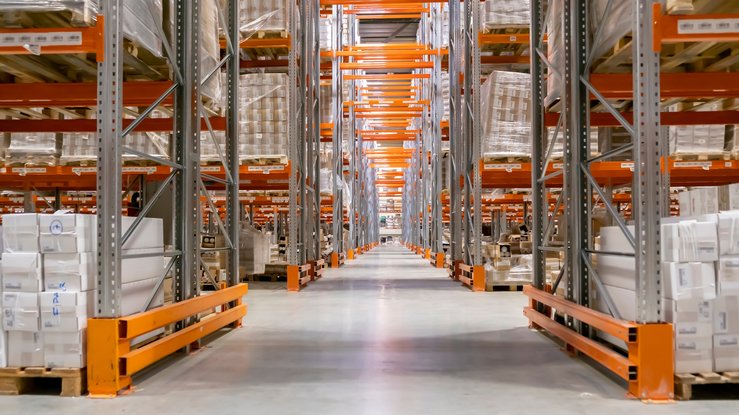

A Maine seafood wholesaler owns something that is trying to stop being worth money. Lobster, groundfish, and shellfish come off a boat with a shelf life measured in days and a value that collapses the moment the chain breaks — and between the landing and the buyer sits a licensed processor, a packing line, a freezer, a truck, and quite possibly a transatlantic vessel. Every one of those steps is a place where the temperature can go wrong, and at every one of them the product still belongs to the wholesaler.
That is a different insurance problem from the one most distributors have, and the difference is the failure mode. The loss that ruins a Maine perishable business is not a fire. It is a refrigeration breakdown, a power failure during an ice storm, or a trailer that sat too long — and none of those leave a mark. The pallets look fine. They are simply no longer sellable. A commercial property policy is built around physical damage at a scheduled location, and this is neither.
Widen out and the same shape holds for the rest of the state’s owned inventory. Maine is large and thinly settled, so grocery, beverage, and consumer-goods wholesalers run long routes out of Portland, Lewiston-Auburn, and Bangor to towns a truck-hour apart. The stock is theirs the whole way. It just spends most of its life somewhere the property policy cannot reach.
The clock on owned perishables
Portland has built a purpose-built cold storage facility on the working waterfront next to the container terminal, precisely so that seafood and other perishables can go from the pier to a freezer to a ship without a gap. That is an operational answer to the clock. The insurance answer has to match it.
Ask the questions in this order. Does the policy respond to spoilage — the loss of value in owned stock that was never physically damaged? Does it respond when the cause is a refrigeration breakdown rather than a peril at the building? Does it respond when the power fails off-premises in an ice storm, which in Maine is not an exotic scenario but a January one? And does it respond while the product is in transit, which for seafood is most of the time that matters? Four questions. Most owners can answer one.
Stock throughput from the boat to the buyer
Stock throughput is one marine-family policy that follows your owned goods across the entire span — the boat or the overseas supplier, the processor, the cold room, the truck or the vessel, and the customer. It replaces the patchwork with a single form, and the patchwork is what fails here: a property policy that reaches your stock only inside a scheduled building, plus a cargo policy that reaches it only while it moves, with seams between them.
For a product whose whole value depends on an unbroken chain, a seam is not an inconvenience — it is where the entire loss lands. And this is a largely manuscript, non-standard market rather than an off-the-shelf one: the wording is negotiated, which is an advantage if somebody reads it and a serious liability if nobody does.
Maine wholesales spirits — and contracts out the warehouse
Maine is a control state at the wholesale tier only, and it is worth stating the structure precisely because no other state does it quite this way. The Bureau of Alcoholic Beverages and Lottery Operations is the only entity that may bring spirits into the state, and it sets the listings and the prices. But it does not run the stores: retail spirits move through privately owned agency liquor stores. And it does not run its own warehouse either — the Bureau has contracted the administration, warehousing, and distribution of the state’s spirits business out to a private operator under a long-term agreement.
That is a genuinely unusual arrangement, and it draws a bright line for our purposes. If you are the private operator holding and moving the state’s spirits, you are not an owner at all — you are handling somebody else’s goods, which is a different page and a different policy. If you are a Maine beer or wine wholesaler, you are licensed by the Bureau, you buy from the supplier, and the product on your racks and in your trucks is your own inventory in the ordinary three-tier way. The whole of this page is written for the second one.
Weight, cold, and a generator that has to start
Maine warehouses are designed against weight and cold. Snow load on a wide, low-slope roof is the structural exposure, and it is more severe here than anywhere else in New England — accumulation, drift against parapets, and thaw-refreeze ice that blocks drains and adds load the roof was not carrying when the storm ended. Freeze breaks wet sprinkler lines in unheated bays and soaks stored inventory. On the coast, from Portland up through Searsport, nor’easter wind and tidal flooding are real, and flood is separately placed; hurricanes are not the planning case here.
And then there is the one that keeps perishables owners awake: ice storms take down power lines, and a power failure at a refrigerated house is a total-loss event for the goods inside if the generator does not start. Commercial property is the right instrument for the building, the racking, the stock that stays put, and the business income lost while a site is down. Whether it is the right instrument for what happens inside a warm freezer is a wording question, and it should be settled on paper.
The importer, and the chain that reaches a seller
Portland’s container terminal connects Maine directly to Iceland and northern Europe, and the New Brunswick land border moves forest products, food, and manufactured goods every day. An importer using either one is the first U.S. seller of what came across — and a products-liability claim follows the chain of distribution to a seller, not only to the manufacturer who made the thing.
That is the exposure a wholesaler inherits for a design it had no part in. General liability answers it through what the standard form calls the products-completed-operations hazard, and when the overseas maker is beyond the practical reach of a U.S. claim, the importer is the realistic target for it. The wholesale operating model — buying, holding, and reselling your own inventory — carries this exposure. A business that merely stores goods for their owner does not.
Two crews, and a very long road
A Maine distribution business injures people in two distinct ways. The warehouse crew takes the classic set — powered-industrial-truck contact and tip-over, product falling from racking, lifting and repetitive strain on pick lines, dock injuries at the trailer — and the seafood and cold-storage houses carry a heavier version of it: wet floors, cold stress, sharp tools, repetitive processing motion, and a yard that is icy for a long stretch of the year. The route drivers take a different set entirely. Workers’ compensation here is a private-market line, and both populations belong in the exposure schedule.
The fleet needs commercial auto — and a word this trade cannot leave ambiguous: your insurance carrier is the company that writes your policy, which is entirely distinct from a motor carrier or freight carrier hauling goods for hire. When routes are measured in hours and the road ices, umbrella liability is where a serious highway loss ends up, and it is usually a customer or landlord contract that forces the limit in the first place.
What drives a Maine distributor’s pricing
We do not print premiums, and any site that does is guessing. What genuinely drives the conversation:
- Temperature dependence — how much of your owned stock is destroyed by a warm hour rather than by a fire.
- Refrigeration and backup power, and whether the policy contemplates an off-premises utility failure at all.
- Transit share — how much of your inventory’s life is spent on a truck or a vessel rather than on a rack.
- Whether you import, and where the purchase terms put the passing of risk.
- Roof and snow-load history on the buildings that hold your stock.
- The payroll split between processing and warehouse crew on one side and route drivers on the other.
Where Maine’s owned inventory moves
Portland
The state’s only container port, with a transatlantic service to Iceland and northern Europe and a purpose-built cold storage facility on the working waterfront beside the terminal. A wholesaler who owns seafood here can move it from a pier to a freezer to a ship without the product leaving its own custody — which is efficient, and which also means one owner carries the exposure across the entire chain rather than handing it off.
Lewiston-Auburn
The inland port: an intermodal freight transfer facility with rail connections toward Québec makes this the crossroads for containers moving in and out of the interior. Owned stock staged here is mid-journey by definition, sitting between a rail move and a truck move, in the exact interval where a property policy has stopped and a cargo policy has not started.
Bangor
The northern distribution base, holding a foreign-trade zone grant and serving a territory where the next town is a long drive rather than a short one. Grocery and consumer-goods wholesalers here carry more owned inventory than a metro distributor would, because in this part of the state a stockout cannot be fixed by a same-day run.
Searsport
Bulk cargo at Mack Point, on a coast where nor’easter wind and tidal flooding are the planning case rather than hurricanes. An owner of bulk or industrial stock staged near the water should treat flood as its own placement — the property policy does not carry it, and the dock-door elevation is the detail that decides the outcome.
Augusta
Central Maine wholesaling on the I-95 spine, serving state institutions, grocers, and the towns between the coast and the interior. The exposure is route exposure: owned product spends hours in a truck each day on a corridor that ices, and what happens to a load in a winter ditch is a transit question, not a building one.
Biddeford
Southern Maine distribution feeding the Portland market and the New Hampshire line. Beer and wine wholesalers here operate a genuinely private tier — the stock is bought, held, and sold as the distributor’s own — which puts them squarely in the products chain in a state where the spirits tier belongs to the government.
Waterville
A foreign-trade zone whose service area reaches south across Androscoggin, Cumberland, and neighboring counties, which is what makes it relevant to the Portland and Auburn distribution market. Duty-deferred storage does not change who owns the goods — it defers the customs charge, not the title, and the products and stock exposures ride along unchanged.
Presque Isle
The far north, where a wholesaler’s owned inventory is separated from its customers by a distance that would cross three states elsewhere. Cross-border trade with New Brunswick moves forest products, food, and manufactured goods every day, and an importer taking title at the border is the first U.S. seller of whatever came across it.
If the goods are not yours, you are on the wrong page
An honest signpost. This page is written for the business that owns what it holds. If your operation stores other companies’ seafood, perishables, or freight for a fee — including the private operator running the state’s spirits warehouse, or the cold houses on the Portland waterfront holding a packer’s product — then the goods on your racks are not owned stock. They are a bailment, your duty runs through the warehouse receipt and the storage contract, and your lead line is warehouse legal liability rather than anything above. That is a different risk with a different policy stack, and it has its own page: warehouse insurance in Maine.
Plenty of Maine businesses do both — they distribute their own product and warehouse someone else’s in the same cold building. If that is you, we place both, and we draw the line between them before anything binds.
Maine distributor and wholesaler insurance FAQs
My product spoils rather than burns. Does insurance actually respond to that?
Only if it was written to. This is the central question for a Maine seafood or perishable wholesaler and it is worth being blunt about it. A commercial property policy is built around physical damage at a scheduled location — a fire, a wind loss, water in the building. A temperature excursion is a different animal: the lobster, the groundfish, or the frozen product is not damaged in any way you can photograph, it is simply no longer sellable. Whether spoilage from a refrigeration breakdown or a power failure responds, and whether spoilage in transit responds, is a matter of the specific wording, sublimits, and conditions in your placement. Stock throughput is the form built to follow owned goods across their whole journey, and the spoilage question belongs in that conversation before the season, not during it.
Can a private company wholesale spirits in Maine?
No, and the structure is worth getting exactly right because it is unusual. Maine is a control state at the wholesale tier only. The Bureau of Alcoholic Beverages and Lottery Operations is the only entity that may bring spirits into the state, and it sets the listings and the prices. But it does not run stores — retail spirits are sold through privately owned agency liquor stores — and it does not do its own warehousing either: the Bureau has contracted the administration, warehousing, and distribution of the state’s spirits business to a private operator under a long-term agreement. Beer and wine are conventional: private wholesalers licensed by the Bureau sell to licensed retailers. So a Maine spirits supplier sells to the state, and a Maine beer or wine wholesaler owns its inventory and sells to retailers in the ordinary way.
What is stock throughput and why does it fit a Maine wholesaler?
Stock throughput is one marine-family policy that follows your owned product across its whole life — from the boat, the processor, or the overseas supplier, through transit, into cold storage or a warehouse, and out to the buyer. It fits Maine because Maine owned inventory is almost never at rest: it is landed, graded, packed, chilled, trucked, and in a lot of cases put on a transatlantic vessel or driven several hours to a customer. The conventional alternative splits that life between a property policy that covers goods only inside a scheduled building and a cargo policy that covers them only while moving, with seams in between. For a product whose value depends on an unbroken chain, a seam is not an inconvenience — it is where the entire loss goes.
The power went out in an ice storm and my freezer stopped. Is that a property claim?
It is one of the hardest questions in this state and the answer depends entirely on how the policy was built. Ice storms take down power lines in Maine as a matter of routine, and a power failure at a refrigerated house is a total-loss event for the goods inside if the generator does not start. What responds — and whether an off-premises power interruption is even a covered cause of loss for the stock — is a wording question, not an assumption. The practical advice is unglamorous: know what your generator does, know whether the policy contemplates an off-premises utility failure, and know whether the spoilage of owned stock is inside the coverage or outside it. Very few owners can answer all three, and all three matter in January.
If I import through Portland or across the Canadian border, what changes?
You become the first U.S. seller, and that puts you at the head of the domestic products-liability chain for goods you did not manufacture. A products claim can follow the chain of distribution to a seller, not only to the maker — and when the maker is overseas and beyond the practical reach of a U.S. claim, the importer becomes the realistic target. General liability answers this through the products-completed-operations hazard, and the limits should be sized against what you actually handle. The second change is where your exposure starts: your purchase terms decide whether risk of loss passed at the foreign supplier, at the port of loading, or on arrival, and the stock throughput placement should be written to begin at the same moment your risk does.
How much of a Maine distributor’s risk is really on the road?
More than in almost any comparable state, because the geography forces it. Maine is large and thinly populated, so grocery, beverage, and consumer-goods distribution runs long routes out of Portland, Auburn, and Bangor to towns a truck-hour apart. That means owned inventory spends more of its life in a trailer than a metro wholesaler’s does, on roads that ice and in weather that closes them. Commercial auto answers for the fleet — and a note on language this trade cannot avoid: your insurance carrier is the company that writes your policy, which is not the same thing as a motor carrier or freight carrier hauling goods for hire. The workers compensation exposure doubles up too: the warehouse crew doing the lifting and the route drivers loading and unloading all day are two distinct injury populations, not one.
Get a Maine distributor insurance quote
Quotes in 1–2 hours during business hours.