
States we serve · Maine
Warehouse business insurance in Maine
For the cold-storage, food-grade, contract, and intermodal operators holding other companies’ goods — from the purpose-built freezer on Portland’s working waterfront to the container yard at Auburn and the border traffic at Madawaska.
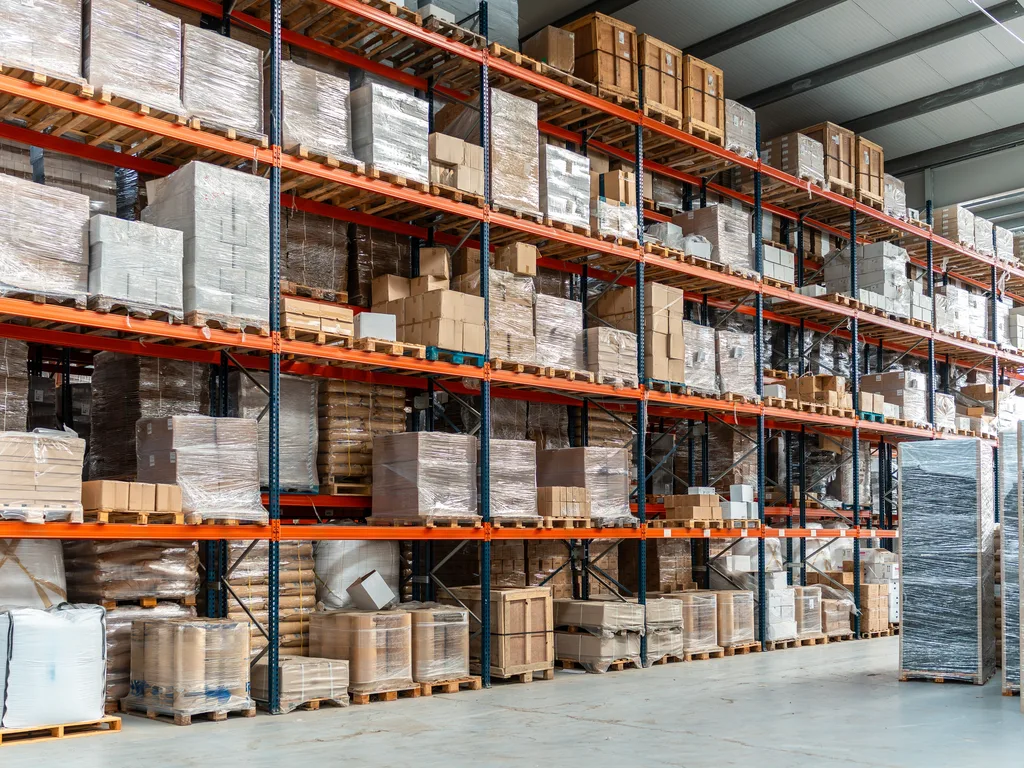

The Maine bailee proposition is cold. A storage operator in this state is usually holding other people’s seafood and other people’s perishables — lobster, groundfish, shellfish, and food that came off a boat or a processing line on a clock. And the loss that ends the relationship is not a fire. It is a temperature excursion, or a power failure during an ice storm, in a building that will be standing and unmarked when the customer arrives to look at what is left.
Portland has made this concrete. The city’s working waterfront now has purpose-built cold storage beside the container terminal, put there specifically so that seafood and other perishables can go straight from the pier to a freezer to a ship — which puts bailed goods, a bonded gateway, and a transatlantic vessel within sight of each other. Inland, the intermodal facility at Auburn makes Lewiston-Auburn the natural place to hold containerized freight moving to and from Québec. Maine imposes no public-warehouse license, so the warehouse receipt and the storage contract are the whole of the duty — though a house that touches food answers to the Department of Agriculture, Conservation and Forestry.
The loss is a degree, not a flame
Everything about insuring a Maine warehouse follows from one asymmetry. The goods you hold can be worth more per pallet than anything on a dry rack anywhere in the country — and they can be destroyed by an event that leaves the building in perfect condition.
Which is exactly the loss a commercial property policy is not built to answer. Property covers what is yours and stays put: the building, the racking, the refrigeration plant, the income that stops when the facility does. Warehouse legal liability covers what is theirs and sits in your care. In a dry-goods state an operator can blur those two lines for years and never find out. In a Maine cold house, the first serious loss will teach the difference in a single weekend.
The exclusion that removes your worst loss
Accepting a customer’s product makes you a bailee. You hold property that is not yours and you answer for it while it is in your care, custody, and control. And your general liability policy will not pay for it — not because of an oversight, but because a standard form excludes damage to personal property in your care, custody, or control. Every box in your freezer is precisely that.
So the loss you fear most — a warm room, a failed compressor, a dark building after an ice storm — is carved out of your foundation policy by the form’s own terms. Warehouse legal liability exists to answer exactly what that exclusion removes, and it leads a Maine program ahead of everything else on the schedule. What sizes the limit is the value of goods that never appear in your accounts, and in seafood that value can move sharply between seasons. The limitation-of-liability language in your storage agreement is the other half of the sizing, and it is the only document that will speak for you after the fact.
The generator has to start
Ice storms take down power lines. That sentence is a weather observation in most states and an insurance clause in this one, because a power failure at a refrigerated house is a total-loss event for the goods inside if the generator does not start.
Not a partial loss. Not a salvage negotiation. The customer’s entire load, worthless, in an undamaged building with an intact roof. So the generator, its fuel supply, its test schedule, its transfer switch, and the alarm and monitoring that tells somebody at two in the morning that the room is warming are not facility-management details in Maine. They are underwriting facts, and they are the first things an insurance carrier will ask about. We would rather have that conversation with you before we take the risk to market than have it with an adjuster afterwards.
Weight on the roof, and the goods below it
Maine warehouses are designed against weight and cold, and snow load on a wide, low-slope roof is more severe here than anywhere else in New England. Accumulation, drift against parapets, and thaw-refreeze ice that blocks drains and adds load the roof was not carrying when the storm ended — that is a structural exposure, and it is a bailee exposure the instant the roof deflects, because whatever comes down lands on a customer’s inventory.
Freeze does the same job more quietly. Wet sprinkler lines in unheated bays break and soak stored goods without any fire at all. On the coast, from Portland up through Searsport, nor’easter wind and tidal flooding are real and flood is separately placed. Hurricanes are not the planning case in Maine, and we will not sell one to you. This is the model we build the warehouse insurance program around: the building is yours, the goods are not, and the program has to know the difference.
A wet floor, a cold room, and a sharp knife
Workers compensation in Maine is a private-market line. The ordinary warehouse claims are all here — powered-industrial-truck contact and tip-over, product falling from racking, lifting and repetitive strain on pick lines, dock injuries at the trailer — but the seafood and cold-storage houses carry a heavier version of the frequency problem: wet floors, cold stress, sharp tools, and repetitive processing motion. And the yard is icy for a long stretch of the year, which turns the walk from the dock to the trailer into its own claim source. A cold house is not a dry warehouse with the temperature turned down; it is a different injury profile, and it prices like one.
What drives the cost of a Maine warehouse program
We do not publish figures. What underwriters here actually weigh:
- The value of the customers’ product in your rooms, which sizes the bailee limit and can swing with the season.
- Refrigeration, redundancy, and backup power — the generator, the fuel, the test regime, the monitoring, and who gets the alarm at night.
- Roof and snow-load design, drainage, and drift geometry.
- Coastal siting at Portland or Searsport, where nor’easter wind and tidal flood are their own placement.
- Bonded and zone status, which adds a customs obligation on top of the duty of care.
- Claims history, which moves pricing more than nearly anything else on this list.
Major Maine warehouse markets
Portland and the working waterfront
The International Marine Terminal is the state’s only container port and hosts a transatlantic service to Iceland and northern Europe — and the city has built purpose-built cold storage on the waterfront beside it, specifically so perishables can go from the pier to a freezer to a ship. A bailee here has bailed goods, a bonded gateway, and an ocean vessel within sight of one another, and a temperature failure at any point in that chain lands on somebody else’s product.
Lewiston-Auburn
The inland port: an intermodal freight transfer facility with rail connections toward Québec, which makes this the state’s crossroads for containers moving inland. Custody at an intermodal transfer is the ambiguous kind — the box changed hands, the seal was or was not intact, and the question of who held the goods at the moment of damage is precisely what a bailee claim turns on.
Bangor
A foreign-trade zone granted to the city and the northern hinge of I-95, serving distribution routes that run for hours between stops. Long dwell and long haul shift the exposure: goods sit longer in the building, and the single catastrophic event matters more than the accumulation of handling touches.
Searsport
Mack Point, the bulk side of the state’s three-port strategy. Bulk and breakbulk custody is not pallet custody — goods are hard to count, hard to segregate, and hard to hand back in the same condition — and the coast here takes nor’easter wind and tidal flooding, which is a separate placement.
Waterville
A zone whose service area reaches south across Androscoggin, Cumberland, and neighboring counties, which is what makes it relevant to the Portland and Auburn distribution market. A duty-deferred pallet in an inland building still carries the customs obligation of a bonded one — the operator answers to two masters without ever seeing salt water.
Madawaska
A zone on the New Brunswick border, where forest products, food, and manufactured goods cross every day. Cross-border custody means the goods in your building have already been through somebody else’s hands and somebody else’s paperwork, and a discrepancy discovered at your dock is your problem to document before it becomes your problem to pay for.
Presque Isle
Far-north agricultural and regional storage, hours from any metro. This is where the state’s distances stop being an inconvenience and start being an underwriting fact: a refrigeration failure discovered on a Monday in Aroostook County has had a whole weekend to ruin a customer’s inventory.
If the goods are yours, you are on the wrong page
A signpost before the questions. This page is for the operator holding other people’s product. If your Maine business owns what it sells — a seafood wholesaler or processor with product whose shelf life is measured in days, a grocery or consumer-goods wholesaler running long routes across a thinly settled state, or a beer and wine distributor working the private tier the state left open when it took the spirits tier for itself — then your inventory is not a bailment, and your program leads from stock throughput and products liability rather than from warehouse legal liability. Owned perishables need cover from the boat and the processor through cold storage and out to the buyer, not merely inside one building. That has its own page: distributor and wholesaler insurance in Maine.
A good many Maine houses do both — they process and sell their own, and they hold for others besides. If yours does, we place both halves — the distribution operation running your own product to market and the wholesale book behind it — and the seam between what you hold and what you own is the first thing we map.
Maine warehouse insurance FAQs
Does Maine require a warehouse license?
Not a general one. Maine has no public-warehouse licensing statute — a warehouse here owes its duties to the bailment it accepted and to the warehouse receipt it issued under Maine’s documents-of-title law, not to a state operating permit. Food storage is licensed by function rather than by building type: the Department of Agriculture, Conservation and Forestry’s Quality Assurance and Regulations division licenses food processing and wholesale food handling, and its food-and-fuel license application covers wholesale and warehousing activity. So a Maine house that touches food answers to an agency; a Maine house holding dry consumer freight answers to its contract.
What actually covers a customer’s seafood when a freezer fails?
Warehouse legal liability — the bailee line, and in Maine it is the whole argument. You are holding other people’s seafood and other people’s perishables, and the loss that ruins the relationship is not a fire but a temperature excursion or a power failure during an ice storm. General liability will not answer for it: a standard form excludes damage to personal property in your care, custody, or control, and the product in your freezer is exactly that. The loss you most fear is carved out of your foundation policy by its own terms, and warehouse legal liability is written to answer precisely what that exclusion removes. It matters more here than in a dry-goods state because the goods can be worth more per pallet than anything on a dry rack — and because they can be destroyed without a single thing happening to the building.
How bad is an ice-storm power failure for a refrigerated house?
It is the total-loss event, and it deserves to be planned for as one. Ice storms take down power lines, and a power failure at a refrigerated house is a total loss for the goods inside if the generator does not start. Not a partial loss. Not a salvage conversation. The building will be standing, undamaged and fully insurable, and a customer’s entire load will be worthless. That is why the generator, its fuel, its test schedule, and its alarm and monitoring discipline are underwriting questions in Maine rather than facility-management trivia — and why we ask about them before we ask about anything else in the building.
What does the snow do to the building itself?
Maine warehouses are designed against weight and cold. Snow load on a wide, low-slope roof is the structural exposure, and it is more severe here than anywhere else in New England — accumulation, drift against parapets, and thaw-refreeze ice that blocks drains and adds load the roof was not carrying when the storm ended. Freeze breaks wet sprinkler lines in unheated bays and soaks stored inventory without any fire ever starting. On the coast, from Portland up through Searsport, nor’easter wind and tidal flooding are real, and flood is separately placed. Hurricanes are not the planning case here.
What are the workers compensation exposures in a Maine cold house?
Workers compensation in Maine is a private-market line. Warehouse claims come from powered-industrial-truck contact and tip-over, product falling from racking, lifting and repetitive strain on pick lines, and dock injuries at the trailer. Maine’s seafood and cold-storage houses carry a heavier version of the frequency problem — wet floors, cold stress, sharp tools, and repetitive processing motion — and the yard is icy for a long stretch of the year, which turns the walk from the dock to the truck into its own claim source.
What does bonded and zone status add for a Maine bailee?
A second obligation over the same pallet. Maine carries three active foreign-trade zones — at Bangor, granted to the city; at Madawaska on the New Brunswick border; and at Waterville, whose service area reaches south across Androscoggin, Cumberland, and neighboring counties, which is what makes it relevant to the Portland and Auburn market. The bonded reality here is a two-border one: an ocean gateway at Portland’s International Marine Terminal, where transatlantic container service connects Maine directly to Iceland and northern Europe, and a land border with Canada moving forest products, food, and manufactured goods every day. Admit duty-deferred goods and you take on customs-bonded obligations on top of your ordinary duty of care to the owner.
Get a Maine warehouse insurance quote
Quotes in 1–2 hours during business hours.